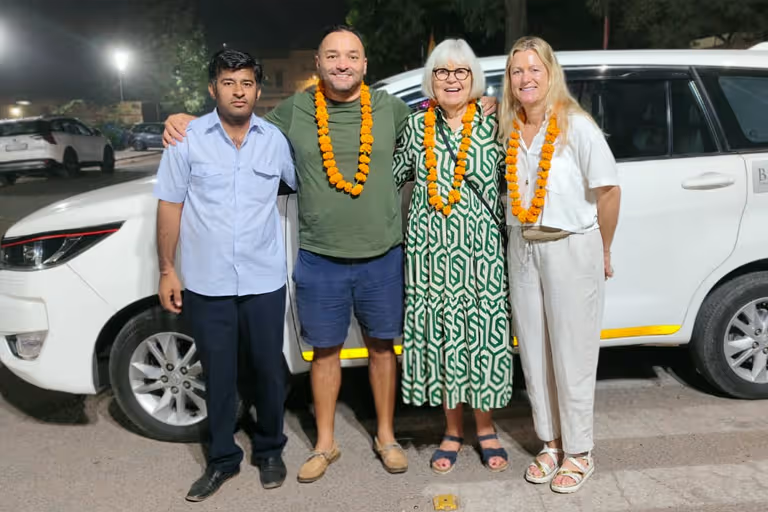
India is busy, colourful, sometimes chaotic, and absolutely worth visiting. But if you are picturing yourself trying to drive through Delhi traffic on your first day after a long flight, it is normal to feel nervous. That is exactly where an India tour with driver changes everything. A professional local driver handles the roads, the traffic, and the logistics, while you focus on actually enjoying the trip instead of just surviving it.
Let’s break down how safe it really is, what to expect day to day, and how to make sure you choose the right private car and driver for your journey.
What Does “Travelling India by Car with a Driver” Really Mean?
When you see phrases like “India tour with driver” or “private car and driver” on travel sites, it usually means this: you get a dedicated car and a professional driver for the full duration of your trip. The driver stays with you from city to city, handles all the transfers, and follows the route you agree in advance.
Most travellers use this setup for classic routes like the Golden Triangle (Delhi, Agra, Jaipur) or other popular circuits in Rajasthan and North India. These routes connect well by road, and many agencies build 5–10 day packages specifically around them with a private driver as the core service.
In practice, your driver:
- Meets you on arrival at the airport or railway station.
- Drives you between all your planned cities and hotels.
- Waits while you visit monuments and markets.
- Helps with practical things like finding ATMs, pharmacies, or a decent place for lunch.
It feels more like travelling with a local chauffeur-guide than simply booking random taxis on the street.
So, Is It Actually Safe to Travel This Way?
Let’s be honest: no country on earth is 100% risk-free. But broadly speaking, India is considered safe for tourists who take basic precautions, choose reputable services, and stay aware of their surroundings. Several recent safety guides for foreign visitors say exactly this – India is generally safe, but how you get around matters a lot.
When you compare your options – public buses, crowded trains, self-drive car rentals, or a private car and driver – the private-driver option usually comes out on top for safety, especially for international travellers who do not know the local language or road culture.
Why? Because a vetted local driver:
- Understands Indian traffic and road conditions.
- Knows which areas to avoid at night or during certain times.
- Shields you from a lot of common tourist scams and hassles.
- Keeps you out of situations you would never even know to avoid on your own.
That is why many tour operators and travel insurance guides now mention “private car with driver” as a particularly safe way to get around, especially on intercity routes.
Why a Private Driver Is Often Safer Than Going Alone
1. They Understand Local Roads and Driving Culture
India’s roads are a world of their own. You share lanes with trucks, motorbikes, tuk-tuks, animals, tractors, and everything in between. There are speed breakers that appear out of nowhere, people crossing at random, and roadworks that force last‑minute detours.
Local drivers grow up with this environment. They know how people usually behave in traffic, what to expect from other vehicles, and how fast is actually safe on a particular stretch, even if the sign says otherwise. Travel safety guides consistently point out that using experienced local drivers reduces accident risks and makes long‑distance travel much less stressful for visitors.
2. They Act as a Safety Buffer Against Scams
Most Indians are warm, friendly, and genuinely helpful. But as in any popular tourist destination, you will find a few people who see foreigners as walking wallets. Typical issues include overpriced taxis, “closed” monuments with “special tours,” fake guides, and unlicensed shops that push you hard to buy.
A local driver knows these tricks. Many safety articles describe private drivers as a “shield” because they often step in before things escalate. They steer you toward genuine ticket counters, proper parking areas, and trusted shops, and away from shady agents and touts who try to latch onto tourists.
This does not mean you can switch your brain off. It does mean you have someone in your corner who recognizes the red flags faster than you ever could on your first day in India.
3. They Help With Language and Cultural Gaps
English is widely spoken in India’s main tourist areas, but not everywhere. Step away from the biggest cities, and you may find hotel staff, shopkeepers, or police officers who speak only basic English.
Your driver becomes your bridge. They can:
- Explain what you need at a local clinic, chemist, or restaurant.
- Help you negotiate prices without being ripped off.
- Clarify any misunderstandings with hotel staff or tour vendors.
Travel safety guides also point out another benefit: drivers can quietly advise you on what to wear at religious sites, how to behave in certain villages, and when it is okay to take photos. That cultural guidance keeps you out of awkward or risky situations.
4. Extra Reassurance for Solo Women and First-Time Travellers
If you are a solo woman deciding whether to travel India by car, this is likely your biggest question: will I feel safe with a private driver?
Many solo female travellers who booked drivers through trusted agencies later described their driver as a protector, guide, and sometimes even a friend. Some specialist safety guides for women in India specifically highlight private car with driver as the most comfortable option compared to crowded public transport.
The key, of course, is choosing the right company. When you book through a reputable agency that screens its staff, checks backgrounds, and monitors trips, a private driver becomes a huge safety upgrade rather than a risk.
Where a Private Driver Helps Most: Real-World Examples
Late-Night Arrivals
You land in Delhi close to midnight. You are tired, your phone battery is low, and you still need to reach your hotel. If you walk outside and start negotiating with random taxis, you add stress at the worst possible time.
With a private car driver and driver arranged in advance, it goes very differently. Your driver waits with a name sign, walks you straight to the car, and takes you directly to your hotel. No wandering around, no haggling, no guessing whether the taxi meter is honest.
Highway Journeys Between Cities
On routes like Delhi–Agra–Jaipur, the highways are generally good, but long drives always involve unpredictable moments: sudden traffic jams, slow-moving trucks, or cows in the road. Travel companies that specialise in road-based India tours mention that professional drivers know the safest rest stops, the best places to eat, and the stretches to avoid after dark.
Instead of checking maps, worrying about fuel, and trying to figure out which small town feels safe enough to stop in, you let your driver lead.
Busy Old City Areas and Crowded Markets
Old Delhi, Jaipur’s bazaars, and parts of other heritage cities can be wonderful to explore but chaotic for parking and traffic. With a private driver, you jump out near the entrance while they go park somewhere sensible and wait.
Your bags stay locked in the car. You know exactly where your ride will be. When you are done with shopping or sightseeing, you send a quick message or walk back to the agreed pick‑up point and off you go.
Comfortable India Travel
Explore India with a Trusted Private Driver
From airport pickup to multi-city road trips, travel with a professional driver who helps make your journey easier, safer and more flexible.
How Safe Is a One Week India Tour with Private Car and Driver?
A one week India tour with private driver is one of the most common and most practical ways people experience the country for the first time. A very typical plan is a one week India tour with Privare car and driver on the Golden Triangle route: Delhi, Agra, and Jaipur, starting and ending in Delhi.
Travel agencies that run these trips at scale describe them as safe and manageable, especially because:
- The roads between these cities are well-travelled and regularly used by tourists.
- The distances are long enough to feel like a “road trip” but not extreme.
- Hotels and service stops along these routes are used to international guests.
Your risk level drops even further when you travel in daylight, wear your seatbelt, and let your driver decide when it makes sense to stop for breaks or avoid certain areas at particular times.
A Simple Seven-Day Example
Here is what a safe, sensible one-week India tour with driver might look like:
- Day 1: Land in Delhi, airport pickup, hotel check-in, gentle evening drive.
- Day 2: Full day in Delhi with driver and optional local guide.
- Day 3: Drive Delhi to Agra by expressway, afternoon in Agra.
- Day 4: Taj Mahal at sunrise, Agra Fort, more local sights.
- Day 5: Drive Agra to Jaipur with a stop at Fatehpur Sikri or a stepwell.
- Day 6: Full day in Jaipur: Amber Fort, City Palace, markets.
- Day 7: Drive back to Delhi and fly out.
From a safety point of view, this kind of route works well because you are:
- Mostly on main highways and city roads that drivers know very well.
- Travelling by day for the longest stretches.
- Staying in established tourist cities where support and services are easy to find.
How to Choose a Safe Travel Company and Driver
The big caveat in all of this: a private driver is only as safe as the person and company you book with. So choosing well is crucial.
Book Through Reputable Channels
Most safety guides on private travel in India recommend booking through:
- Established Indian tour operators that specialise in private driver travel.
- Trusted online travel platforms where you can read detailed, recent reviews.
- Company websites that clearly focus on “India tour with driver” style trips.
What they consistently advise against is accepting unsolicited long-distance offers from random drivers at airports or stations. It might work out, but if you want to minimise risk, book in advance with someone whose reputation you can actually check.
Questions to Ask Before You Confirm
When you contact a company, ask for specifics:
- What car models do you use for my group size?
- Is the vehicle insured and regularly serviced?
- Is the driver employed full time by your company or just a freelancer?
- How many years of experience does the driver have on this route?
- What exactly is included in the quoted price (fuel, tolls, parking, driver’s stay)?
A serious operator will answer clearly and in detail, not dance around the questions. Several safety guides also suggest asking for the driver’s name, license details, and car number once the booking is confirmed, so you know exactly who to expect when you arrive.
Travel India with Confidence
Enjoy a comfortable and well-planned India journey with a professional private driver, reliable vehicle and local travel support.
Signs of a Reliable Private Driver
Common markers of a good driver include:
- Punctuality – they are on time or early every day.
- Calm, patient driving style – no racing, no aggressive overtaking.
- Clean, well-kept vehicle – inside and out.
- Respectful communication – friendly but professional, not intrusive.
- Willingness to adapt to your pace – more stops if you need them, fewer if you want to push on.
Some agencies emphasise that their Golden Triangle and Rajasthan drivers are specifically trained to work with international visitors, including solo women and seniors. That training covers both road safety and client comfort.
Safety Tips You Should Still Follow
Even with a fantastic driver, you still play a role in your own safety. The usual common-sense travel habits apply in India just as they would anywhere else.
1. Use Seatbelts and Avoid Unnecessary Night Driving
It sounds basic, but many locals skip seatbelts in the back. You should not. Always buckle up, even for short rides. Road safety experts who document Indian driving conditions repeat this point again and again.
Night driving on highways or rural roads can be riskier due to lower visibility, occasional drunk driving, and unexpected animals or pedestrians. Many experienced private drivers will recommend limiting long-distance night travel unless absolutely necessary, and this is good advice to follow.
2. Keep Valuables Secure
Keep passports, spare cards, and large amounts of cash locked in the hotel safe when you do not need them. During drives, keep your everyday bag zipped and out of sight rather than on your lap in plain view at open windows or doors.
Safety guides on private-driver travel in India also suggest keeping digital copies of important documents (passport, visa, insurance) backed up in email or cloud storage, just in case.
3. Set Basic Boundaries from Day One
When you first meet your driver, calmly explain your expectations:
- Your preferred start and end times each day.
- Whether you are happy to visit certain shops, or prefer to skip shopping stops.
- How often you like to stop for breaks.
A good driver will appreciate that clarity. Setting expectations early avoids misunderstandings later and makes it easier for both of you to relax and enjoy the trip.
4. For Solo Women, Add an Extra Layer of Caution
India can be a fantastic destination for solo women, but it is sensible to add a few more safety layers:
- Only book through companies with a strong track record and clear reviews from women.
- Share your driver’s details and daily plan with a friend or family member.
- Trust your instincts – if you feel uncomfortable with someone, speak to the company immediately and request a change.
Women-focused safety guides highlight that with the right precautions and a trustworthy driver, many solo female travellers feel safer in a private car than in crowded public transport.
Common Worries – And What Usually Happens Instead
“Will I be stuck with a stranger for a whole week?”
Yes, you will spend a lot of time with your driver, but the relationship is usually professional, not intense. A good driver knows when to chat and when to give you quiet time.
Many travellers end their trip feeling like they travelled with a local friend. They often mention their private driver by name in reviews, talking about small kindnesses like helping them buy a SIM card or finding a doctor when someone felt unwell.
“What if the driver drives too fast or feels unsafe?”
If that happens, you have the right to speak up. A simple, calm “Could we please slow down a little?” normally solves the issue. If it does not, contact the company right away and request a different driver.
Reputable agencies take complaints about unsafe driving very seriously because their entire business depends on good word-of-mouth and repeat recommendations.
“Can I trust the driver with my luggage?”
On private-driver tours, it is standard practice for the driver to stay with the car while you are inside monuments, restaurants, or shops. They keep an eye on your luggage and valuables left in the boot.
Again, this is part of why you want an agency with real reviews and a long-term reputation. For them, one incident of theft or carelessness can damage years of trust, so they train their drivers to treat your belongings as if they were their own.
Costs vs Safety: Is It Worth Paying for a Driver?
Let’s be real: hiring a private driver does cost more than using public buses or cheap trains. But when you break down what you actually get, the value is usually excellent, especially for a couple or a small group.
Multiple 2025–2026 cost guides for private car and driver in India show realistic daily price ranges like:
- Budget and mid-range sedans: roughly 40–60 USD per day, including fuel and driver.
- SUVs and MPVs: roughly 60–90 USD per day.
- Luxury vehicles: more, depending on brand and comfort level.
For a one-week India tour with driver, you are looking at a transport budget in the hundreds of dollars, not thousands, for the car and driver side. When you spread that across several days and people, and then factor in the safety, comfort, and time saved, it starts to look very reasonable.
If you tried to piece the same trip together with taxis, trains, and last‑minute bookings, you might spend less on paper, but you would pay for it in stress, lost time, and more exposure to random risk.
Red Flags: When You Should Not Get in the Car
To keep things balanced, let’s talk about red flags. If you see any of these, think twice before committing:
- The company refuses to give you the driver’s name or car details in advance.
- There are no real reviews anywhere, or only a few vague ones.
- The quote looks unbelievably cheap compared to everyone else.
- The driver shows up late, smells of alcohol, or drives recklessly from the start.
- You feel pressured into shopping stops or extra paid activities you never asked for.
In any of these situations, you can walk away and find another provider. Your safety is more important than any deposit.
Final Thoughts: Is It Safe to Travel India by Car with a Driver?
When you plan well and choose a trusted operator, travelling India by car with a private driver is not only safe, it is one of the best ways to experience the country. It turns a potentially stressful, confusing trip into something smooth, flexible, and surprisingly relaxed.
You get the freedom of a road trip without the pressure of driving in an unfamiliar environment. You get a local ally who understands the language, the roads, and the culture. You get more time to enjoy the colours, flavours, and stories of India – and less time worrying about logistics and safety.
Whether you are planning a long adventure or a compact one week India tour with private car and driver, this style of travel gives you the rare combination of independence, comfort, and peace of mind. And for most visitors, that is worth every rupee.
Narendra Singh
India Travel Expert and Founder of India Private Car Driver
Narendra Singh helps international travelers plan comfortable and memorable journeys across India. With extensive knowledge of Indian destinations, private car travel, hotels, local culture and customized itineraries, he shares practical travel advice to help you plan your trip with confidence.

