
Agra Monuments: Entry Fees, Timings, History & Travel Guide
Agra is one of the most important heritage destinations in India. Located on the banks of the Yamuna River, the city is famous for the Taj Mahal, but its history goes far beyond this world-renowned monument. Agra is home to grand Mughal forts, elegant tombs, historic gardens and architectural landmarks that tell stories of emperors, queens, artists and powerful dynasties.
From the white marble beauty of the Taj Mahal to the red sandstone walls of Agra Fort and the peaceful gardens beside the Yamuna, every monument in Agra offers a different experience. Some places are connected with love and memory, while others reflect military power, royal ambition and the artistic achievements of the Mughal period.
This complete Agra monuments guide includes entrance fees, opening timings, locations, historical background and practical travel tips. It is useful for first-time visitors, families, couples, international travelers and anyone planning a Golden Triangle Tour covering Delhi, Agra and Jaipur.
Important ticket note: Monument fees, visiting hours, entry rules and ticket categories may change. Always confirm the latest price on the official ticketing website or with the monument authority before your visit. The Taj Mahal is closed every Friday for general viewing.
Why Visit Agra’s Monuments?
Agra was one of the most important cities of the Mughal Empire and served as an imperial capital during major periods of Mughal history. The city became a centre of architecture, art, administration and culture.
The Taj Mahal is the most famous attraction, but visiting only the Taj Mahal means missing much of Agra’s historical character. Agra Fort explains the power and lifestyle of the Mughal rulers. Itimad-ud-Daulah introduces delicate marble inlay work that influenced the design of the Taj Mahal. Mehtab Bagh offers a peaceful view across the Yamuna, while Fatehpur Sikri shows the ambition of Emperor Akbar’s planned capital.
Agra is also easy to include in a larger North India itinerary. Most travelers combine it with Delhi and Jaipur as part of the Golden Triangle. A private car and driver can make it easier to visit multiple monuments, avoid unnecessary transfers and stop at attractions outside the main city.
Agra Monuments Entry Fees at a Glance
The table below provides a useful planning overview. Prices are indicative and should be checked before travel because the Archaeological Survey of India, Agra Development Authority or other local authorities may revise fees.
| Monument | Indian / OCI | Foreign Visitor | Opening Information |
|---|---|---|---|
| Taj Mahal | ₹50 | ₹1,100 | Closed on Fridays; opens before sunrise and closes before sunset |
| Agra Fort | Check official listing | Check official listing | Generally open from morning to evening |
| Fatehpur Sikri | Check official listing | Check official listing | Generally open from sunrise to sunset |
| Itimad-ud-Daulah | Check official listing | Check official listing | Generally open from morning to sunset |
| Akbar’s Tomb, Sikandra | Check official listing | Check official listing | Generally open from sunrise to sunset |
| Mehtab Bagh | Check official listing | Check official listing | Generally open from morning to sunset |
| Ram Bagh | Check official listing | Check official listing | Generally open during daylight hours |
Ticket verification: The official Taj Mahal website lists online ticketing and current Taj Mahal ticket categories. The ASI Agra Circle also publishes monument-wise fee information for Agra attractions.
1. Taj Mahal

Location
Dharmapuri, Forest Colony, Tajganj, Agra, Uttar Pradesh 282001, India.
Taj Mahal Entry Fee
The official Taj Mahal website currently lists the following standard ticket categories for general daytime viewing:
- Indian citizens and OCI cardholders: ₹50.
- Foreign visitors: ₹1,100.
- SAARC and BIMSTEC visitors: ₹540.
- Children below 15 years: No entry fee for general viewing.
- Main mausoleum: Additional ₹200 ticket where applicable.
Ticket prices and conditions may change. The official website also provides online ticketing information and advises visitors to check the current ticket details before arrival.
Taj Mahal Timings
The Taj Mahal is normally open every day except Friday. The monument opens before sunrise and closes before sunset. The official visiting-hours page states that the Taj Mahal opens approximately 30 minutes before sunrise and closes approximately 30 minutes before sunset, while ticket windows operate according to the official schedule.
The Taj Mahal is closed on Fridays for general viewing because of Friday prayers. If Friday falls during your Agra itinerary, plan the Taj Mahal visit on another day.
History
The Taj Mahal was commissioned by Mughal Emperor Shah Jahan in memory of his wife Mumtaz Mahal. Construction began in the 17th century and involved architects, calligraphers, stone inlay artists, engineers and craftsmen from different parts of the Mughal Empire and beyond.
The monument is built mainly from white marble and is known for its symmetrical design, large central dome, four minarets, decorative calligraphy, floral inlay work and landscaped gardens. The combination of architecture, geometry, water channels and changing light gives the monument a unique appearance throughout the day.
The Taj Mahal is not only a symbol of love. It is also an important example of Mughal architecture and craftsmanship. The marble inlay work, known as pietra dura, includes delicate floral patterns made with carefully cut and polished stones.
Best Time to Visit Taj Mahal
Sunrise is often the best time to visit the Taj Mahal. The temperature is more comfortable, the morning light is soft and the monument may feel less crowded than later in the day.
Visitors should arrive early enough to complete security checks and reach the entrance before their preferred viewing time. Large bags, food, tripods and certain electronic items may not be allowed inside.
Practical Tips
- Do not plan your Taj Mahal visit on Friday.
- Buy tickets through official channels where possible.
- Carry identification documents if required.
- Wear comfortable shoes.
- Carry only permitted items.
- Allow extra time for security checks.
- Visit early to avoid heat and crowds.
- Ask your guide about the best photography points.
2. Agra Fort
Location
Rakabganj, Agra, Uttar Pradesh 282003, India.
Agra Fort Entry Fee
Agra Fort fees vary by visitor category and may change according to the official monument schedule. The ASI Agra Circle publishes separate rates for Indian, foreign and SAARC/BIMSTEC visitors, so check the latest official listing before visiting.
Agra Fort Timings
Agra Fort is generally open from morning until evening, usually from sunrise or early morning to sunset. The exact last-entry time may vary, so visitors should confirm before planning a late visit.
History
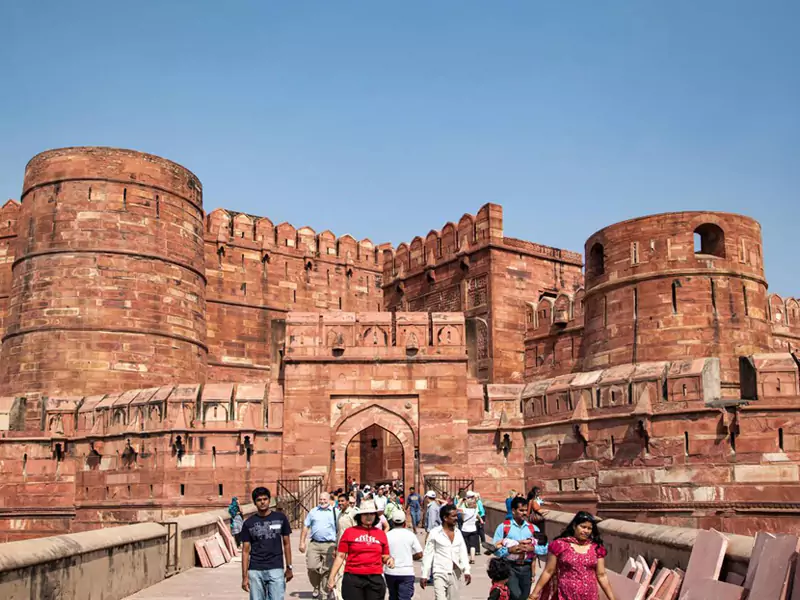
Agra Fort is one of the most important Mughal monuments in India. The fort was developed and expanded during the reign of Emperor Akbar and later modified by Shah Jahan.
The fort served as a military stronghold, royal residence and administrative centre. Its massive red sandstone walls contain palaces, courtyards, audience halls, mosques and private rooms.
Inside the fort, visitors can see a combination of red sandstone and white marble architecture. The contrast reflects the changing preferences of Mughal rulers and the development of imperial design.
Agra Fort is also closely connected with the later years of Shah Jahan. According to historical tradition, the emperor was confined within the fort by his son Aurangzeb and spent his final years looking toward the Taj Mahal.
What to See Inside
- Amar Singh Gate.
- Jahangiri Mahal.
- Diwan-i-Am.
- Diwan-i-Khas.
- Musamman Burj.
- Khas Mahal.
- Moti Masjid.
- Views of the Taj Mahal from selected areas.
Practical Tips
Agra Fort is large, so allow at least two hours for a comfortable visit. Wear walking shoes and carry water. A guide can explain the purpose of different buildings and help you understand the fort’s history.
3. Akbar’s Tomb, Sikandra
Location
Sikandra, Agra, Uttar Pradesh 282007, India.
Entry Fee and Timings
Entry fees vary according to the current ASI listing and visitor category. The monument is generally open during daylight hours. Some official listings mention Friday-related closures or schedule variations, so verify the current visiting information before traveling.
History
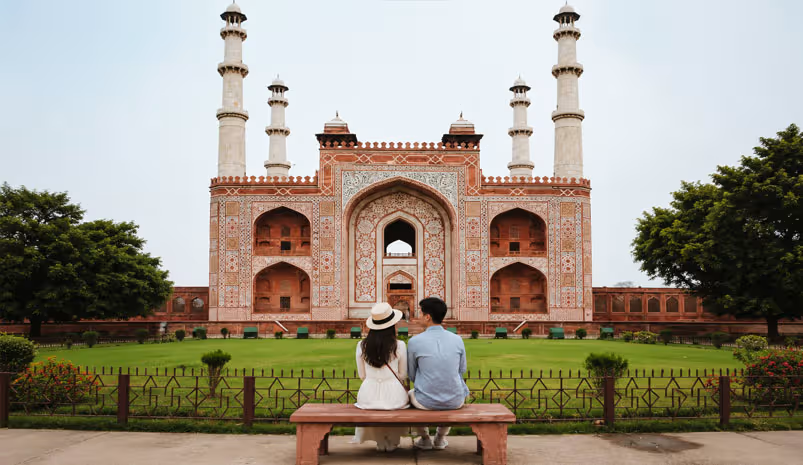
Akbar’s Tomb is the final resting place of Emperor Akbar. The tomb complex reflects the emperor’s interest in architecture, design and cultural integration.
The monument combines red sandstone, marble, geometric patterns, decorative panels and large gateways. Its design includes influences from Mughal, Persian, Hindu and other regional traditions.
Akbar is remembered as one of the most influential Mughal rulers. His reign was associated with administrative reforms, military expansion, cultural activity and efforts to create greater understanding between different communities.
What to See
- The large entrance gateway.
- Decorative geometric and floral patterns.
- Open courtyards and garden layout.
- Marble and sandstone details.
- Deer and other garden surroundings.
Sikandra is a good place to visit if you want to explore a quieter monument away from the crowds around the Taj Mahal and Agra Fort.
4. Tomb of Mariam-uz-Zamani
Location
Mathura Road, near Sikandra, Agra, Uttar Pradesh 282007, India.
Entry Fee and Timings
Fees and opening conditions should be checked through the current ASI monument listing. The tomb is generally visited during daylight hours, and some official schedules may include weekly closure arrangements.
History
The tomb is associated with Mariam-uz-Zamani, the wife of Emperor Akbar and the mother of Emperor Jahangir. The building reflects the architectural traditions of the Mughal period while also showing regional design influences.
The structure uses red sandstone, arches, decorative details and spacious terraces. Its design is more restrained than some of Agra’s larger monuments, but it is valuable for travelers interested in Mughal history and royal women.
The tomb can be included with a visit to Akbar’s Tomb because both sites are located in the Sikandra area.
5. Fatehpur Sikri
Location
Fatehpur Sikri, Uttar Pradesh 283110, India.
Entry Fee and Timings
Fatehpur Sikri entrance fees vary by visitor category and official revisions. The ASI Agra Circle publishes separate rates for domestic, foreign and SAARC/BIMSTEC visitors.
The complex is generally open from sunrise to sunset. Confirm the latest last-entry time before traveling, especially if you are visiting as a day trip from Agra.
History
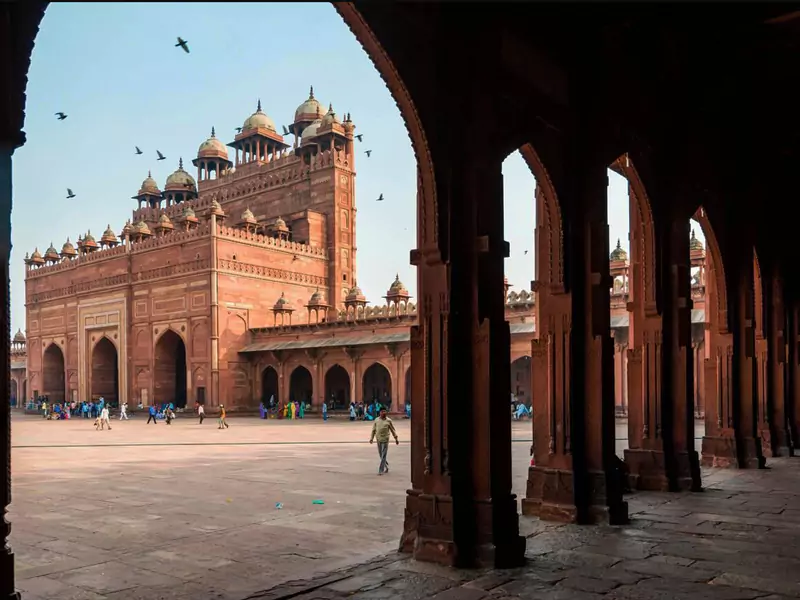
Fatehpur Sikri was developed by Emperor Akbar and served as the Mughal capital for a period during the 16th century. The city represents Akbar’s political ambition, architectural vision and interest in cultural integration.
The complex includes palaces, courtyards, audience halls, religious buildings and gateways. Its architecture combines red sandstone with Indo-Islamic forms and regional decorative traditions.
Main Attractions
- Buland Darwaza.
- Jama Masjid.
- Diwan-i-Khas.
- Diwan-i-Am.
- Panch Mahal.
- Jodha Bai’s Palace.
- Birbal’s House.
- Tomb of Salim Chishti.
Fatehpur Sikri is located outside Agra and requires additional travel time. It can be visited as a half-day excursion or included on the route between Agra and Jaipur.
Travel Tips
Wear comfortable shoes because the complex is large and involves outdoor walking. Carry water, sun protection and a scarf or shawl for religious areas.
6. Tomb of Itimad-ud-Daulah
Location
Moti Bagh, Agra, Uttar Pradesh 282006, India.
Entry Fee and Timings
Entry fees vary according to the official ASI listing. The monument is generally open from morning until sunset. Check current prices and last-entry information before your visit.
History
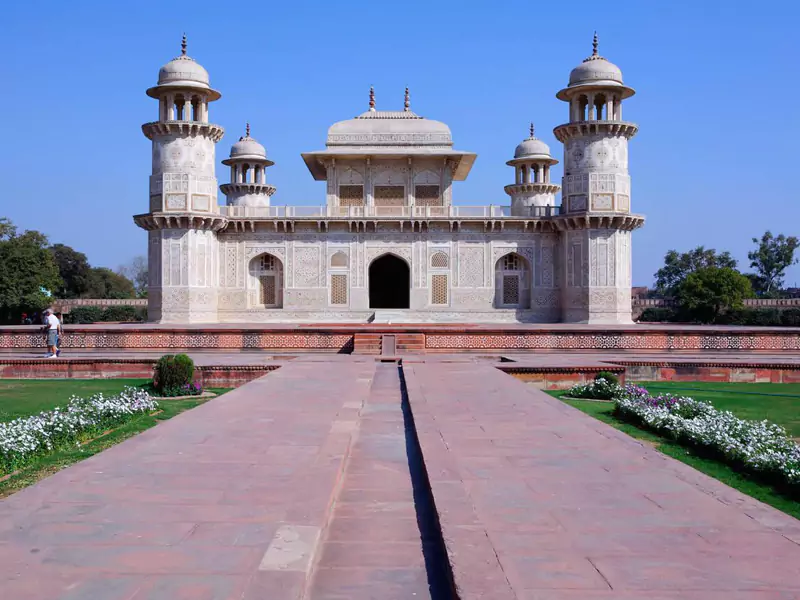
The Tomb of Itimad-ud-Daulah is often called the Baby Taj because of its delicate marble design and connection with the Taj Mahal’s architectural development.
The tomb was commissioned by Nur Jahan for her father, Mirza Ghiyas Beg. The building is known for white marble, stone inlay, carved screens, painted details and a garden setting.
Many visitors consider Itimad-ud-Daulah one of the most beautiful smaller monuments in Agra. Its design is more intimate than the Taj Mahal, allowing visitors to observe the decorative work closely.
Why Visit the Baby Taj?
- Delicate marble inlay work.
- Beautiful carved screens.
- Peaceful garden setting.
- Important connection to Mughal architecture.
- Fewer crowds than the Taj Mahal in many periods.
- Excellent photography opportunities.
The Baby Taj can be combined with Mehtab Bagh because both are located near the Yamuna River.
7. Mehtab Bagh
Location
Nagla Devjit, Agra, Uttar Pradesh 282001, India.
Entry Fee and Timings
Mehtab Bagh is generally open during daylight hours from morning to sunset. Entry fees may vary according to the current local authority or ASI listing.
History
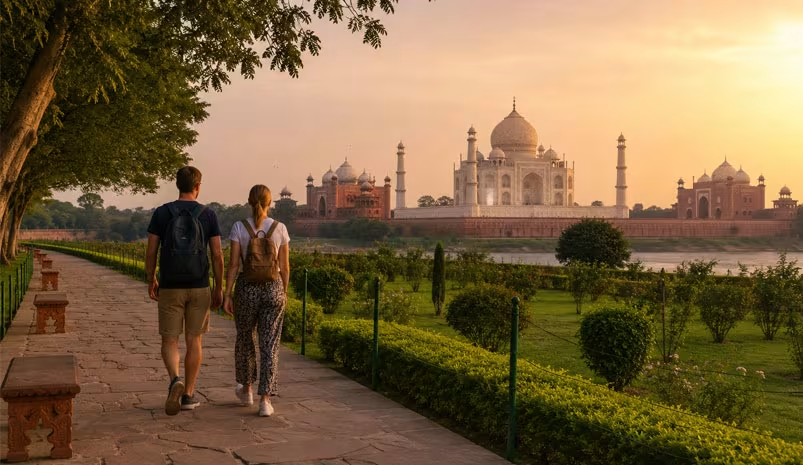
Mehtab Bagh is a Mughal garden located across the Yamuna River from the Taj Mahal. The garden was designed as a viewing point and was aligned with the Taj Mahal complex.
The name Mehtab Bagh is often translated as “Moonlight Garden.” Its position across the river gives visitors a different perspective of the Taj Mahal, particularly around sunset.
Best Time to Visit
Late afternoon is usually the best time to visit Mehtab Bagh. The soft light creates a beautiful view of the Taj Mahal across the Yamuna, and the area can feel less crowded than the main monument.
Mehtab Bagh is a good choice for photographers and couples who want a quieter view of the Taj Mahal.
8. Ram Bagh
Location
Firozabad Road, Agra, Uttar Pradesh 282006, India.
Entry Fee and Timings
Ram Bagh is generally open during daylight hours, from morning until sunset. Fees and visiting conditions should be checked before travel.
History
Ram Bagh is traditionally associated with Emperor Babur and is considered one of the oldest Mughal gardens in India. It reflects the early Mughal interest in landscaped gardens, water channels, symmetry and peaceful outdoor spaces.
The garden offers a different experience from Agra’s grand monuments. Instead of large palace buildings, visitors can enjoy greenery, pathways, water features and a quieter atmosphere.
Why Visit Ram Bagh?
- Historic Mughal garden design.
- Peaceful surroundings.
- Less crowded atmosphere.
- Early Mughal history.
- Useful stop for garden and architecture enthusiasts.
Suggested Agra Sightseeing Itineraries
One-Day Agra Itinerary
A one-day Agra tour should focus on the Taj Mahal, Agra Fort and one additional monument.
- Early morning: Taj Mahal.
- Late morning: Breakfast and rest.
- Late morning or afternoon: Agra Fort.
- Afternoon: Itimad-ud-Daulah or Mehtab Bagh.
- Evening: Departure or hotel stay.
If you are traveling from Delhi, begin early and allow enough time for traffic and security checks.
Two-Day Agra Itinerary
- Day 1: Taj Mahal, Agra Fort and Mehtab Bagh.
- Day 2: Itimad-ud-Daulah, Sikandra and Fatehpur Sikri.
A two-day itinerary is more comfortable because it gives you time to see the monuments without rushing.
Agra and Fatehpur Sikri Itinerary
Travelers continuing toward Jaipur can visit Fatehpur Sikri between Agra and Jaipur. Leave Agra after visiting the Taj Mahal or Agra Fort, depending on your schedule.
Fatehpur Sikri is a large complex, so allow at least two to three hours for the main visit. Continue to Jaipur after sightseeing or stay overnight in the area if you prefer a slower journey.
Best Time to Visit Agra
The most comfortable season for visiting Agra is generally from October to March. Winter mornings can be cool, but daytime sightseeing is usually more pleasant than during the summer.
April to June can be very hot, especially around open courtyards and gardens. Start sightseeing early and carry water, sunscreen and a hat.
July to September may bring rain and humidity. The Taj Mahal and gardens can look attractive after rainfall, but keep outdoor plans flexible.
Fog may affect winter mornings and visibility. If you are visiting for sunrise photography, keep your expectations flexible because weather conditions can change.
How to Travel Around Agra
A private car with a driver is one of the most convenient ways to visit Agra’s monuments. It allows you to carry belongings safely, travel between monuments without negotiating every ride and include nearby attractions such as Sikandra or Fatehpur Sikri.
Auto-rickshaws and local taxis are available for shorter trips. Confirm the fare before traveling if a meter is not being used.
For international travelers and families, a private vehicle can make the day more comfortable, particularly during summer or when visiting multiple monuments.
Agra Travel Tips
- Check official ticket prices before visiting.
- Do not schedule the Taj Mahal on Friday.
- Start early to avoid heat and crowds.
- Carry a valid identity document if required.
- Wear comfortable walking shoes.
- Follow monument photography and security rules.
- Keep bags small for faster security checks.
- Carry bottled water and sun protection.
- Book an official or reputable guide.
- Be cautious of unsolicited guides and sellers.
- Leave enough time for traffic between monuments.
- Confirm last-entry times for afternoon visits.
Agra Monuments for Families
Agra is suitable for family travel, but children may find long outdoor visits tiring. Plan the Taj Mahal and Agra Fort during the cooler part of the day and include breaks between monuments.
Carry water, snacks, hats and comfortable shoes. A private car allows children to rest between visits and reduces the need to walk long distances in the heat.
Agra Monuments for Couples
The Taj Mahal is one of the most popular romantic destinations in the world. Couples can visit at sunrise, take photographs, enjoy a quiet view from Mehtab Bagh and explore the smaller monuments together.
A private Agra tour can include a sunrise Taj Mahal visit, breakfast, Agra Fort, Itimad-ud-Daulah and a sunset viewpoint. Couples can also combine Agra with Jaipur and Udaipur for a longer Rajasthan journey.
Agra Monuments for Senior Travelers
Senior travelers can enjoy Agra comfortably with early sightseeing, private transportation and regular rest breaks. Some monuments involve uneven surfaces, long walking routes and stairs.
Ask your driver about the closest practical drop-off point and request a guide who can adjust the pace. Carry regular medicines, water and any required medical documents.
Photography Rules and Visitor Etiquette
Photography is permitted in many open areas, but rules vary by monument. The main mausoleum at the Taj Mahal has additional restrictions and visitors should follow all security instructions.
Tripods, large bags, food and certain electronic items may not be permitted inside. Ask staff before photographing religious ceremonies or local people.
Dress respectfully at mosques, tombs and religious sites. Do not touch carvings, write on walls or climb restricted structures.
Official Ticket Information
Visitors should use official sources for ticket verification. The official Taj Mahal website provides ticketing details, entry categories, visiting hours and information about online booking.
The District Agra government website also directs visitors toward official Taj Mahal ticket booking information. The ASI Agra Circle publishes monument-wise fee information for sites such as Agra Fort, Fatehpur Sikri, Akbar’s Tomb and Itimad-ud-Daulah.
Before you go: Entry fees, ticket categories, opening hours and closure days may be revised. Always verify current information on an official government or monument website before paying for tickets.
Frequently Asked Questions
What are the most famous monuments in Agra?
The most famous monuments are the Taj Mahal, Agra Fort, Fatehpur Sikri, Itimad-ud-Daulah, Mehtab Bagh, Akbar’s Tomb in Sikandra, Mariam-uz-Zamani’s Tomb and Ram Bagh.
Is the Taj Mahal closed on Friday?
Yes. The Taj Mahal is closed on Fridays for general viewing. It is normally open on other days from before sunrise until before sunset, subject to official timings.
What is the Taj Mahal entry fee?
The official Taj Mahal ticketing information lists ₹50 for Indian and OCI visitors, ₹1,100 for foreign visitors and ₹540 for SAARC/BIMSTEC visitors. An additional ₹200 may apply for access to the main mausoleum. Children below 15 years generally have no entry fee for general viewing.
Can I visit Agra monuments in one day?
Yes. In one day, you can visit the Taj Mahal, Agra Fort and one additional attraction such as Mehtab Bagh or Itimad-ud-Daulah. A two-day visit is more comfortable if you want to include Fatehpur Sikri and Sikandra.
What is the best time to visit the Taj Mahal?
Sunrise is often the best time because the weather is cooler and the light is softer. Fog or seasonal conditions may affect visibility during winter.
How long should I spend at Agra Fort?
Allow at least two hours for Agra Fort. The complex is large and includes courtyards, palaces, mosques and viewpoints.
Is Fatehpur Sikri worth visiting?
Yes. Fatehpur Sikri is an important historic city with impressive gateways, courtyards, palaces and religious buildings. It is especially worthwhile for travelers interested in Mughal architecture and history.
Can I visit Fatehpur Sikri from Agra?
Yes. Fatehpur Sikri can be visited as a half-day excursion from Agra or as a stop while traveling between Agra and Jaipur.
Is Mehtab Bagh a good place to see the Taj Mahal?
Yes. Mehtab Bagh offers a view of the Taj Mahal from across the Yamuna River and is particularly attractive around sunset.
Should I hire a guide in Agra?
A knowledgeable guide can make the history and architecture much easier to understand. Choose an official or reputable guide and confirm the fee before starting the tour.
Is Agra suitable for a private car tour?
Yes. A private car and driver are useful for visiting multiple monuments, traveling from Delhi or Jaipur, carrying luggage and adding nearby sites to your itinerary.
Plan Your Agra Monument Tour
Agra’s monuments are more than individual tourist attractions. Together, they tell the story of Mughal power, love, architecture, religion, art and urban planning.
Visit the Taj Mahal for its beauty and emotional history. Explore Agra Fort to understand the strength of the Mughal Empire. Walk through the delicate marble work of the Baby Taj, enjoy the river view from Mehtab Bagh and travel to Fatehpur Sikri to see the remains of Akbar’s ambitious capital.
A well-planned Agra tour gives you enough time to appreciate the monuments without feeling rushed. Start early, verify ticket information, wear comfortable shoes and choose reliable transportation between attractions.
Plan Your Agra Monument Tour
Explore the Taj Mahal, Agra Fort, Fatehpur Sikri and Agra’s historic monuments with a private car, experienced driver and customized itinerary.

