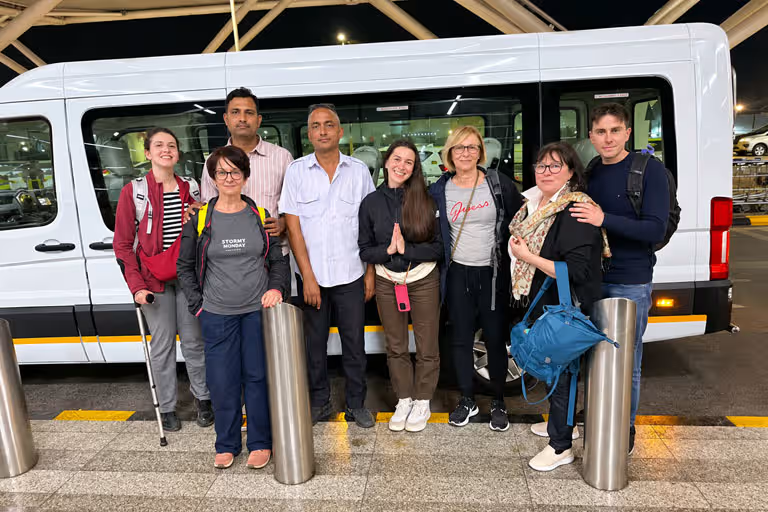
India Travel Guide
Updated: 9 November 2026
Why Foreign Tourists Hire a Private Driver in India
India can be an extraordinary country to explore, but planning a journey across a vast and varied destination takes thought. A private car with a driver gives international visitors a direct way to connect airports, hotels, heritage sites and smaller stops on one itinerary. It can be especially useful when a trip spans several cities, includes luggage or needs a flexible pace. It is not the right choice for every traveller or every journey: trains, flights, the Metro and group tours may work better on some routes. This guide explains what a private driver does, where the service helps, what it does not promise and how to compare a booking fairly.

Visitors often choose a driver because they want to spend less time coordinating each transfer and more time deciding how to use the day. One vehicle can carry the group and its bags between planned stops, while the itinerary can be adjusted by agreement. The practical value depends on the route, traffic, vehicle, service terms and the quality of communication with the operator. A written itinerary and quote matter more than a broad promise of convenience.
Why Do Foreign Tourists Hire a Private Driver in India?
There is no single reason that applies to every international visitor. Some people want a simpler airport pickup after a long flight. Others want to connect Delhi, Agra and Jaipur without arranging a new transfer at every stop. Families may value travelling together with their bags, while independent travellers may want to add a short break or change the day’s pace. A driver can help with the road journey, but the traveller still chooses the destinations, hotels, sightseeing time and activities.
One booking can connect several parts of a trip
When an itinerary includes a hotel pickup, a monument visit, a highway drive and a drop at another hotel, a private car can make the transport plan easier to follow. The group has one agreed vehicle and a contact for the booked service. This can reduce the number of separate transfers that travellers need to coordinate themselves. It does not remove every logistical step: hotel check-ins, entrance tickets, guide arrangements and attraction rules may still need separate planning.
For a first visit, a clear pickup and drop-off plan can make the day feel more manageable. The useful question is not whether a driver makes India effortless. It is whether a dedicated car solves a real transport problem on your particular route. If all you need is one direct ride across a city, a local taxi or Metro may be simpler. If you are moving several people and suitcases across a sequence of cities, the value of one coordinated road plan may be greater.
More control over the pace of a road trip
A private itinerary can usually be discussed around the traveller’s interests. You may prefer a longer visit at a museum, an early start for a monument, a meal break at a suitable time or a shorter day after arriving late. Changes must be agreed with the operator and may affect time, distance or price, but the conversation can happen within one booking instead of requiring a complete change to a large group schedule.
Flexibility should be understood realistically. A driver cannot always wait indefinitely, enter every restricted area, park at a monument gate or make an unplanned detour without changing the service. Traffic, weather, roadworks, local events and opening hours can also affect the plan. Ask the operator what can be changed on the day and how extra time or distance is charged.
Door-to-door travel with luggage
Moving luggage between stations, taxis, hotels and attractions can be tiring, particularly after a long international flight. A private car can collect your party at an agreed point and carry the luggage between the stated stops. This may be convenient for older visitors, families with young children, travellers with mobility needs or anyone carrying camera equipment. It is essential to confirm that the chosen vehicle has enough passenger seating and usable luggage space.
Do not rely only on a model name or maximum seat count. A car that seats six may have limited boot space when all seats are occupied. Tell the provider how many full-size suitcases, cabin bags, strollers or other items you will carry. Ask whether the operator will provide the exact vehicle class or a substitute, and what happens if the luggage does not fit safely.
One point of contact for transport
For a multi-day booking, having one company contact for the vehicle can make it easier to confirm pickup times, communicate a delayed flight, ask about a stop or report a change. The driver may also help with practical navigation, such as finding the hotel entrance or an agreed meeting point. The driver’s role is transport; this should not be confused with a licensed guide or an all-purpose trip manager unless those services are separately included.
Before travel, save the operator’s official phone number and written confirmation. Ask who to contact outside office hours, who will communicate a vehicle or driver change, and what details the company will send before pickup. If the driver changes, confirm the new name, vehicle registration and meeting instructions through the company’s verified contact channel.
A private trip can suit a small group
For a couple, family or a small group, one car can keep the party together. The group can share the transport arrangement and travel as a unit instead of splitting into separate vehicles. Whether this is good value depends on the number of travellers, route, vehicle class and alternatives. Compare the total cost, including local transfers at rail stations or airports, rather than judging only by a headline car rate.
For a solo traveller, a private car may cost more per person than a train seat. Some solo travellers still choose one for a direct route, privacy, a time-sensitive schedule or a remote destination. Others prefer a shared tour, rail journey or public transport. The best choice is a practical comparison, not an assumption that a private vehicle is always more comfortable or economical.
What Does a Private Driver Service Include?
“Private driver” can describe several different arrangements. It may be a single airport transfer, a local city booking for a set number of hours, an outstation drop, or a multi-day tour with the car travelling between destinations. Those services have different limits and should not be treated as interchangeable. Your written confirmation should state which service has been booked, the pickup and final drop, vehicle class, dates and what is included in the quoted amount.
Transport is not automatically a guided tour
A driver’s main responsibility is to drive the agreed route and coordinate the vehicle’s pickups and drops. Do not assume that a driver is also a certified monument guide, historian, interpreter, ticket agent or hotel representative. If you want guided visits, ask whether a licensed local guide can be arranged and whether that person’s service is included or charged separately. If you need a particular language, confirm it before paying.
At historic sites, a guide can explain architecture, history, religious context and local customs. A driver can help you reach the site and agree on a return meeting point. Keeping those roles clear helps set realistic expectations and lets you decide which parts of the trip need specialist support.
Private use has a defined service window
“Private” generally means the vehicle is reserved for your party for the stated trip or period. It does not automatically mean the car is available at every hour, stays with you overnight or can be used for unlimited local errands. A local package may have a maximum duration and distance. A tour package may specify the cities and daily schedule. Ask when the booking begins and ends, whether the car waits during visits, and where the driver rests between service periods.
For a multi-day route, clarify whether the driver and car remain with the group every day, whether the vehicle is available during free time, and whether there is a night halt or driver accommodation charge. If the car will not be needed on some days, ask whether a different arrangement would be more suitable.
Hotels, meals, tickets and activities
A car-and-driver quote does not necessarily include hotels, meals, monument tickets, local guides, boat rides, safari permits, airport parking or personal expenses. Some tour packages bundle selected services; others quote transport only. Ask for an inclusion and exclusion list rather than relying on the word “package.” Confirm whether prices are per person or for the entire vehicle and group.
For attractions with timed entry or restricted access, check the official booking channel and rules for your travel date. Ask the operator where the car can legally stop and whether a shuttle or walk is required. A car booking does not guarantee priority entry or permission to drive into protected areas.
When Is Hiring a Driver Especially Useful?
Arriving at an unfamiliar airport
A pre-arranged transfer may be reassuring if you arrive after a long flight, have several bags or need to reach a hotel beyond the airport area. Confirm the terminal, pickup point, driver contact, included waiting period and process for flight delays. Ask whether the price includes airport parking and what additional waiting costs. If your flight is early or late, make sure the pickup time and contact availability are stated in writing.
Keep your hotel address offline and accessible, and confirm the city and neighbourhood. Several Indian cities have similar place names, and some hotel names are repeated. If you do not need a private transfer, compare official airport taxi, app-based cab and public transport options for your arrival time and luggage. Use designated pickup areas and verify the car and driver before getting in.
Travelling between several cities
A private car can be useful when a road itinerary connects more than one city, especially when you want to stop between destinations or travel directly from one hotel to another. The operator can quote the route and the group can travel with its bags. Ask for estimated driving time as a planning range, not a promise. Road time is affected by congestion, weather, rest breaks, road conditions and stops.
For long distances, consider breaking the journey with an overnight stay or using a train or flight for one leg. A car is not always the best tool for crossing a very large country. A mixed itinerary can use a flight or train between distant regions and a driver for local sightseeing or a connected road circuit.
Visiting multiple places in one day
When attractions are spread across a city or region, one car can link the stops and provide an agreed meeting point. This can be helpful when travellers want to visit a monument, market and hotel in one day or travel with children who need breaks. Plan fewer places than a map might suggest: traffic, queues, security checks, walking and meal breaks take time.
Check weekly closures and visiting rules for each attraction. Some religious sites have clothing or photography restrictions; some monuments have security procedures; some city areas restrict vehicle access. A realistic plan prioritizes the places you care about most and leaves room for an unhurried visit.
Travelling with family or older relatives
Families often need a different pace from solo travellers. Children may need regular food, water or restroom breaks, while older relatives may prefer shorter walks and a midday rest. A private car can reduce repeated transfers, but it does not make every monument accessible. Share mobility or health-related requirements with the operator and check site accessibility independently.
Ask about child seats, seat belts, step height, air-conditioning, luggage capacity and the distance between drop-off points and entrances. If one person cannot manage stairs or long walks, plan only sites that can accommodate them or arrange alternatives. Never assume a standard sedan is wheelchair accessible.
Reaching rural stays or places with limited connections
Some heritage hotels, nature stays and smaller towns have fewer direct public transport options than major cities. A driver may simplify the last leg, particularly when the arrival time does not match local transport. Confirm the exact property location, road access, mobile coverage, expected journey duration and return plan. For wildlife areas or protected zones, check official entry rules and whether local registered vehicles or guides are required.
Ask whether the driver can legally enter the area and whether the vehicle is permitted on local roads. A private car does not replace a park-authorized vehicle, boat, permit or local guide where those are required. Keep the operator informed if your hotel or activity changes after booking.
Indian Routes That Work Well by Private Car
Private car travel is most practical when the cities and stops form a coherent road route. For each itinerary, check actual road distances, available days, hotel locations and the activities you want to include. A route that looks compact on a map can involve slow city traffic or long intercity drives. These examples are starting points for planning, not fixed schedules or promises of travel time.
Delhi, Agra and Jaipur: the Golden Triangle
The Golden Triangle is a common first-trip circuit because it connects three major destinations with distinct heritage and city experiences. Delhi is often used as the arrival or departure point, Agra is known for the Taj Mahal and Mughal-era sites, and Jaipur introduces visitors to Rajasthan’s forts, palaces and markets. A car can link the cities and make it easier to travel with luggage between overnight stays.
How many days to allocate depends on your interests. A short circuit may prioritize a few major monuments, while a slower plan allows more time for museums, local neighbourhoods, meals and rest. Avoid attempting extensive sightseeing in Delhi, Agra and Jaipur while also making long transfers on the same days. Ask the operator to separate driving blocks from visits and identify which sites need their own guide or advance ticket.
For an itinerary idea, review the 5-day Golden Triangle Tour or the 4-day Golden Triangle Tour. Use the route as a planning reference and verify the current itinerary, included services, hotel arrangements and attraction timings before booking.
Golden Triangle with Rajasthan
Travellers with more time can extend the Golden Triangle into Rajasthan. A longer circuit might add Jodhpur, Udaipur, Pushkar, Bikaner or Jaisalmer depending on the season and the amount of road travel you are comfortable with. A private vehicle helps connect smaller stops and hotels, but a multi-city itinerary can mean several hours on the road on some days.
Do not try to include every famous city in a short trip. Choose a few destinations and allow time to experience them. Ask for a day-by-day plan with approximate road distance, driving time, overnight city and free time. Clarify driver accommodation, daily distance limits, inter-state taxes, tolls, parking and whether the same vehicle remains with you throughout.
For a route example, explore the Golden Triangle with Rajasthan tour or browse the Rajasthan tour packages. Confirm the exact cities and inclusions for the departure you are considering.
Delhi day trips and nearby destinations
Agra, Jaipur, Mathura, Vrindavan, Haridwar and Rishikesh are among the destinations travellers may consider from Delhi. A private car can be convenient for a day trip when the route, departure time and planned visit are realistic. For a distant destination, a same-day return can become tiring and may leave little time at the site. Consider staying overnight or taking a train for one leg.
Jaipur as a same-day excursion involves substantial road time in each direction. If your main goal is the city’s forts and museums, an overnight stay usually creates a more relaxed schedule. A one-day trip can suit a specific purpose or limited schedule, but ask for a realistic pickup and return plan rather than assuming every attraction fits.
North India heritage and pilgrimage journeys
A driver can connect a route through Delhi, Agra, Jaipur and selected religious or heritage sites, but not every destination is best reached by road alone. Mountain routes, seasonal weather, permits and local vehicle rules can change the plan. Ask the operator which legs are by car and whether a local transfer or registered vehicle is needed for the final approach.
For pilgrimage travel, confirm temple schedules, crowd conditions, access rules, footwear or clothing expectations and accommodation before departure. A private car provides transport to an allowed drop-off point; it does not guarantee access, queue priority or a guided visit inside a religious site.
South India, western India and longer cross-country journeys
India’s regions differ in climate, language, roads and local transport. A driver may be useful for a focused regional circuit such as a group of nearby destinations, a coastal itinerary or a hill-country route, depending on the area and local rules. For a journey spanning very distant regions, flying or rail travel between regions may save time, with a local driver booked after arrival.
Do not assume that one operator can serve every state, town or protected area. Ask which locations the company covers, whether its vehicle is authorized for the route, and whether any permits or local transfers are needed. Confirm if the same driver will travel across state borders or if a vehicle change is planned. Make any handover arrangements explicit.
How to decide whether a route fits a car
Write the route as a list of overnight cities and daytime stops. Add the planned pickup and drop points, expected luggage, and time you want to spend at each attraction. Then ask for the estimated kilometres and driving blocks. If the itinerary contains several consecutive long drives, remove a destination, add a rest day or use another mode for one leg.
The best route is not the one with the most pins on a map. It is the one that leaves enough time to arrive, rest, explore and depart without turning each day into a race. A thoughtful operator should be able to discuss trade-offs and point out when a proposed schedule is too tight.
Private Car Versus Trains, Flights, Buses and Group Tours
A private car is one option among several. The right choice depends on distance, budget, luggage, number of travellers, timetable and the kind of experience you want. Compare the door-to-door journey rather than only the travel time shown for a train or flight. Include reaching the station or airport, check-in, waiting, transfers after arrival and local transport at the destination.
| Option | Often works well for | Check before choosing |
|---|---|---|
| Private car with driver | Multi-stop road trips, groups with luggage, direct hotel-to-hotel journeys | Vehicle space, time and distance limits, full quote, road travel time |
| Train | Long intercity legs, travellers who prefer rail, fixed departure schedules | Ticket availability, station transfers, class, luggage and arrival station |
| Domestic flight | Long distances where saving road time matters | Airport travel, baggage rules, delays, transfer cost at both ends |
| Intercity bus | Budget-conscious routes with a suitable direct service | Departure point, luggage rules, comfort, arrival time and onward transport |
| Metro or city transit | Urban routes connected by frequent public transport | Station distance, crowd levels, accessibility, luggage and operating hours |
| App-based or local taxi | Individual city rides and short point-to-point transfers | Pickup rules, fare estimate, surge pricing, vehicle and driver details |
| Group tour or coach | Travellers who want a set itinerary and shared cost | Group size, departure time, stops, guide, included tickets and pace |
When the train may be a better fit
For a direct intercity journey, a train can be a good choice if the timetable and ticket availability suit your dates. It may be less tiring than a long drive, and travellers can move around more than in a car. However, the journey also involves reaching the correct station, finding the platform, handling luggage and arranging the final transfer. A private car may be more convenient if the party is large or the endpoints are far from stations.
Compare the total cost for everyone travelling, not only one ticket. Add transfers, luggage, meals, time and any hotel night needed because of the schedule. A train and a local driver can work well together: use rail for a long leg and a car for sightseeing or a smaller regional circuit.
When a flight may be preferable
India is geographically large. Flying can be the sensible option when the journey would otherwise take most of a day or longer by road. The flight itself is only one part of the trip: include travel to the airport, check-in, security, baggage collection, possible delays and transfers at the arrival city. If you have only a short holiday, a flight between distant regions can preserve time for the destination.
A private driver may still be useful for the airport transfer and local travel after landing. You do not need to choose one transport mode for the entire holiday. A mixed plan can combine rail or air between far-apart cities with private road travel where stops and flexibility matter.
When a group tour may suit you better
A group tour can reduce the amount of planning you do and may include a guide, hotels or tickets as part of one package. It can also provide a fixed schedule and shared transport cost. The trade-off is less control over departure times, stops and how long you spend at each site. Read the itinerary carefully and check the group size, included services, optional costs and cancellation terms.
A private car gives your party more control over its road itinerary but places more responsibility on you to decide what to visit and confirm the details. If you want expert commentary, add a qualified guide. If you want every part organized, ask whether a fully guided package is available and compare what is included.
A simple decision test
Ask yourself five questions: How many people are travelling? How many bags do you have? How many stops are planned? How much time do you have? Is a direct rail or air service available at a convenient time? If the answer points to a multi-stop route with several people and luggage, a car may be worth comparing. If it is one long point-to-point journey for one or two people, another mode may be more practical.
Choosing the Right Vehicle for an India Trip
Choose a vehicle based on the number of passengers and the luggage travelling at the same time. Do not select a car only because the advertised seat count matches your group. Every passenger needs a proper seat and working seat belt, and luggage must be secured without blocking the driver’s view or passenger exits. A long-distance journey also calls for enough legroom and a cabin layout everyone can tolerate.
Compact car or hatchback
A compact vehicle may work for one or two people with light luggage and short journeys. It can be easier to manoeuvre through dense urban areas and may cost less than a larger vehicle. For an airport transfer, a compact car can become cramped when carrying multiple large suitcases. Confirm the exact luggage capacity and whether the vehicle class is suitable for the planned highway distance.
Sedan
A sedan may suit a couple, solo traveller or small party with a moderate amount of luggage. It typically offers a separate boot, but the space differs by model. Ask whether the rear seat and boot will comfortably fit the group and bags. If your itinerary involves long drives, consider legroom, seat comfort and air-conditioning as well as the price.
MPV or SUV
An MPV or SUV may work for a family or small group that needs extra cabin room. These vehicle labels cover many sizes and seating layouts. A seven-seat model may have little luggage capacity with all rows in use, so ask where the suitcases will go. If a particular model is important to you, request it in writing or agree in advance on acceptable alternatives.
Large group vehicle
A minibus or Tempo Traveller may suit larger groups, but comfort and luggage capacity depend on the layout. Ask for the number of seats, luggage storage, air-conditioning, seat belts, pickup height and whether the quoted configuration is approved for the route. For a group that plans to split activities, two smaller vehicles may be more flexible than one large vehicle.
Accessibility and child seats
Explain accessibility needs before you confirm the booking. Ask about step height, door opening, the ability to store a mobility aid and the walking distance at planned stops. Ordinary private cars are not automatically wheelchair-accessible. For children, confirm whether an appropriate child seat can be supplied, how it is installed and whether there is an extra charge.
If the operator cannot verify the vehicle details or a specific accessibility requirement, do not rely on a vague assurance. Confirm a suitable arrangement or choose a provider that can clearly describe the car. The vehicle is central to the trip, so its capacity and access need to be settled before travel day.
Questions to ask about the actual car
- What vehicle category and model will be assigned?
- How many passengers and full-size bags can it carry comfortably?
- Are working seat belts available for every passenger?
- Is air-conditioning included and operational?
- Can the vehicle accommodate child seats or mobility aids?
- What happens if the scheduled vehicle becomes unavailable?
- Will the company send the registration and driver details before pickup?
How to Understand the Cost of a Private Driver in India
There is no single all-India price for hiring a private car and driver. The amount depends on the vehicle class, route, duration, distance, season, pickup location, waiting time, state permits and what the operator includes. A Delhi airport transfer, a local sightseeing package and a week-long tour are different services. An old web price or a rate quoted for a different city may not reflect what is available for your dates.
Request a current written quote for your exact itinerary. Compare the same vehicle category, dates, route and package limits across providers. A very low starting amount may exclude costs that another quote includes, while a higher price may cover a different vehicle or longer service window. Do not compare only the base figure.
Ask what the quote covers
Ask whether the amount includes fuel, tolls, parking, state taxes, driver allowance, driver accommodation, airport parking and waiting time. Find out whether meals, monuments, hotels, local guides, permits, water, child seats or other items are excluded. If a tour has hotels included, ask for the hotel names or category, number of nights, room arrangement and cancellation terms.
For a long itinerary, ask how the daily service limit is calculated. The quote may have a fixed distance per day, a total kilometre allowance, an itinerary-based price or a combination of time and distance. Clarify extra kilometres, overtime, late-night service, early pickup and detours. Ask whether the vehicle’s return to its base is included when your trip ends in another city.
Understand local and outstation pricing
A local booking may be sold as a set number of hours and kilometres. If either limit is exceeded, an extra charge may apply. Confirm when the clock starts and ends, whether the driver’s travel to the pickup counts, and whether waiting time is included. If you plan several visits, estimate the full route rather than assuming the car can wait without limit.
An outstation trip may be charged by day, kilometre, route or package. A “one-way drop” may still include the operator’s return-to-base cost. Ask whether the quote covers local sightseeing at the destination or only the transfer. For a multi-day booking, check whether driver lodging, night halt and daily rest are addressed.
Get a clear payment and cancellation policy
Confirm the booking deposit, balance due date, accepted payment methods, invoice details, cancellation deadline, refund method and charges for date or route changes. Keep the confirmation and payment receipt. Avoid sending money to an account that does not match the verified company or named booking contact without first confirming the arrangement through an official channel.
Ask what happens if a flight is delayed, the assigned vehicle is unavailable or severe weather interrupts the route. A transparent provider should explain the available options and any cost implications. The policy may vary by booking type, so read the terms for your actual trip rather than relying on a general statement.
Compare total trip value, not just cost per day
A private car may cost more than one train ticket, but the total comparison changes when there are several travellers, multiple station transfers or a sequence of stops. At the same time, the car may not be economical for a solo traveller on a long direct route. Make a simple comparison for your group: total transport cost, time, transfers, luggage handling, flexibility and comfort.
Do not assume a car booking is cheaper because it is shared by a family, or more expensive because the starting price looks higher than a ticket. Use the current quote and realistic alternatives. If the exact rate is not displayed publicly, ask the operator; do not rely on an old figure copied into an article.
Safety, Comfort and Communication on the Road
A private driver can make transport easier to coordinate, but no transport choice removes the need for ordinary travel precautions. Do not treat a private booking as a guarantee of safety, punctuality or vehicle condition. Use a company you can contact, verify the driver and car details, follow seat-belt rules and tell someone you trust about your route if that helps you feel prepared.
Verify the pickup
Before boarding, compare the vehicle registration and driver name with the details provided by the company. If anything does not match, pause and contact the operator through the number on your booking confirmation. Wait in a public, well-lit location while the discrepancy is resolved. At airports and stations, use the designated pickup area and follow local instructions.
Keep the driver’s contact and company dispatch number saved. Make sure your phone has a working data or calling option, and carry the hotel address offline. If you are travelling alone, you may share the car details and expected arrival time with a friend or family member. These steps are sensible for any unfamiliar transport arrangement.
Seat belts, rest and journey length
Use seat belts wherever fitted and ask for a vehicle with a working belt for each passenger. Do not agree to travel with more passengers than there are seats. For long road days, plan breaks for food, water and restrooms. Ask the operator about the driver’s working hours and rest periods; a realistic itinerary should not depend on unsafe fatigue or continuous driving.
If you feel unwell, need a break or want to change the plan, communicate clearly and early. A driver can stop at a suitable location when the route and road conditions permit. Do not ask for stopping on a highway shoulder or another unsafe place just for a photograph. Use designated rest areas where possible.
Night travel and remote routes
Some travellers prefer daytime intercity driving because it is easier to see the route and manage stops. Night service may be available, but confirm driver schedules, rest arrangements, route familiarity, additional charges and your own comfort before booking. Avoid building a long overnight drive into an itinerary without asking how driver rest will be handled.
For remote regions, confirm mobile coverage, road conditions, fuel stops, accommodation and whether local permissions or vehicles are required. Weather can affect mountain roads, desert travel and rural access. Check official updates for the destination and leave flexibility in your schedule when conditions may change.
Keep personal items and documents secure
Keep passports, cash, cards, medication and important electronics with you rather than in the luggage compartment during sightseeing. Use a small day bag that stays with you. At hotel and attraction stops, check the car before leaving and confirm where the vehicle will wait. Do not leave valuables visible inside a parked car.
Carry a copy of your passport details separately from the original, following your own country’s travel advice. Keep travel insurance information and emergency contacts accessible. These are general travel-planning practices and do not replace instructions from your embassy, insurer or local authorities.
Communication and language
Ask what language the driver can communicate in and what type of support the company offers. Some drivers may speak conversational English; this should not be assumed from the word “tourist service.” If detailed history or interpretation matters, arrange a qualified guide. Use written pickup times, addresses and itinerary notes to reduce confusion.
Consider saving key addresses in both English and the local script when available. A hotel card, map pin and offline map can help with pronunciation and spelling differences. If the group changes its plans, confirm the updated stop and cost with the company rather than relying only on a quick verbal exchange.
How to Book a Private Driver in India
Step 1: Write down the trip you actually want
List your dates, arrival airport or station, overnight cities, sightseeing stops, final drop and number of passengers. Include approximate luggage, children, mobility requirements, preferred vehicle class and any must-see places. If you have not finalized every hotel, share the neighbourhood or likely area and update the operator once your accommodation is confirmed.
Be specific about whether the car is needed for every day or only for transfers and sightseeing days. A long tour with several free days may not need continuous vehicle availability. Ask for separate pricing if you want to compare a full-time car with selected transfer days.
Step 2: Request a route-based written quote
Send the same itinerary to each provider you are comparing. Request the total price, vehicle class, service hours, included distance, driver arrangements, tolls, taxes, parking, airport charges, night halt, extra use and cancellation rules. Ask the company to label any item that is optional or not included.
If you receive a broad estimate before the route is finalized, treat it as provisional. Ask the provider to revise the quote when your dates, hotels or stops change. Save the final itinerary and terms together so you and the company are working from the same plan.
Step 3: Check the provider and communication channel
Look for a business identity and a reliable way to reach the company. Review recent customer feedback across more than one source where possible, paying attention to details about the service rather than star ratings alone. Check whether the company responds clearly to questions about vehicle category, inclusions and changes. No review profile can guarantee a future experience, but the way a provider explains its terms can help you judge whether the booking suits you.
Confirm the official booking contact, payment recipient and invoice process. Ask when you will receive the driver’s name, phone number and vehicle registration. Make sure there is a plan for a vehicle substitution and that the replacement will be confirmed before pickup.
Step 4: Confirm before the trip
Reconfirm the pickup date, local time, terminal or station, meeting point, destination address, passenger count, luggage and contact numbers. For an airport arrival, share the flight number and ask how delays are handled. For a hotel pickup, specify the entrance or lobby and give a reachable phone number.
Keep the final confirmation on your phone and make an offline copy if you expect limited connectivity. Save the company number and driver details. If the schedule or flight changes, tell the operator as soon as practical and ask them to confirm any revised cost.
Step 5: Review the service on the day
At pickup, verify that the assigned car and driver match the confirmed details. Confirm the main route and planned stops before setting off. If you need a change, discuss it with the driver or dispatch contact and confirm whether it affects the fare or timing. Keep a receipt or written record of any additional payment.
At the end of the service, check that all passengers and belongings have left the car. If you have feedback or a concern, contact the company with the booking reference and clear details. This makes it easier to resolve an issue and gives future travellers more useful information than a vague review.
Sample Itinerary Structures for International Visitors
The examples below show how a private car can fit into a broader trip. They are planning frameworks, not fixed promises of road time or attraction availability. Adapt them to the season, arrival time, weekly closures, physical pace and interests of the group. Keep some unscheduled time for rest, meals and unexpected delays.
Four days: a focused Golden Triangle visit
Day 1: Arrive in Delhi, transfer to your hotel and rest. If your flight lands early and you feel rested, choose one nearby activity rather than a full sightseeing schedule.
Day 2: Explore selected Delhi sights with a planned pickup and drop. Choose a manageable number of sites and include time for security, walking and meals.
Day 3: Travel to Agra, check in and visit a small number of sites according to opening hours and ticket availability. Consider whether you want the Taj Mahal at sunrise or during another available visit window.
Day 4: Continue to Jaipur or return to Delhi depending on your onward flight and itinerary. Do not place a long intercity drive too close to a flight without a substantial buffer.
This schedule is compact. It may suit visitors with limited leave, but it leaves little margin for delays or deeper exploration. If you want slower mornings, additional museums or time to wander, add a night.
Five to seven days: a more balanced first trip
A five-day plan can provide additional time for Delhi, Agra and Jaipur, including separate city visits and overnight stays. A seven-day plan can create a gentler pace, add a rest afternoon or include one nearby destination. Use the extra time to explore fewer places more meaningfully rather than automatically adding long detours.
For ideas, see the five-day Golden Triangle route. Confirm whether the current package includes accommodation, local guides, tickets and transfers, as these are not automatically included in a private car booking.
Ten to fourteen days: add selected Rajasthan destinations
With more time, visitors can extend the Golden Triangle into Rajasthan, choosing cities such as Jodhpur and Udaipur or another route that matches their interests. The itinerary should account for intercity driving, hotel check-in, sightseeing and rest. Avoid scheduling a major fort visit and a long transfer every day without an easier day between them.
The Golden Triangle with Rajasthan route and the Rajasthan tour collection can help you compare possible city combinations. Ask for the detailed current itinerary and written inclusions before deciding.
A mixed transport itinerary
Some journeys work best as a mix: arrive by air, use a private car for a regional circuit, take a train for a long intercity leg and use a local driver after arrival. This can reduce repeated long drives while preserving door-to-door travel where it matters. Ask whether one company can handle the car legs you need or whether separate local providers are more practical.
When combining modes, allow enough time between a road transfer and a flight or train departure. Road traffic and station procedures can vary. Keep the pickup address, train or flight details and local contact information in one place, and let each provider know if your schedule changes.

Does a Private Driver Suit Every Foreign Traveller?
Solo travellers
A private car can provide a direct route and control over pickup timing, but the full vehicle cost is borne by one person. Compare it with reserved trains, flights, buses, shared tours and app-based transfers. If you choose a private driver, use a provider with a clear booking record, verify the pickup and share your itinerary with someone you trust. Consider daytime driving for unfamiliar or remote routes if it fits your schedule.
Solo travel does not automatically require a driver. Many visitors are comfortable using public transport in cities and hiring a car for only one or two legs. A blended approach can offer independence while limiting the cost of a full-time vehicle.
Couples and small groups
For couples or friends travelling together, the car cost can be shared and luggage can travel in one vehicle. Agree on the pace, stops and budget before booking. Confirm that everyone’s luggage fits and that each passenger has a seat belt. If people have different interests, consider whether a private vehicle makes it easier to split sightseeing and reunite, or whether a group tour would be simpler.
Families with children
Families may value door-to-door transfers and fewer luggage changes. Ask for child seats and confirm availability; bring or arrange an approved seat if a suitable one cannot be confirmed. Plan frequent stops, carry snacks and water, and check whether hotel rooms and attractions are child-friendly. A private car can help with the route but cannot remove walking, queues or site restrictions.
Older travellers or visitors with mobility needs
A driver may reduce the number of transfers, but it does not ensure that every site is accessible. Ask about the vehicle’s step height, parking location, distance to entrances and whether a mobility aid can be stored. Contact monuments, hotels and activity providers directly about ramps, lifts, seating and accessible facilities. If a long walking route is difficult, replace some sites with more accessible alternatives.
Business visitors
Business visitors may need a reliable way to move between hotels, offices, event venues and airports. Give the operator the meeting schedule, addresses, passenger count and any access rules. Build time between appointments and clarify whether the car waits during meetings, whether waiting time is billed and how overtime is handled. Ask for invoice requirements before the booking.
Photographers and travellers with special interests
Photographers may want to stop at a viewpoint or spend longer at a site. Confirm that stopping is allowed, that the area is safe and that the driver can wait within the booked service period. For wildlife, religious, culinary or craft experiences, arrange the specialist activity with a qualified local operator where needed. A driver can connect the locations but may not have the expertise or permissions to conduct the activity.
Respectful and Responsible Road Travel
India is home to many languages, religions, communities and local customs. A private car makes it easier to move between places, but thoughtful travel also means respecting people and the places you visit. Follow posted rules at religious sites and monuments, ask before photographing individuals, and do not treat residential streets or places of worship as photo backdrops without regard for the people who use them.
Use designated parking and legal pickup points. Do not ask a driver to stop in a restricted lane, on a highway shoulder or where it blocks pedestrians. Avoid littering, excessive idling and unnecessary detours. Choose local guides and businesses where appropriate, and pay agreed charges through the confirmed booking process. If a site has visitor guidelines, follow them even if an informal suggestion says otherwise.
Road travel has an environmental footprint. If you are travelling alone over a long distance, compare a train or shared journey where suitable. If you hire a car, combine nearby stops, select a vehicle size that fits your party and avoid adding unnecessary backtracking. Responsible choices can improve the trip for visitors and local communities.
Respect also includes realistic expectations of the driver. Confirm working hours, provide meal and rest breaks according to the service terms, communicate schedule changes promptly and avoid asking for unsafe driving. A clear, considerate plan helps the whole journey run more smoothly.
Pre-Booking Checklist for Foreign Visitors
Before you pay a deposit, make sure you can answer these questions. Save the written confirmation, route and contact details somewhere accessible offline.
- Are the travel dates, pickup time, pickup point and final drop written correctly?
- Is the assigned vehicle category suitable for every passenger and all luggage?
- Does every passenger have a proper seat belt, and are child seats confirmed if needed?
- Are the daily hours, distance limits, waiting time and extra-use charges clear?
- Does the quote list fuel, tolls, parking, taxes, driver allowance and accommodation?
- Are hotels, meals, attraction tickets, permits and local guides included or excluded?
- Is the driver’s role clear, including whether a separate guide is needed?
- Are payment, cancellation, refund, route change and delay policies in writing?
- Do you have the company’s verified contact, driver details and vehicle registration process?
- Have you checked current attraction schedules, visa rules and destination advisories?
- Is there a realistic buffer before a flight, train or other time-sensitive connection?
- Does the itinerary include enough rest, meals and time at the places you care about?
If one of these points is unclear, ask before confirming. A careful question before the trip is easier to resolve than an unexpected charge or a mismatch on pickup day.
Official Resources for Planning an India Visit
Travel rules and local access instructions can change. For current information, check official sources close to your departure and again before visiting a specific destination.
- Indian e-Visa portal — official application information and eligibility for visitors who may qualify for an e-Visa. Read the conditions that apply to your nationality and travel purpose.
- Ministry of Tourism, Government of India — tourism information and the current tourist helpline details published by the ministry.
- Incredible India emergency information — official visitor support and emergency guidance.
- Travel for LiFE — responsible travel guidance from Incredible India.
- Delhi Transport Department taxi information — official Delhi taxi information; regulated taxi details do not automatically equal a private tour-car quote.
Visa eligibility, permit rules, emergency contacts, public transport, monument access and fares may differ by nationality, state and date. This article offers general planning guidance; it is not a substitute for official instructions, your embassy’s travel advice or your provider’s written terms.
Frequently Asked Questions
Why do foreign tourists hire a private driver in India?
Visitors may choose a private driver for door-to-door transport, multi-city routes, several sightseeing stops, luggage handling or a schedule that does not match public transport. It can make a road itinerary easier to coordinate. Whether it is worthwhile depends on route, group size, budget, time and comfort preferences.
Is hiring a private driver in India worth the cost?
It can be worthwhile for a family or group travelling between several stops, especially when the total car cost is shared. A solo traveller on one long point-to-point journey may find a train or bus more economical. Compare the complete trip cost, including station transfers, luggage, time and local transport, using a current written quote.
Is a private driver better than taking the train?
Neither option is best for every journey. A car can provide direct hotel-to-hotel travel and flexible stops. A train can be efficient for long distances and may cost less for one or two travellers. Consider the route, timetable, ticket availability, luggage, transfers and the amount of driving involved.
Does the driver act as a tour guide?
Not automatically. A driver’s role is usually transport and route coordination. Ask whether a qualified local guide is included or can be arranged separately. Confirm language, guide fees and which attractions the guide will cover.
Will the driver speak English?
Language ability varies between drivers and operators. Ask the company to confirm the level of English or another language you need. For detailed historical explanations or translation, arrange a qualified guide or interpreter rather than relying on an assumption.
Are private drivers in India safe for foreign tourists?
No transport arrangement can guarantee safety. Choose a provider you can contact, verify the driver and vehicle details, use seat belts, follow pickup instructions and keep a record of the booking. If something does not match your confirmation, pause and contact the company before boarding.
Can a foreign woman travel alone with a private driver?
Many solo travellers use private transport, but personal comfort and risk tolerance differ. Book through a verifiable company, confirm the driver and vehicle, share your route with someone you trust if you wish, and keep the company contact available. You can also compare trains, group tours or app-based rides for particular legs.
Can I change the itinerary after booking?
Often a route can be adjusted by agreement, but extra distance, time, tolls or overnight stays may change the price. Ask the operator about changes before travel and confirm the revised plan and amount in writing. Do not assume that unlimited detours are included.
Does the car stay with us overnight?
That depends on the service. Some multi-day tours keep the same vehicle with the group; other bookings cover only a transfer or a defined daily period. Ask whether the car and driver remain available after drop-off, who arranges driver accommodation and whether a night-halt fee applies.
Are fuel, tolls and parking included?
They may be included or charged separately. The written quote should list fuel, tolls, parking, state taxes, airport charges, driver allowance and any other likely costs. If it does not, ask the provider to clarify before paying.
Are hotels, meals and monument tickets included?
Not unless the quote or tour package specifically says so. Request separate inclusion and exclusion lists for accommodation, meals, attraction tickets, local guides and activities. Check ticket rules and current opening times through official sources.
What size vehicle should I book?
Choose based on all passengers and all luggage travelling together. Share the number and size of suitcases, children, strollers or mobility aids. Ask for the actual category and a written confirmation that the seating and luggage capacity fit your group.
Can a private driver take us to every attraction?
No. Some sites have vehicle restrictions, security perimeters, parking areas, local shuttles or permit rules. The car may need to drop you at an allowed point while you walk or use another authorized vehicle. Check access instructions for each attraction.
Should I book a driver before arriving in India?
For a multi-day itinerary, a busy travel period, a large group or a particular vehicle requirement, arranging transport ahead can give you time to compare terms. For a simple city ride, booking locally may be more flexible. In either case, use a clear price and cancellation policy and verify the booking channel.
How much should I tip the driver?
Tipping practices vary and a tip should not be assumed to be part of the fare unless stated. Ask whether any service charge is already included. If you choose to tip, base it on the service and your own preference; there is no need to promise a particular amount in advance.
What should I do if my flight is delayed?
Tell the operator as soon as you can and refer to the written delay or waiting policy. Confirm whether the driver tracks the flight, how long waiting is included and what happens if the delay is substantial. Keep the company’s dispatch contact available.
Can I combine a private driver with trains or flights?
Yes. Many itineraries use a driver for selected regional road trips and a train or flight for longer distances. Share the full schedule with each provider and leave a realistic buffer before connections. A mixed itinerary can reduce long drives while preserving direct transport for stops that need it.
Plan Your India Journey Around the Way You Like to Travel
Foreign visitors hire private drivers in India for practical reasons: direct transfers, connected road routes, group travel, luggage and the freedom to shape a day around their interests. Those benefits matter most when the itinerary genuinely needs a car. For other journeys, a train, flight, Metro or group tour may be a better fit. Compare the complete cost and schedule, then confirm the vehicle, service limits, inclusions, driver arrangements and cancellation terms in writing.
For a first-trip route, explore the 5-day Golden Triangle Tour, the 4-day Golden Triangle Tour or the Golden Triangle with Rajasthan. You can also browse Rajasthan tour packages and share your dates, route, group size and preferences through the contact page to discuss a suitable plan.
PLAN YOUR INDIA JOURNEY
Discuss a Private India Route
Send your travel dates, arrival city, destinations, passenger count and luggage details to request a route-based plan and written quote.

Ranjit Singh
India Travel Expert
Ranjit Singh helps international travellers plan private car tours and customised India itineraries with practical local guidance.
Transport terms, fares, road access and attraction schedules vary by operator, route and travel date. Confirm current details with the provider and official sources before booking. This guide provides general trip-planning information and does not guarantee a particular service, journey time or outcome.