RAJASTHAN TRAVEL GUIDE · UPDATED OCTOBER 2026
20 Hidden & Offbeat Places in Rajasthan
Rajasthan, the “Land of the Kings,” is one of India’s most visited states. Government figures report 25.25 crore domestic tourist visits in 2025, alongside 19.45 lakh foreign tourist visits. These are visits rather than counts of unique travellers, and the state’s attractions extend far beyond its best-known cities—Jaipur, Udaipur, Jodhpur, Jaisalmer and Pushkar.
Step beyond those famous tourist hubs, and Rajasthan transforms completely. The noise fades. The streets empty. What remains is something rarer and more precious: Rajasthan at its most honest, most beautiful, and most unhurried.
This comprehensive guide reveals 20 hidden places in Rajasthan that most travelers never discover. For broader route ideas, browse the Rajasthan Tours collection. From painted havelis in Shekhawati to leopard-spotted hills in Jawai, from ancient stepwells in Bundi to abandoned villages near Jaisalmer, these destinations offer authentic cultural experiences, peaceful landscapes, wildlife adventures, and untouched desert life away from crowded tourist routes.
Whether you’re a couple planning a romantic getaway, a family seeking meaningful experiences, a solo traveler craving adventure, or a photographer hunting for unique shots, these offbeat destinations will show you the real Rajasthan—the one that exists beyond the palace circuit and tourist traps.
Why Explore Offbeat Rajasthan Locations?
The Rise of Slow Travel
Many travelers now choose slower journeys over rushed, checklist-style tourism, slow travel: spending more time in fewer places, engaging deeply with local culture, and seeking meaningful experiences over a checklist of photo stops.
Rajasthan’s lesser-known destinations offer something its famous cities often can’t: space to actually experience the place. No queues at the gate, no tour groups blocking the view, no rush to move on. You walk through frescoed lanes at your own pace, sit by a lake with no one else around, and share a conversation with a local guide who has the time to tell you the full story.
What Makes These Places Worth the Detour?
These destinations aren’t underdeveloped or lacking in amenities. Many have beautifully restored heritage stays, well-preserved monuments, and rich cultural traditions. They simply haven’t been discovered by mass tourism yet. That’s precisely what makes them worth visiting now—before everyone else catches on.
The 20 places in this guide span the full range of Rajasthan’s geography and character:
- Painted merchant towns in Shekhawati
- Silent desert dunes beyond Jaisalmer
- Marble temples in the Aravalli hills
- Wildlife sanctuaries with leopards and migratory birds
- Ancient stepwells and forgotten forts
- Green river valleys in the far south
- Tribal villages preserving centuries-old traditions
Part 1: Shekhawati Region – Rajasthan’s Open-Air Art Gallery
Mandawa – The Painted Heritage Town
Location: Shekhawati region, 170 km from Jaipur
Best Time to Visit: October to March
Ideal Stay: 1-2 days
Nearest Airport: Jaipur (170 km)
Nearest Railway Station: Churu (130 km) or Jaipur
Why Mandawa Is Special
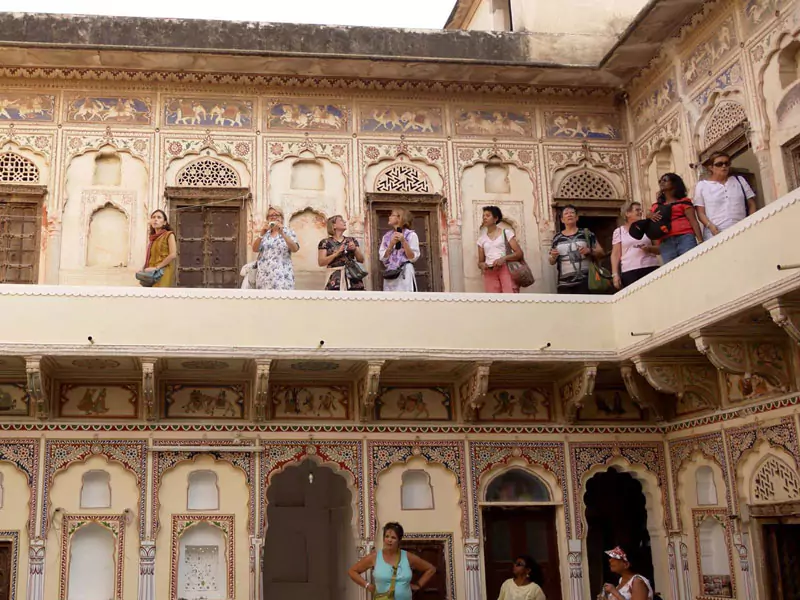
Mandawa is the most accessible entry point to Shekhawati, a cluster of small towns in north-east Rajasthan where wealthy Marwari merchants once built grand havelis (mansions) and covered them, inside and out, in vivid frescoes.
The result is a region that functions as an open-air art gallery, stretching across dozens of towns. The paintings depict everything from Hindu mythology and royal portraits to steam trains and British officers, reflecting centuries of changing influences. Local artisans called chiteras created these frescoes using natural pigments: indigo, saffron, red stone, and limestone. Many of those colours remain vibrant today.
Best Things to Do in Mandawa
- Explore painted havelis: Visit Murmuria Haveli, Goenka Double Haveli, and Bansidhar Chokhani Haveli, each showcasing intricate frescoes and mirror work
- Walk the heritage lanes: Early morning walks through the old town reveal the finest artwork in soft, golden light
- Visit Mandawa Fort: Now a heritage hotel, the fort offers panoramic views and royal architecture from the 18th century
- Shop for local handicrafts: The bazaars sell traditional textiles, block prints, and Rajasthani souvenirs
- Photography: Every corner offers photo-worthy scenes—from colorful doorways to rooftop views
Where to Stay
Mandawa offers excellent heritage accommodation options. Vivaana Culture Hotel sits in a restored 150-year-old twin haveli, with original frescoes, carved courtyards, and curated cultural experiences.
Travel Tips
- Visit early morning or late afternoon for the best light and comfortable walking temperatures
- Hire a local guide to understand the stories behind the frescoes
- Carry cash—ATMs are limited in smaller Shekhawati towns
- Combine with nearby Nawalgarh, Mahansar, and Alsisar for a complete Shekhawati experience
Nawalgarh – The Fresco Capital of Shekhawati
Location: Shekhawati region, 140 km from Jaipur
Best Time to Visit: October to March
Ideal Stay: 1-2 days
Nearest Airport: Jaipur (140 km)
Nearest Railway Station: Sri Madhopur (20 km) or Jaipur
Why Nawalgarh Is Special
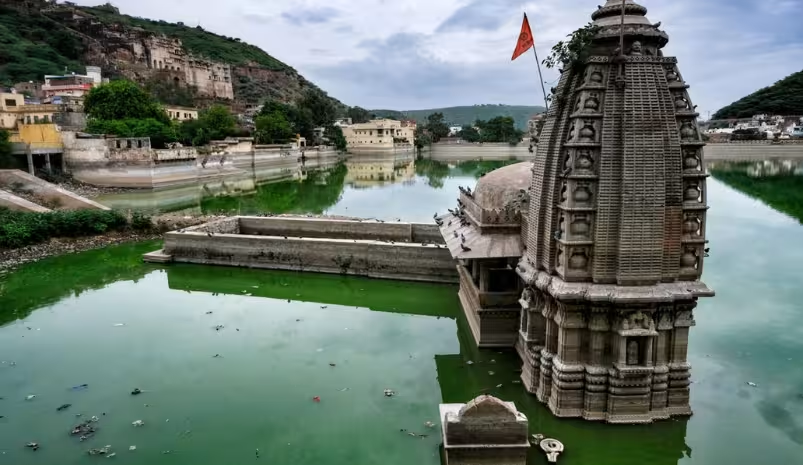
While Mandawa gets more attention, many heritage travelers consider Nawalgarh to have the finest frescoes in the entire Shekhawati region.
The town feels more lived-in and authentic than Mandawa, with local families still occupying some of the older properties around the bazaar. It’s less commercialized, which means you can explore at your own pace without constant vendor attention.
Best Things to Do in Nawalgarh
- Podar Haveli Museum: This beautifully restored mansion houses an exceptional collection of frescoes, antique furniture, and vintage photographs. The guided tour explains the history and symbolism behind the artwork.
- Anandilal Poddar Haveli: Another stunning example of Shekhawati architecture with intricate mirror work and paintings
- Nawalgarh Fort: Explore the ruins of this 18th-century fort that once protected the town
- Bazaar walks: The local markets sell traditional Rajasthani textiles, jewelry, and handicrafts at reasonable prices
- Photography: The blue-painted lanes and ornate doorways make for stunning photos
Where to Stay
Vivaana Museum Hotel sits in the Jaipuria Haveli at the heart of Nawalgarh, giving guests direct access to its painted streets and haveli museums. The property itself is a work of art, with restored frescoes and period furnishings.
Travel Tips
- Nawalgarh is perfect for a quiet, unhurried exploration
- The town is small enough to cover on foot
- Combine with Mandawa (30 km away) for a comprehensive Shekhawati experience
- Visit during weekdays to avoid weekend crowds from Jaipur and Delhi
Mahansar – The Hidden Gem with Gold-Leaf Frescoes
Location: Shekhawati region, 180 km from Jaipur
Best Time to Visit: October to March
Ideal Stay: Half day to 1 day
Nearest Airport: Jaipur (180 km)
Nearest Railway Station: Churu (60 km) or Jaipur
Why Mahansar Is Special
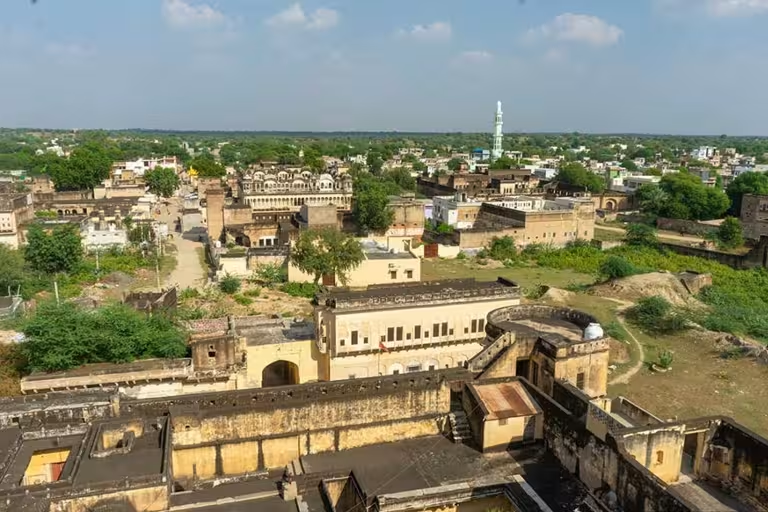
Mahansar is a smaller village within the Shekhawati circuit that attracts far fewer visitors than Mandawa or Nawalgarh.
It’s known specifically for its Sone Chandi ki Dukan (the shop of gold and silver), a haveli whose interiors are painted with rare gold-leaf frescoes on mythological and royal themes. This style of painting is exceptionally rare even within the Shekhawati region.
Best Things to Do in Mahansar
- Sone Chandi ki Dukan: The highlight of Mahansar, this haveli features gold-leaf frescoes depicting scenes from the Ramayana, Krishna’s life, and royal processions. The craftsmanship is extraordinary.
- Guman Singh ki Haveli: Another beautifully painted mansion with vibrant colors and detailed artwork
- Village walks: Explore the quiet lanes and interact with friendly locals
- Photography: The intimate scale of Mahansar means you can photograph without crowds
Travel Tips
- Mahansar sees very few visitors, which makes the experience feel almost private
- The Sone Chandi ki Dukan may require advance arrangement to visit—ask your hotel or guide
- Combine with Alsisar (25 km) and Nawalgarh for a full Shekhawati day trip
- Carry cash as there are no ATMs in the village
Alsisar – The Quiet Heritage Village
Location: Shekhawati region, 200 km from Jaipur
Best Time to Visit: October to March
Ideal Stay: 1 day
Nearest Airport: Jaipur (200 km)
Nearest Railway Station: Churu (50 km) or Jaipur
Why Alsisar Is Special
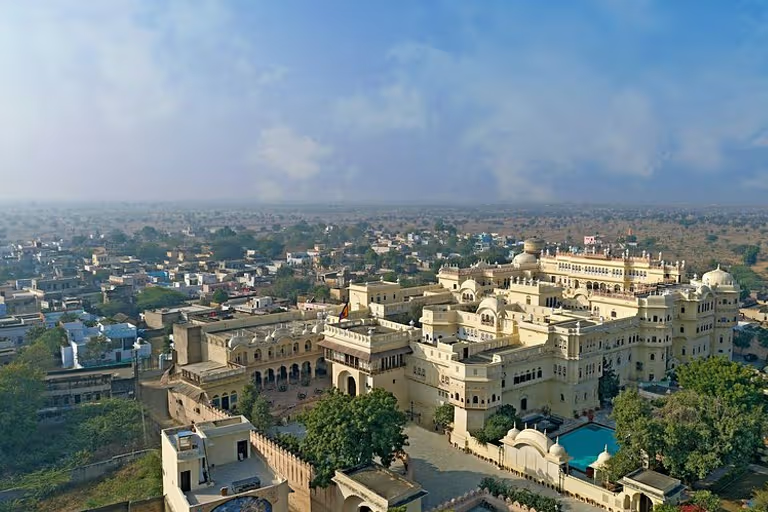
Alsisar is better known for its boutique heritage stays and its peaceful, unhurried atmosphere.
It’s ideal for travelers who want the Shekhawati experience without any crowds at all. The village has beautifully restored havelis and a slower pace than Mandawa or Nawalgarh.
Best Things to Do in Alsisar
- Alsisar Mahal: This heritage hotel was once a royal residence and now offers guests a chance to experience Rajput hospitality
- Haveli exploration: Several painted havelis dot the village, each with unique frescoes
- Village life: Walk through the bazaar, visit local shops, and experience rural Rajasthan
- Photography: The quiet streets and traditional architecture offer excellent photo opportunities
Travel Tips
- Alsisar is perfect for travelers seeking peace and authenticity
- The heritage hotel makes a great base for exploring Shekhawati
- Combine with Mahansar and Nawalgarh for a comprehensive Shekhawati circuit
- Visit during weekdays for the quietest experience
Part 2: Beyond Jaisalmer – Desert Secrets
Khuri – The Real Desert Village Experience
Location: 40 km from Jaisalmer, Thar Desert
Best Time to Visit: October to March
Ideal Stay: 1-2 nights
Nearest Airport: Jodhpur (300 km) or Jaisalmer (40 km)
Nearest Railway Station: Jaisalmer (40 km)
Why Khuri Is Special
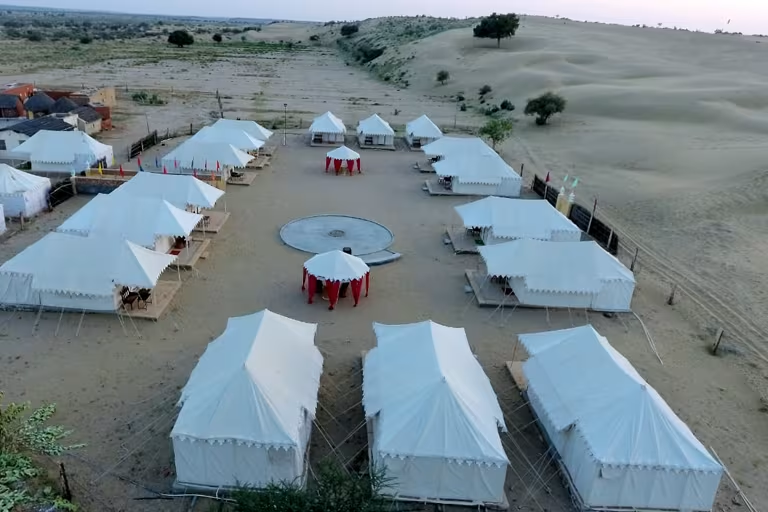
Khuri is a small village nestled among the dunes of the Thar Desert, around 40 km from Jaisalmer.
Unlike the heavily commercialized Sam Sand Dunes near Jaisalmer, Khuri offers a genuinely unhurried desert experience. Camel safaris here feel authentic, and in the evenings, traditional folk performances take place under open skies, with no stage lighting and no ticketed crowds.
This is desert travel as it’s meant to feel—peaceful, immersive, and deeply connected to the landscape.
Best Things to Do in Khuri
- Desert camping: Stay in traditional tents or under the stars on mattresses laid out on the sand
- Camel safaris: Ride through the dunes at sunrise or sunset with local guides
- Folk performances: Enjoy authentic Rajasthani music and dance around a bonfire
- Desert walks: Explore the dunes on foot and watch the changing light across the sand
- Stargazing: On clear nights, the desert sky offers spectacular views of stars and constellations
Where to Stay
Several family-run camps offer basic but comfortable accommodation. These are far more authentic than the luxury resorts near Sam.
Travel Tips
- Khuri is best visited during winter months (October to March)
- Carry warm clothes—desert nights can be very cold
- Book your camp in advance during peak season (December-January)
- Combine with Jaisalmer city exploration and Kuldhara for a complete desert experience; compare the Jaisalmer Sightseeing Tour and the Golden Sands of Rajasthan Tour
Kuldhara – The Haunted Abandoned Village
Location: about 17 km west of Jaisalmer
Best Time to Visit: October to March
Ideal Stay: Half day (visit during day or on haunted night tour)
Nearest Airport: Jaisalmer (about 17 km)
Nearest Railway Station: Jaisalmer (about 17 km)
Why Kuldhara Is Special
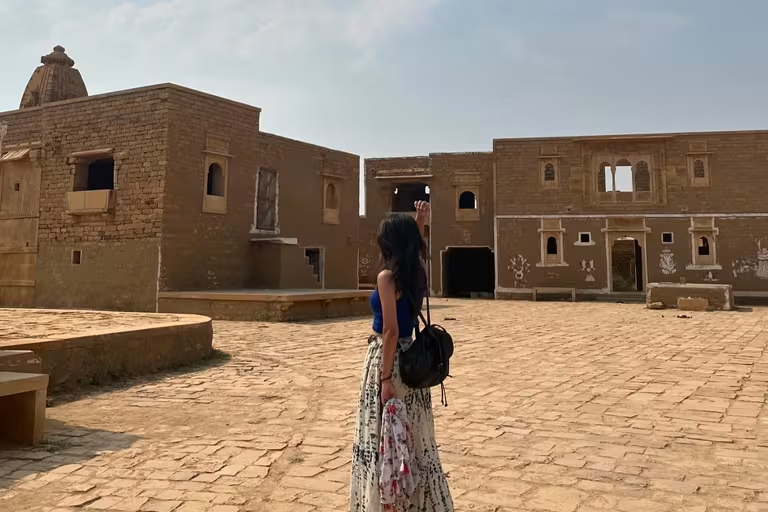
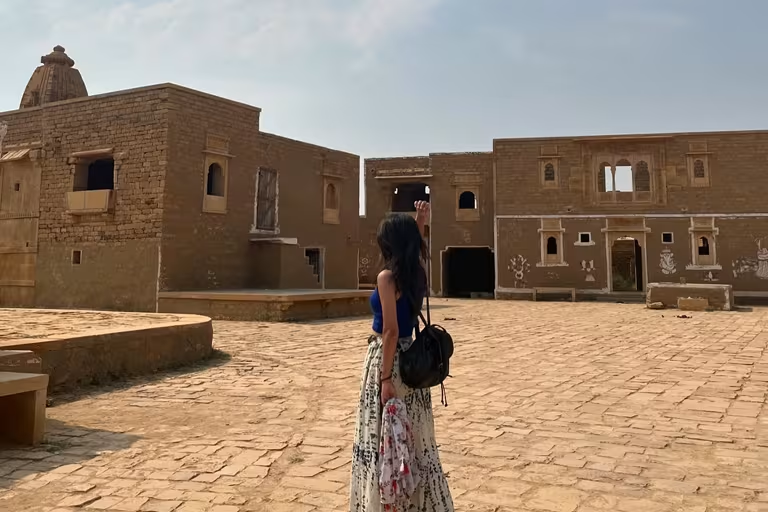
Kuldhara is one of Rajasthan’s most mysterious and haunting destinations.
Legend has it that 84 villages of the Paliwal community around Jaisalmer were abandoned overnight, over 500 years ago. Kuldhara is the most popular among them, its magnificent ruins strewn around the house of the protagonist in the legend of its haunting.
The village was established in the 13th century by Paliwal Brahmins but was abandoned in the 18th century under mysterious circumstances. Local legend says the community left overnight after the local ruler’s minister made advances toward the village chief’s daughter. Before leaving, they cursed the village so that no one could ever settle there again.
Best Things to Do in Kuldhara
- Explore the ruins: Walk through the abandoned stone lanes, past collapsed doorways and empty courtyards
- Learn the history: Hire a local guide to hear the full story of the village’s abandonment
- Photography: The decaying architecture and eerie atmosphere make for dramatic photos
- Haunted night tours: Suryagarh hotel offers a “Haunted Trail” experience that includes visiting Kuldhara after dark for a bone-chilling experience
Travel Tips
- Visit during daylight for a less spooky but still atmospheric experience
- For the full haunted experience, book the night tour through Suryagarh
- Combine with Jaisalmer Fort and Khuri for a complete desert experience
- Respect the site—don’t climb on fragile structures or remove artifacts
Barmer – Raw Desert Culture & Folk Traditions
Location: Western Rajasthan, near India-Pakistan border
Best Time to Visit: November to February
Ideal Stay: 2 days
Nearest Airport: Jodhpur (200 km)
Nearest Railway Station: Barmer (in town)
Why Barmer Is Special
Barmer is one of Rajasthan’s most culturally rich yet least explored desert destinations.
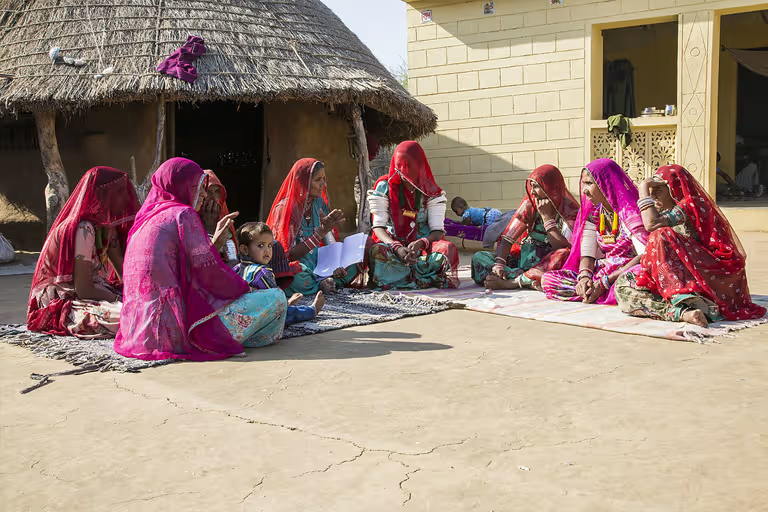
Located near the India-Pakistan border in western Rajasthan, Barmer showcases the raw and authentic spirit of desert life far away from commercial tourism. The town is famous for its colorful traditions, folk music, handcrafted textiles, and peaceful desert villages that preserve centuries-old Rajasthani culture.
Unlike Rajasthan’s popular tourist cities, Barmer offers travelers an opportunity to experience untouched rural landscapes, local craftsmanship, and traditional desert hospitality in its purest form.
Best Things to Do in Barmer
- Explore traditional desert villages: Interact with local communities and learn about their way of life
- Attend folk music performances: Barmer is renowned for its traditional Manganiyar and Langa musicians
- Shop for handicrafts: Buy handcrafted embroidery, textiles, woodwork, and ajrakh prints directly from artisans
- Visit Kiradu Temples: These 11th-century temples are known as the “Khajuraho of Rajasthan” for their intricate carvings
- Experience camel rides: Take a camel safari through the desert landscape
- Watch desert sunsets: The golden dunes around Barmer offer spectacular sunset views
Local Food Experiences
Barmer offers bold and flavorful traditional desert cuisine:
- Bajra roti with garlic chutney
- Spicy Rajasthani curries
- Ker Sangri (desert beans and berries)
- Gatte Ki Sabzi
- Traditional sweets and village-style meals
Travel Tips
- Explore the region with local guides for authentic cultural experiences
- Carry light cotton clothes during the day and warm layers for winter nights
- Visit local markets to buy genuine handmade crafts directly from artisans
- Respect local traditions while visiting rural villages
- Plan evening desert visits for the best sunset views and photography
Part 3: Wildlife & Wilderness Escapes
Jawai – Leopard Country of Rajasthan
Location: Pali district, 149 km from Udaipur
Best Time to Visit: October to March
Ideal Stay: 2 days
Nearest Airport: Udaipur (149 km)
Nearest Railway Station: Mori Bera (4 km)
Why Jawai Is Special
Jawai is one of Rajasthan’s most extraordinary hidden wildlife destinations, famous for its thriving leopard population and dramatic granite landscapes.
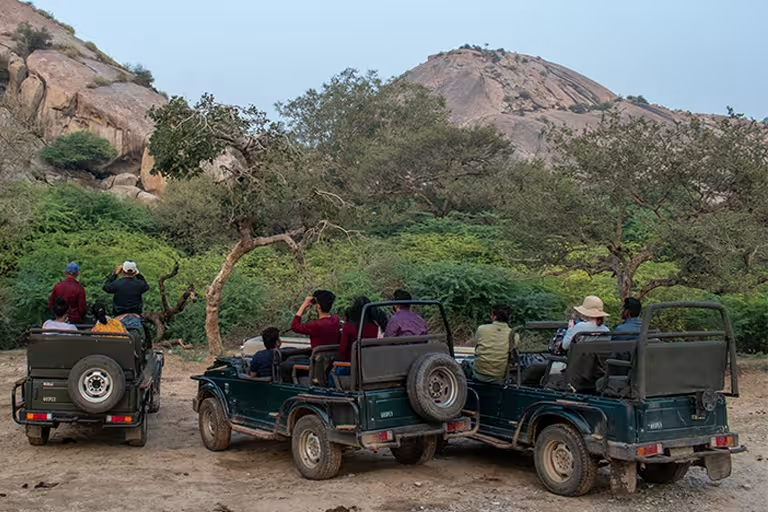
Located in the Pali district near the Jawai Dam, this region offers a rare wildlife experience where humans and leopards have peacefully coexisted for generations. Unlike crowded national parks, Jawai provides an open and raw safari experience where leopards roam freely through rocky hills, caves, and villages.
The area has rapidly become a favorite among luxury travelers, photographers, and wildlife enthusiasts looking for an offbeat Rajasthan adventure.
Jawai is often called the “Leopard Hills of India” because of its unusually high leopard sightings in the wild. What makes the region truly unique is the harmonious relationship between local Rabari tribes and wildlife. The granite hills, caves, lakes, and untouched landscapes create a surreal setting that feels completely different from the desert side of Rajasthan.
Best Things to Do in Jawai
- Leopard safaris: Experience thrilling jeep safaris through the granite hills where leopards roam freely
- Luxury tent camping: Stay in beautifully appointed tented camps surrounded by wilderness
- Village walks: Interact with the local Rabari community and learn about their traditional way of life
- Sunset views: Watch breathtaking sunsets over Jawai’s rocky landscapes
- Birdwatching: Visit Jawai Dam during winter months to spot migratory birds including flamingos and bar-headed geese
- Bonfire evenings: Enjoy outdoor dining and cultural performances under the stars
Wildlife You Can Spot
- Leopards (the main attraction)
- Hyenas
- Crocodiles (near Jawai Dam)
- Migratory birds (flamingos, bar-headed geese, various waterfowl)
- Desert foxes
- Various reptile species
Where to Stay
Jawai offers several luxury tented camps that provide comfortable accommodation while maintaining the wilderness experience. These camps typically include guided safaris, meals, and cultural experiences.
Travel Tips
- Book leopard safaris and camps well in advance, especially during peak season (December-February)
- Guided safaris offer the best wildlife spotting experience
- Carry binoculars and zoom lenses for photography
- Early morning and evening safaris provide the highest chances of leopard sightings
- Luxury camps are the best way to experience Jawai’s wilderness comfortably
Kumbhalgarh – The Great Wall of India
Location: Rajsamand district, 82 km from Udaipur
Best Time to Visit: September to March
Ideal Stay: 1-2 days
Nearest Airport: Udaipur (82 km)
Nearest Railway Station: Falna (30 km) or Udaipur
Why Kumbhalgarh Is Special
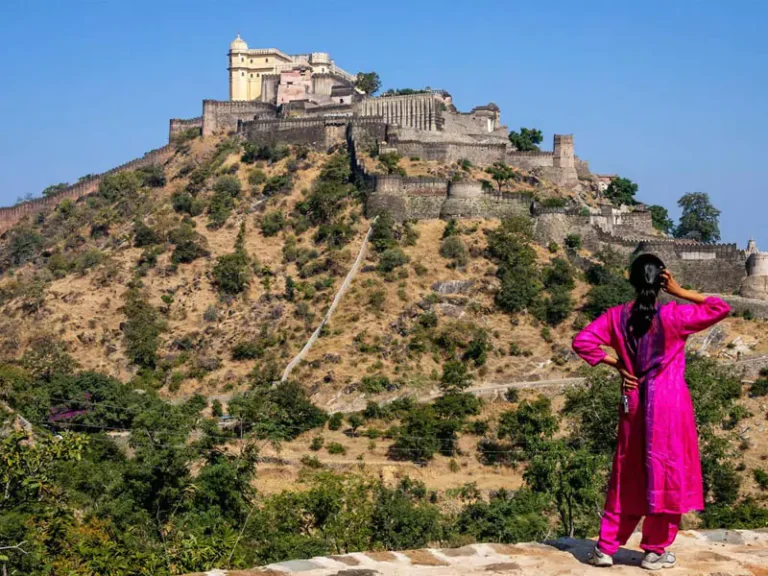
Kumbhalgarh is one of Rajasthan’s most magnificent historical destinations, famous for its massive fort and enormous defensive wall that stretches across the Aravalli hills.
Located in the Rajsamand district, the fort was built during the 15th century by Rana Kumbha and is recognized as a UNESCO World Heritage Site under the Hill Forts of Rajasthan.
Known as the “Great Wall of India,” Kumbhalgarh Fort is celebrated for having one of the world’s longest continuous fort walls after the Great Wall of China—stretching an incredible 36 kilometers across the Aravalli hills.
The fort sits at a height of over 1,100 meters above sea level, offering breathtaking panoramic views of the surrounding region. It’s also historically significant as the birthplace of Maharana Pratap, one of Rajasthan’s most celebrated warrior kings.
Did You Know?
The massive fort wall is so wide in some sections that eight horses could reportedly ride side by side. The wall encompasses such a huge area that it seems as if a complete economy survived here at some time in the age-old Marwar empire.
Best Things to Do in Kumbhalgarh
- Explore the fort: Walk through the massive gates, palaces, and temples within the fort complex
- Walk the wall: Trek along sections of the 36-km wall for panoramic views
- Evening light and sound show: Attend the spectacular show that brings the fort’s history to life
- Jungle safaris: Explore the Kumbhalgarh Wildlife Sanctuary, home to leopards, wolves, sloth bears, and various birds
- Visit ancient temples: The fort complex houses over 360 temples, including the famous Neelkanth Mahadev Temple
- Photography: The fort offers endless photo opportunities, especially during sunrise and sunset
Nearby Attractions
- Ranakpur Jain Temple: One of the most intricate Jain temples in India (30 km)
- Kumbhalgarh Wildlife Sanctuary: Perfect for wildlife enthusiasts
- Badal Mahal: The “Palace of Clouds” within the fort complex
- Haldighati: Historic battlefield where Maharana Pratap fought against the Mughals
- Rajsamand Lake: A beautiful artificial lake built in the 17th century
Where to Stay
Several heritage and theme-based hotels near the fort offer comfortable accommodation. The Kumbha Bagh Resort provides a royal experience with fort-themed rooms and excellent views.
Travel Tips
- Hire a local guide to understand the rich history and architecture of the fort
- Wear comfortable footwear as the fort requires considerable walking and climbing
- Visit early morning or late afternoon for pleasant weather and better photography
- Stay near the fort for stunning sunrise and sunset views
- Carry water during fort exploration, especially during warmer months
- Combine with Ranakpur for a complete day trip from Udaipur
Ranakpur – The Marble Temple Marvel
Location: Rajsamand district, 68 km from Udaipur
Best Time to Visit: October to March
Ideal Stay: Half day to 1 day
Nearest Airport: Udaipur (68 km)
Nearest Railway Station: Falna (30 km) or Udaipur
Why Ranakpur Is Special
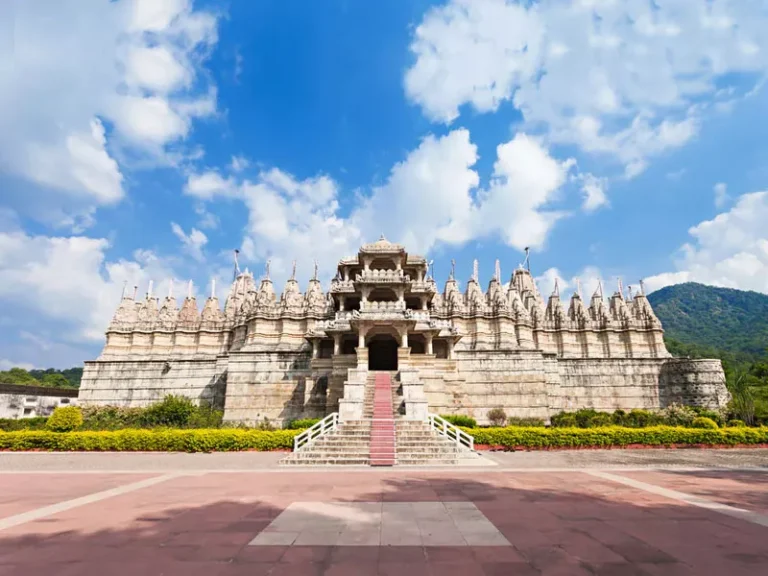
Ranakpur is home to one of the most intricate Jain temples in India.
The Chaturmukha Dharana Vihara, set among the Aravalli hills, contains 1,444 uniquely carved marble pillars, no two of which are identical. The temple dates to the 15th century and took decades to complete.
Surrounded by forest and near-silence on most days, it’s a place that rewards quiet contemplation as much as architectural admiration.
Best Things to Do in Ranakpur
- Explore the main temple: Marvel at the 1,444 carved pillars and intricate ceiling designs
- Visit other temples: The complex includes several other Jain temples dedicated to different Tirthankaras
- Photography: The temple’s white marble glows beautifully in morning light
- Peaceful contemplation: Spend time in the serene atmosphere absorbing the spiritual energy
- Nature walks: The surrounding Aravalli hills offer pleasant walking trails
Travel Tips
- Dress modestly and remove shoes before entering the temple
- Visit early morning to avoid crowds and experience the temple in peaceful solitude
- Photography is allowed but be respectful of worshippers
- Combine with Kumbhalgarh for a full day trip from Udaipur, or review the Udaipur–Ranakpur–Jodhpur Tour
- The temple is surrounded by waterfalls and valleys, making it especially beautiful during monsoon
Part 4: Heritage Towns & Stepwells
Bundi – The Forgotten Blue Town
Location: Hadoti region, 200 km from Jaipur
Best Time to Visit: October to February
Ideal Stay: 1-2 days
Nearest Airport: Jaipur (200 km) or Kota (60 km)
Nearest Railway Station: Kota (60 km)
Why Bundi Is Special
Bundi is one of Rajasthan’s most underrated destinations, often overshadowed by Jaipur and Udaipur.
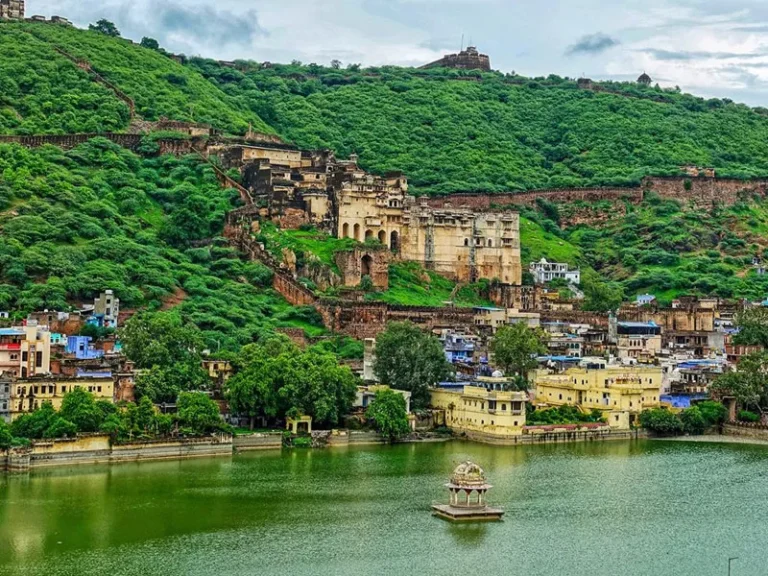
Tucked away in the Hadoti region, this charming town is known for its blue-painted houses, narrow lanes, magnificent forts, ancient stepwells, and peaceful old-world atmosphere. Unlike Rajasthan’s crowded tourist hubs, Bundi offers a slower and more authentic travel experience filled with heritage, art, and timeless beauty.
Bundi feels like a living painting where every street tells a story. The town is famous for its intricate Bundi-style murals and miniature paintings that flourished between the 17th and 19th centuries. Its architectural beauty, combined with tranquil lakes and historic baoris (stepwells), gives the town a magical charm that many travelers describe as untouched Rajasthan.
Bundi has over 50 baoris (stepwells) within its limits—an architectural marvel that showcases the region’s historical water conservation techniques.
Best Things to Do in Bundi
- Explore Taragarh Fort: This majestic fort perched high above the town offers panoramic views and houses stunning murals
- Admire Bundi Palace: The palace features beautiful frescoes and miniature paintings from the Bundi school of art
- Walk through ancient stepwells: Visit the famous Raniji Ki Baori (Queen’s Stepwell) and other historic baoris
- Experience Bundi Utsav: If visiting in November, don’t miss this vibrant cultural festival featuring music, dance, and traditional performances
- Wander the blue lanes: Explore the old town’s narrow, blue-painted streets and traditional bazaars
- Photography: Bundi is a photographer’s paradise with its colorful architecture and scenic viewpoints
Nearby Attractions
- Nawal Sagar Lake: A beautiful artificial lake with a temple in the middle
- Chaurasi Khambon Ki Chhatri: A cenotaph with 84 pillars commemorating Bundi’s rulers
- Sukh Mahal: A lakeside palace where Rudyard Kipling is said to have found inspiration
- Bhimlat Waterfall: A scenic waterfall perfect for a short excursion
Local Food Experiences
Bundi offers delicious traditional Rajasthani flavors:
- Dal Baati Churma
- Traditional kachoris with spicy chutneys
- Gatte ki Sabzi
- Local sweets and street snacks
Where to Stay
Stay in heritage havelis to enjoy authentic local hospitality. Several restored properties offer comfortable rooms with traditional architecture and modern amenities.
Travel Tips
- Carry comfortable shoes because many attractions involve walking uphill or through narrow streets
- Early mornings and sunsets are best for photography
- Bundi is perfect for slow travelers looking for peaceful cultural experiences rather than luxury tourism
- The town is small enough to explore on foot
- Combine with nearby Menal and Kota for a complete Hadoti region experience
Chand Baori, Abhaneri – The Geometric Stepwell Wonder
Location: Near Dausa, 95 km from Jaipur
Best Time to Visit: October to March
Ideal Stay: Half day
Nearest Airport: Jaipur (95 km)
Nearest Railway Station: Dausa (15 km) or Jaipur
Why Chand Baori Is Special
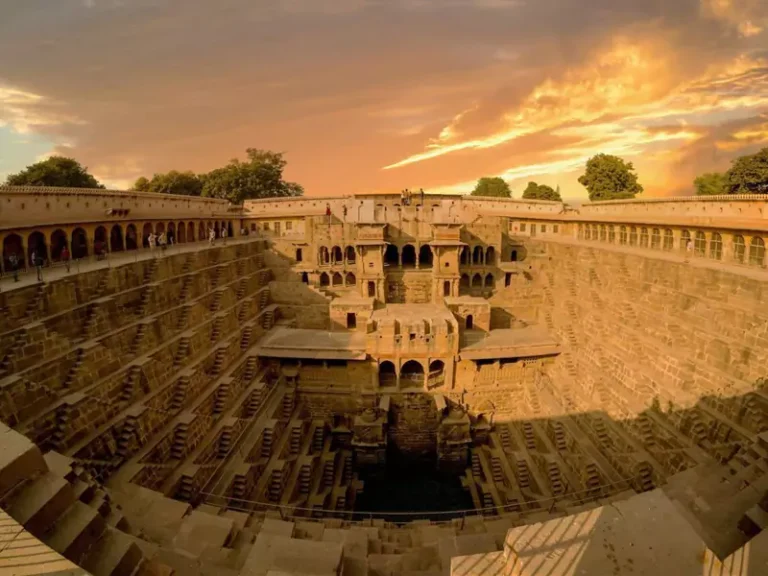
Chand Baori in Abhaneri is one of the most geometrically striking structures in all of India.
The stepwell descends thirteen storeys below ground level, with 3,500 narrow steps arranged in perfect symmetry on three sides. It was built in the 9th century by Raja Chanda of the Nikumbha dynasty and is maintained by the Archaeological Survey of India as a protected monument.
The stepwell’s purpose was twofold: to provide water in this arid region and to serve as a community gathering place, especially during hot summers when the lower levels would be significantly cooler. The intricate geometric pattern creates a mesmerizing visual effect that has attracted photographers and filmmakers from around the world.
Best Things to Do in Chand Baori
- Admire the architecture: Stand at the edge and absorb the stepwell’s incredible scale and symmetry
- Photography: The geometric patterns offer stunning photo opportunities, especially in morning light
- Learn the history: Hire a local guide to understand the stepwell’s construction and cultural significance
- Visit Harshat Mata Temple: This ancient temple adjacent to the stepwell dates to the 10th century
- Explore Abhaneri village: Walk through the quiet village and experience rural Rajasthan
Travel Tips
- Visit early morning to avoid crowds and harsh midday sun
- Photography is allowed but be respectful—this is still a functioning water source for locals
- The stepwell remains relatively uncrowded, which means you can stand at the edge and simply absorb its scale without distraction
- Combine with nearby Dausa or make it a stop on your way from Jaipur to Bundi
- Carry water and sun protection as there’s limited shade
Kuchaman – The Thousand-Year-Old Fort Town
Location: Nagaur district, 180 km from Jaipur
Best Time to Visit: October to March
Ideal Stay: 1 day
Nearest Airport: Jaipur (180 km)
Nearest Railway Station: Kuchaman City (in town) or Jaipur
Why Kuchaman Is Special
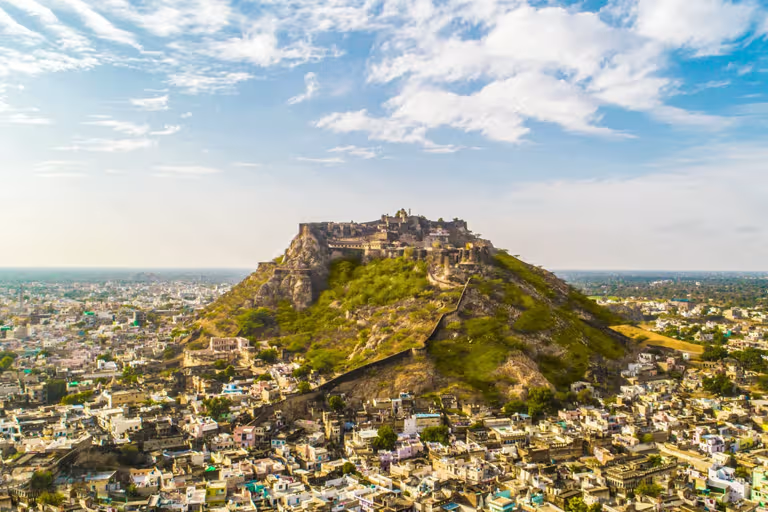
Kuchaman, in the Nagaur district, centers on a hilltop fort that has been carefully converted into a heritage hotel.
The fort itself is over a thousand years old and offers panoramic views across the plains. The town below has old temples, bazaars, and havelis that reward slow, on-foot exploration.
Unlike many of Rajasthan’s commercialized fort towns, Kuchaman retains an authentic, lived-in feel. Local families have lived here for generations, and the pace of life is refreshingly slow.
Best Things to Do in Kuchaman
- Explore Kuchaman Fort: Now a heritage hotel, but visitors can explore certain areas and enjoy panoramic views
- Walk the old town: Explore the narrow lanes, visit local temples, and browse the bazaars
- Photography: The fort and town offer excellent photo opportunities, especially during golden hour
- Visit local temples: Several ancient temples dot the town, showcasing traditional Rajasthani architecture
- Experience rural life: Interact with friendly locals and observe traditional crafts and trades
Where to Stay
Kuchaman Fort itself operates as a heritage hotel, offering guests a unique opportunity to stay within a thousand-year-old fortress. The property has been carefully restored to maintain its historical character while providing modern comforts.
Travel Tips
- The fort is walkable from the town, but the climb can be steep—wear comfortable shoes
- Visit early morning or late afternoon for the best light and comfortable temperatures
- Combine with nearby Nagaur Fort or Khimsar for a complete Nagaur district experience
- The town is small enough to explore on foot in a few hours
- Respect local customs when visiting temples and residential areas
Jhalawar – The Green Surprise of Rajasthan
Location: Southern Rajasthan, 300 km from Jaipur
Best Time to Visit: October to March
Ideal Stay: 1-2 days
Nearest Airport: Kota (100 km) or Jaipur (300 km)
Nearest Railway Station: Jhalawar (in town)
Why Jhalawar Is Special
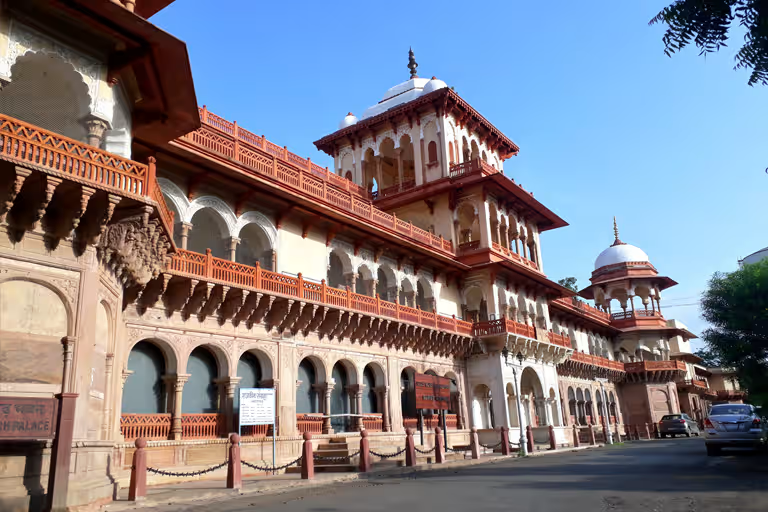
Jhalawar, in Rajasthan’s far south, surprises most visitors immediately.
Unlike the arid landscapes of western Rajasthan, Jhalawar is lush and green, fed by rivers and ringed by forests. It has Buddhist cave paintings, a medieval fort, and a quiet pace of life that feels entirely removed from the Rajasthan of popular imagination.
This hidden gem offers travelers a rare combination of spirituality, history, and natural beauty in a region that most tourists completely overlook.
Best Things to Do in Jhalawar
- Explore Jhalawar Fort: This medieval fort offers panoramic views and houses several temples
- Visit Buddhist cave paintings: The region has ancient Buddhist rock art dating back over 1,000 years
- Nature walks: The surrounding forests and hills offer pleasant walking trails
- Photography: The green landscapes and historical architecture provide unique photo opportunities
- Experience rural life: Jhalawar’s agricultural communities offer a glimpse into Rajasthan’s farming traditions
Travel Tips
- Jhalawar is best explored with a private vehicle as public transport is limited
- The town is quiet and peaceful—perfect for travelers seeking off-the-beaten-path experiences
- Combine with nearby Kota (for the City Palace) and Bundi for a complete southern Rajasthan circuit
- Visit during monsoon (July-September) to see the region at its greenest
- Carry cash as ATM facilities are limited
Part 5: Ancient Temples & Natural Wonders
Menal – The Mini Khajuraho of Rajasthan
Location: Between Chittorgarh and Bundi
Best Time to Visit: July to February (especially monsoon for waterfalls)
Ideal Stay: Half day to 1 day
Nearest Airport: Udaipur (150 km) or Jaipur (350 km)
Nearest Railway Station: Kota (80 km) or Chittorgarh (100 km)
Why Menal Is Special
Menal is one of Rajasthan’s most peaceful and lesser-known natural heritage destinations, located between Chittorgarh and Bundi.
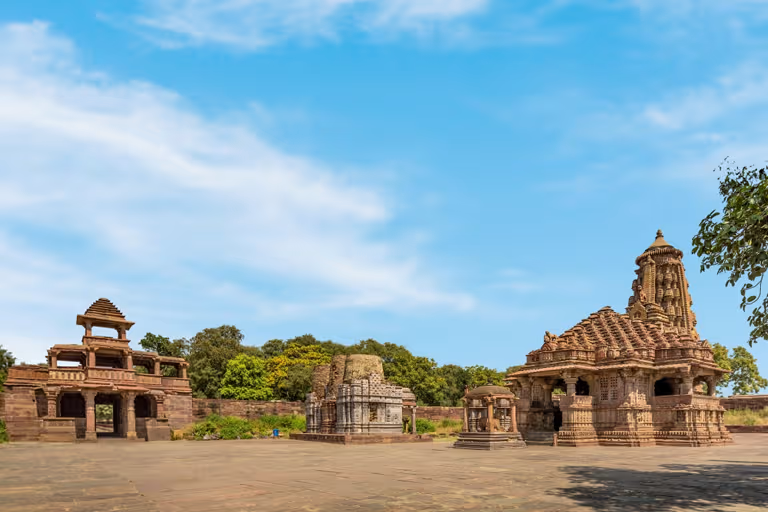
Often referred to as the “Mini Khajuraho of Rajasthan,” Menal is famous for its ancient temple complex, scenic waterfalls, deep gorges, and lush greenery that beautifully contrast Rajasthan’s usual desert landscapes.
This hidden gem offers travelers a rare combination of spirituality, history, and natural beauty. Surrounded by forests and rocky cliffs, Menal becomes especially magical during the monsoon season when waterfalls flow through the region, creating a calm and refreshing atmosphere.
Best Things to Do in Menal
- Explore the ancient temple complex: The 11th-century Shiva temples feature intricate carvings and detailed stone architecture
- Visit Menal waterfall: During monsoon season, the waterfall creates a spectacular scene
- Nature walks: Explore the gorge, forest areas, and rocky cliffs surrounding the temples
- Photography: The combination of ancient temples, waterfalls, and green landscapes offers unique photo opportunities
- Peaceful contemplation: The serene atmosphere makes Menal perfect for meditation and quiet reflection
- Observe local village life: The surrounding villages offer glimpses into rural Rajasthani culture
Nearby Attractions
- Chittorgarh Fort: One of Rajasthan’s largest and most historic forts (100 km)
- Bijolia Temples: Another ancient temple complex with beautiful architecture
- Bundi: The blue town with stepwells and palaces (80 km)
- Rana Pratap Sagar Dam: A scenic reservoir perfect for picnics
- Bhainsrorgarh Fort: A lesser-known fort with interesting history
Travel Tips
- Avoid risky trekking or standing near slippery waterfall edges during heavy monsoon rains
- Carry comfortable walking shoes for exploring rocky areas
- Visit early morning for peaceful surroundings and soft lighting for photography
- Limited tourist facilities are available, so plan essentials in advance
- Combine Menal with a road trip to Chittorgarh or Bundi for a better travel experience
Dungarpur – The Marble Palace Town
Location: Southern Rajasthan, 480 km from Jaipur
Best Time to Visit: October to March
Ideal Stay: 1-2 days
Nearest Airport: Udaipur (140 km) or Ahmedabad (180 km)
Nearest Railway Station: Dungarpur (in town)
Why Dungarpur Is Special
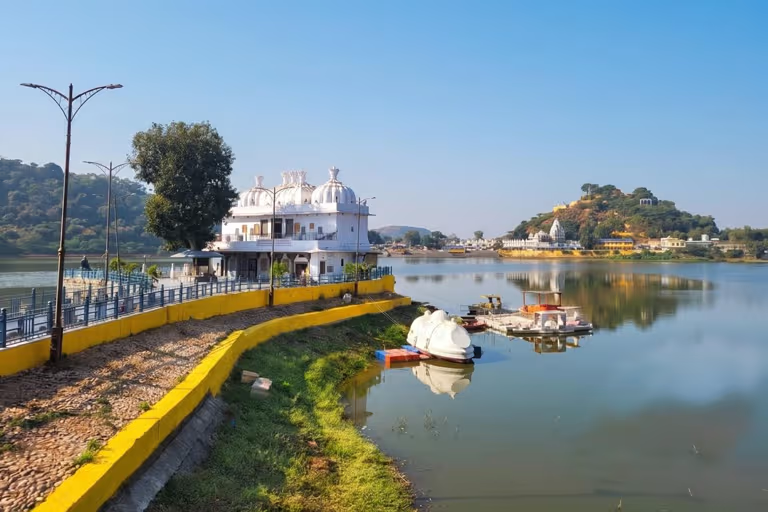
Dungarpur, in southern Rajasthan, is a town of lakes and green marble palaces that most travelers walk straight past on the way elsewhere.
The Juna Mahal, a 13th-century fort-palace, is covered in mirror-work, miniature paintings, and carved stone. The surrounding landscape, with its reservoirs and tree cover, feels more like Kerala than Rajasthan.
This hidden gem offers a completely different side of Rajasthan—one of lush greenery, serene lakes, and exquisite marble architecture.
Best Things to Do in Dungarpur
- Explore Juna Mahal: This ancient palace features stunning mirror-work, miniature paintings, and intricate stone carvings
- Visit Udai Bilas Palace: A beautiful lakeside palace now operating as a heritage hotel
- Boating on Gaib Sagar Lake: Enjoy peaceful boat rides on this scenic reservoir
- Photography: The marble architecture and lake views offer excellent photo opportunities
- Nature walks: The surrounding hills and forests provide pleasant walking trails
Travel Tips
- Dungarpur is best reached by private vehicle or taxi from Udaipur
- The town is quiet and peaceful—perfect for travelers seeking off-the-beaten-path experiences
- Combine with nearby Udaipur or the southern Rajasthan circuit (Chittorgarh, Bundi, Menal)
- Visit during winter months for the most comfortable weather
- The heritage palace hotels offer excellent accommodation options
Narlai – The Stepwell Dining Experience
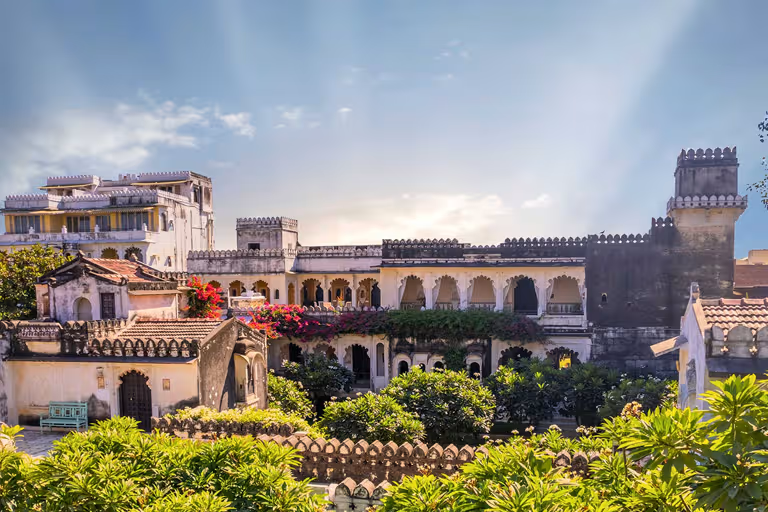
Location: Pali district, 60 km from Udaipur
Best Time to Visit: October to March
Ideal Stay: 1-2 days
Nearest Airport: Udaipur (60 km)
Nearest Railway Station: Falna (40 km) or Udaipur
Why Narlai Is Special
Narlai, a village in the Pali district, offers a refined rural experience centered on its ancient temples, a prominent granite rock formation, and beautifully restored heritage properties.
The village has become famous for its unique stepwell dining experience: a long table lit by oil lamps, set inside a centuries-old baoli (stepwell), with the night sky above and the stone walls around you. This magical dining experience has become one of Narlai’s signature attractions.
Best Things to Do in Narlai
- Stepwell dining: Experience the unforgettable dinner inside the ancient stepwell under the stars
- Explore ancient temples: Visit the village’s historic temples dedicated to various deities
- Climb the granite rock: The prominent rock formation offers panoramic views of the surrounding countryside
- Village walks: Explore the quiet lanes and interact with friendly locals
- Photography: The unique combination of ancient architecture and rural life offers excellent photo opportunities
Where to Stay
The Rawla Narlai is a beautifully restored heritage property that offers the famous stepwell dining experience along with comfortable, luxurious accommodation. The property has been carefully restored to maintain its historical character while providing modern amenities.
Travel Tips
- Book the stepwell dining experience in advance, especially during peak season
- The village is small and can be explored on foot
- Combine with nearby Jawai for wildlife or Udaipur for a complete southern Rajasthan experience
- Visit during winter months for the most comfortable weather
- Respect local customs and dress modestly when visiting temples
Part 6: More Hidden Treasures
Rajsamand – The Lake Town
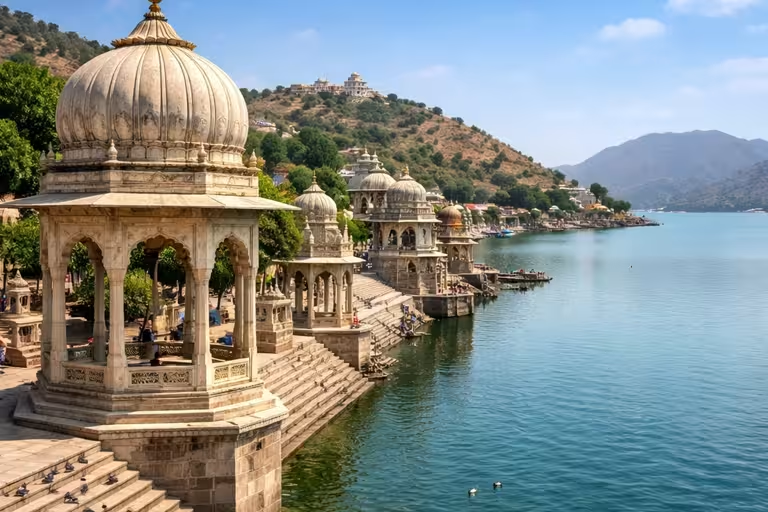
Location: Between Udaipur and Kumbhalgarh, 65 km from Udaipur
Best Time to Visit: October to March
Ideal Stay: 1 day
Nearest Airport: Udaipur (65 km)
Nearest Railway Station: Udaipur (65 km)
Why Rajsamand Is Special
Rajsamand is a beautiful and charming place that rests in solitude between the mighty Aravalli Ranges and a huge, soothing lake.
The town hosts the mighty Kumbhalgarh Fort nearby—the birthplace of Maharana Pratap—and offers a peaceful alternative to the busier tourist destinations of Udaipur and Jodhpur.
Rajsamand Lake is a really tiny town’s beautiful picturesque artificial lake built by a good old king back in the 17th century. Not crowded at all (weekends might be an exception), the lake has marble parapets throughout its boundary and they surely are a sight to behold.
Best Things to Do in Rajsamand
- Rajsamand Lake: Spend hours by the lake, walking along the marble parapets and enjoying the peaceful atmosphere
- Kumbhalgarh Fort: Visit the nearby UNESCO World Heritage fort (30 km)
- Charbhuja Vishnu Temple: An ancient temple dedicated to Lord Vishnu
- Dwarkadheesh Temple: Another historic temple with beautiful architecture
- Photography: The lake and surrounding Aravalli hills offer stunning photo opportunities, especially during sunrise and sunset
Travel Tips
- Rajsamand is best visited as a day trip from Udaipur or combined with Kumbhalgarh
- The lake is particularly beautiful during monsoon and winter months
- Visit early morning or evening for the best light and fewer crowds
- The town is small and can be explored on foot
- Combine with Kumbhalgarh and Ranakpur for a complete day trip from Udaipur
Khimsar – Desert Fort Luxury
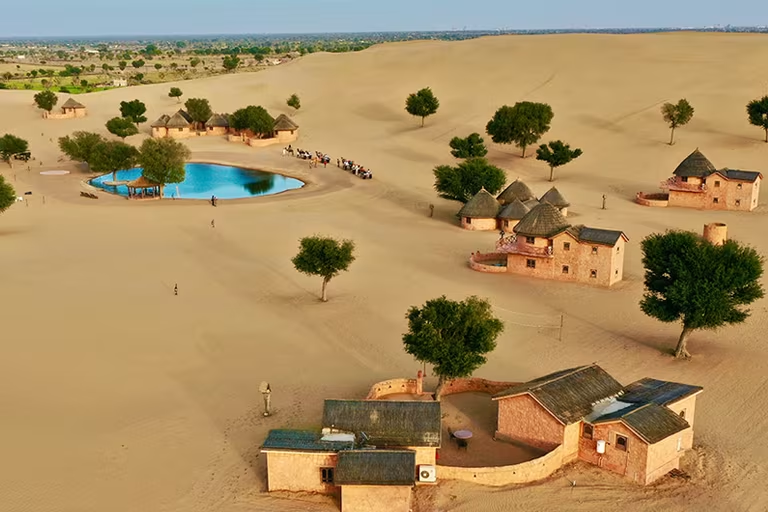
Location: Nagaur district, on the edge of Thar Desert
Best Time to Visit: October to March
Ideal Stay: 2 days
Nearest Airport: Jodhpur (120 km)
Nearest Railway Station: Degana (20 km) or Jodhpur
Why Khimsar Is Special
Khimsar is a hidden heritage destination in Rajasthan that beautifully combines royal history, desert adventure, and luxury hospitality.
Located on the edge of the Thar Desert in the Nagaur district, Khimsar is best known for its magnificent fort-turned-heritage hotel, peaceful desert landscapes, and authentic rural experiences.
Unlike the heavily crowded tourist cities of Rajasthan, Khimsar offers a quieter and more exclusive desert escape where travelers can experience royal architecture, golden sand dunes, traditional village life, and luxury desert stays all in one place.
Best Things to Do in Khimsar
- Stay in Khimsar Fort: This 16th-century fort has been transformed into a luxury heritage property while preserving its old-world charm
- Desert jeep safaris: Experience thrilling rides across the sand dunes at sunrise or sunset
- Village visits: Interact with local communities and learn about their traditional way of life
- Camel rides: Take a leisurely camel safari through the desert landscape
- Cultural performances: Enjoy traditional Rajasthani music and dance around a bonfire
- Photography: The golden dunes, historic fort, and village scenes offer excellent photo opportunities
Where to Stay
Khimsar Fort itself operates as a luxury heritage hotel, offering guests a unique opportunity to stay within a 400-year-old fortress. The property has been carefully restored to maintain its historical character while providing world-class amenities.
Travel Tips
- Khimsar is perfect for luxury stays, romantic getaways, and honeymoon trips
- Book heritage stays and desert experiences in advance during peak season
- Carry light cotton clothes for the day and warm layers for winter evenings
- Desert safaris are best enjoyed during sunrise or sunset hours
- Stay overnight in the desert area for a complete Rajasthan experience
Viratnagar – The Mythological Hidden Gem
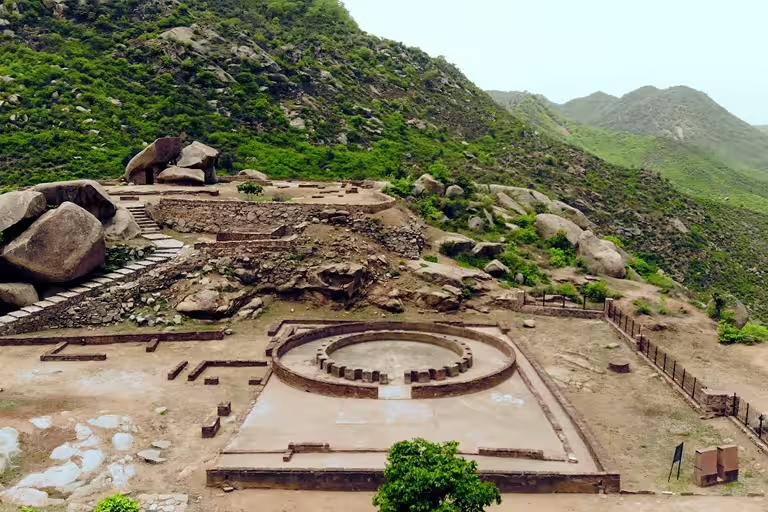
Location: Near Alwar, 63 km from Jaipur
Best Time to Visit: March to October
Ideal Stay: Half day to 1 day
Nearest Airport: Jaipur (63 km)
Nearest Railway Station: Alwar (61 km)
Why Viratnagar Is Special
With a rich mythological background, Viratnagar proves to be a hidden place of Rajasthan.
Viratnagar traces its history back to the Mahabharata. In the last year of the exile when Pandavas were looking for a place to hide, they chose this city as their home. According to legend, the Pandavas spent their final year of exile here in disguise, serving the court of King Virata.
This mythological connection makes Viratnagar an intriguing destination for those interested in India’s ancient epics and historical sites.
Best Things to Do in Viratnagar
- Ashoka Shilalekh: Explore the ancient Ashokan edicts dating back to the 3rd century BCE
- Bijak ki Pahari: Visit this archaeological site believed to be the remains of Virata’s palace
- Bhim ki Dungri: A hill associated with Bhima, one of the Pandava brothers
- Mughal Gate: Explore this historic gateway showcasing Mughal architecture
- Ganesh Giri Temple: Visit this ancient temple dedicated to Lord Ganesha
- Photography: The archaeological sites and rural landscapes offer unique photo opportunities
Travel Tips
- Viratnagar is best visited as a day trip from Jaipur or Alwar
- The sites are spread out, so hiring a local guide or driver is recommended
- Visit during cooler months (October to March) for the most comfortable experience
- Carry water and sun protection as the sites involve outdoor exploration
- Combine with nearby Alwar (for Bala Quila and City Palace) for a full day trip
Complete Travel Guide: Planning Your Offbeat Rajasthan Journey
Best Time to Visit Offbeat Rajasthan
The best time to travel to these destinations is between October and March.
- October-November: Pleasant weather, post-monsoon greenery, ideal for photography
- December-January: Peak season with cool temperatures and clear skies (book in advance)
- February-March: Warm days, cool evenings, fewer crowds than peak winter
Avoid: April to June brings extreme heat, particularly in desert regions like Khuri and Barmer. Temperatures can exceed 45℃ (113℉), making outdoor exploration uncomfortable and potentially dangerous.
Monsoon consideration: July to September can be magical in places like Menal, Bundi, and the Aravalli regions, where waterfalls flow and landscapes turn lush green. However, some desert areas may have limited accessibility during heavy rains.
How to Reach These Hidden Rajasthan Gems
By Air
The main airports for accessing these offbeat destinations are:
- Jaipur International Airport: Best for Shekhawati, Bundi, Chand Baori, Viratnagar
- Udaipur Airport: Best for Jawai, Kumbhalgarh, Ranakpur, Dungarpur, Narlai
- Jodhpur Airport: Best for Khuri, Kuldhara, Barmer, Khimsar
- Kota Airport: Best for Bundi, Menal, Jhalawar
By Train
Key railway hubs include:
- Jaipur: Major junction with connections across India
- Udaipur: Well-connected to major cities
- Jodhpur: Gateway to western Rajasthan
- Kota: Best for southern Rajasthan destinations
- Falna: Nearest to Kumbhalgarh and Ranakpur
- Churu: Best for Shekhawati region
- Barmer: Direct trains from major cities
By Road
Road trips are ideal for exploring multiple hidden gems in a single itinerary. Rajasthan’s road network is well-developed, and hiring a private car with driver is affordable and convenient.
Recommended circuits:
- Shekhawati Circuit: Jaipur → Mandawa → Nawalgarh → Mahansar → Alsisar → Jaipur
- Southern Rajasthan: Udaipur → Kumbhalgarh → Ranakpur → Jawai → Narlai → Dungarpur → Chittorgarh → Bundi → Menal
- Desert Circuit: Jodhpur → Khimsar → Jaisalmer → Khuri → Kuldhara → Barmer
- Hadoti Region: Kota → Bundi → Menal → Jhalawar
Where to Stay: Heritage Hotels & Unique Experiences
One of the joys of traveling offbeat Rajasthan is the opportunity to stay in restored heritage properties that are themselves part of the experience.
Shekhawati Region
- Vivaana Culture Hotel, Mandawa: Restored 150-year-old twin haveli with original frescoes
- Vivaana Museum Hotel, Nawalgarh: Located in Jaipuria Haveli at the heart of town
- Alsisar Mahal, Alsisar: Boutique heritage property in a quiet village setting
Kumbhalgarh & Ranakpur
- The Kumbha Bagh Resort: Fort-themed rooms with excellent views
- Various heritage havelis: Traditional architecture with modern amenities
Jawai
- Luxury tented camps: Wilderness experience with comfortable accommodation, guided safaris, and cultural programs
Desert Region
- Khuri desert camps: Authentic village experience with camel safaris and folk performances
- Khimsar Fort: 16th-century fort converted into luxury heritage hotel
- Kuchaman Fort: Thousand-year-old fortress with heritage accommodation
Bundi & Southern Rajasthan
- Heritage havelis in Bundi: Traditional architecture in the blue town
- The Rawla Narlai: Famous for stepwell dining experiences
- Udai Bilas Palace, Dungarpur: Lakeside heritage property
Essential Travel Tips for Offbeat Rajasthan
- Carry Enough Cash
ATMs are sparse in smaller towns like Khuri, Narlai, Mahansar, and Menal. Carry sufficient cash before heading to these destinations.
- Plan Your Itinerary with Extra Time
Offbeat Rajasthan rewards slow travel. A circuit that tries to cover all 20 places in five days will miss the point entirely. Spend at least 1-2 days in each destination to truly experience it.
- Hire Local Guides
At sites like Chand Baori, Kuldhara, Kumbhalgarh, and Bundi, a knowledgeable guide adds layers of history and context that no guidebook can replicate. Local guides also help you discover hidden corners and lesser-known stories.
- Dress Modestly
Respect local customs, especially in rural areas and at religious sites. Dress modestly (covered shoulders and knees) when visiting temples, villages, and traditional communities. This respect makes a real difference to the quality of interaction you’ll have with the communities you visit.
- Photography Etiquette
Always ask permission before photographing people, especially in rural villages and tribal communities. Some temples and religious sites may restrict photography—respect these rules.
- Carry Essentials
- Comfortable walking shoes (many sites involve walking and climbing)
- Sun protection (hat, sunscreen, sunglasses)
- Reusable water bottle
- Light cotton clothes for day, warm layers for nights
- Basic first-aid kit
- Power bank for charging devices
- Copies of important documents
- Book in Advance
During peak season (December-February), book heritage hotels, desert camps, and safari experiences well in advance. Popular properties like Jawai camps and Khimsar Fort can fill up weeks ahead.
- Respect Local Traditions
- Remove shoes before entering temples
- Ask permission before entering private properties
- Don’t touch or climb on ancient monuments
- Support local artisans by buying directly from them
- Learn a few Hindi phrases—locals appreciate the effort
Suggested Itineraries
7-Day Offbeat Rajasthan Circuit
Day 1-2: Jaipur → Mandawa → Nawalgarh (Shekhawati)
Day 3: Nawalgarh → Kumbhalgarh
Day 4: Kumbhalgarh → Ranakpur → Udaipur
Day 5: Udaipur → Jawai
Day 6: Jawai → Bundi
Day 7: Bundi → Chand Baori → Jaipur
10-Day Comprehensive Offbeat Journey
Day 1-2: Jaipur → Mandawa → Nawalgarh → Mahansar (Shekhawati)
Day 3: Nawalgarh → Kumbhalgarh
Day 4: Kumbhalgarh → Ranakpur → Udaipur
Day 5-6: Udaipur → Jawai → Narlai
Day 7: Narlai → Dungarpur → Chittorgarh
Day 8: Chittorgarh → Bundi → Menal
Day 9: Menal → Chand Baori
Day 10: Chand Baori → Viratnagar → Jaipur
5-Day Desert & Wildlife Focus
Day 1: Jodhpur → Khimsar
Day 2: Khimsar → Jaisalmer → Khuri
Day 3: Khuri → Kuldhara → Jaisalmer
Day 4: Jaisalmer → Barmer
Day 5: Barmer visit and departure; Jawai and Udaipur require additional nights and a separately planned extension
Budget Considerations
Offbeat Rajasthan can be experienced on various budgets. The daily ranges below are carried over as rough planning bands from the source material, not verified 2026 quotations; confirm current transport, accommodation, activity fees and inclusions directly before booking:
Budget Travel (₹2,000-4,000 per day):
- Government buses and shared taxis
- Budget hotels and guesthouses
- Local restaurants and street food
- Self-guided exploration
Mid-Range (₹5,000-10,000 per day):
- Private car with driver
- Heritage hotels and comfortable camps
- Mix of local and restaurant dining
- Guided tours at major sites
Luxury (₹15,000+ per day):
- Luxury heritage hotels and tented camps
- Private guided tours throughout
- Fine dining experiences
- Exclusive experiences (stepwell dining, private safaris, etc.)
Safety Considerations
Rajasthan has many well-travelled routes and visitor services, but safety experiences vary by place, timing, transport and individual needs. Check current local information, choose arrangements that suit your comfort and keep these practical steps in mind:
- Remote areas: Inform someone of your itinerary when traveling to very remote destinations
- Desert regions: Always travel with experienced guides in desert areas
- Wildlife safaris: Follow all safety instructions during leopard and wildlife safaris
- Health: Carry basic medications and drink bottled water
- Emergency contacts: Keep local emergency numbers and your hotel’s contact information handy
- Travel insurance: Recommended for all travelers, especially for adventure activities
2026 planning update: verify access before you travel
This guide has been refreshed for October 2026 using the destination details available from Rajasthan Tourism and the heritage information supplied for this article. Seasonal advice is still a guide rather than a promise: heat, rain, wildlife activity, road access and local operating decisions can change. Before departure, confirm the latest entry arrangements with the relevant site or local tourism office, check the weather forecast, and ask your accommodation or driver whether any road or activity conditions have changed.
For Kuldhara, Rajasthan Tourism describes the abandoned village as lying about 17 kilometres west of Jaisalmer and identifies it as a protected monument under the State Archaeology Department. Its dramatic abandonment story is a local legend; present it as folklore rather than established proof of a supernatural event. The state tourism site also notes that camel or camel-cart safaris are offered at Sam and Khuri by local camel owners and some camps. Ask who operates the ride, what is included and how animal welfare is handled.
Kumbhalgarh belongs to the UNESCO-listed Hill Forts of Rajasthan, and Rajasthan Tourism describes its fort as a fifteenth-century stronghold with a wall stretching about 36 kilometres. The official Ranakpur temple page describes the complex’s 1,444 carved pillars. These details make helpful context for a visit, but they do not replace current visitor rules. Entry times, camera permissions, guided visits, festival programmes, camp operations and prices should be confirmed close to the date rather than copied from an old itinerary.
For the Desert Festival, check the Department of Tourism’s announcement for the year you plan to travel. The event is commonly organised around January or February, but exact dates and programme locations can change. If you are choosing a camp, wildlife drive or heritage property because of a specific event, get written confirmation before booking transport or non-refundable accommodation.
How to choose the right places from this list
You do not need to visit all 20 destinations to experience offbeat Rajasthan. Choose according to the reason you are travelling. For frescoes, start with Mandawa and Nawalgarh, then add Mahansar or Alsisar if you have time. For desert life, choose between the camp experience around Khuri, the ruins at Kuldhara and Barmer’s crafts and local culture. For hill landscapes, compare Kumbhalgarh and Ranakpur with a Jawai stay. For water architecture and old towns, Bundi and Chand Baori make a strong combination, while Menal and Jhalawar add seasonal countryside.
Think about how you like to travel. A family may prefer fewer hotel changes and a mix of short walks with rest time. A photographer may want early starts and flexible stops. A history-minded traveller may benefit from local guides at forts, temples and fresco havelis. A wildlife visitor should plan around responsible operators and accept that animal sightings cannot be guaranteed. A couple looking for a quiet stay may value a heritage property or camp, but should check privacy, facilities, road access and cancellation terms before paying.
Then map the route around arrival and departure points. Jaipur can be useful for Shekhawati, Abhaneri and Viratnagar; Jaisalmer is a practical hub for Khuri and Kuldhara; Udaipur can support an Aravalli route towards Kumbhalgarh, Ranakpur, Jawai or Dungarpur; and Kota or Bundi can help with Hadoti. These are planning hubs, not fixed rules. Confirm current connections and avoid choosing a destination simply because it looks close on a map.
A realistic two-week offbeat Rajasthan framework
Days 1–3: Jaipur and Shekhawati. Keep the first day light after arrival. Continue to Mandawa, then allow time for Nawalgarh and one or two smaller villages such as Mahansar and Alsisar. Ask ahead about haveli access, and avoid trying to see every property in one afternoon. A local guide can make the painted buildings more meaningful.
Days 4–6: choose a regional transition. Depending on transport and interests, travel towards the Aravallis or the western desert. If you choose the desert, base yourself in Jaisalmer and plan a visit to Kuldhara plus an overnight or sunset experience around Khuri. If you choose the Aravallis, use an overnight stop to break the drive before Kumbhalgarh or Jawai. Do not schedule a wildlife excursion immediately after a long uncertain transfer.
Days 7–9: forts, temple and landscape. Allow time for Kumbhalgarh and Ranakpur, with a suitable base that avoids backtracking. If wildlife is a priority, extend the Jawai stay rather than turning it into a rushed transit stop. A guide or camp host can help organise the day, but ask what is included and follow current site and wildlife rules.
Days 10–12: Hadoti or the south. Select a route rather than adding every remaining place. Bundi, Chand Baori and Menal can suit a heritage and stepwell focus. Jhalawar offers a greener regional contrast. Dungarpur, Narlai and Rajsamand create another southern and Aravalli direction, while Khimsar or Kuchaman may fit a separate northern-western route. Build the days around actual road time.
Days 13–14: return with breathing room. Keep the last days near the departure city or leave a buffer for road delays. If your flight or train is fixed, do not plan an intercity excursion on the same day. Use the extra time for a market visit, a quiet walk, a meal or a rest day. A successful itinerary is not measured by how many pins it covers.
This is a framework, not a guaranteed transport schedule. Travel time varies by route, traffic, weather and stops. Ask your driver or transport provider for a realistic daily plan, including breaks, tolls, parking and arrival times. If the route feels crowded on paper, remove a stop before you book rather than relying on perfect conditions.
Responsible travel in villages, temples and wildlife areas
Many offbeat places are living communities rather than visitor attractions created only for tourism. In Shekhawati, people may still live or work in historic havelis. In villages around the desert and Aravallis, homes, grazing areas and workshops are part of daily life. Walk quietly, stay on public routes, ask before entering a property and follow a local host’s instructions. If a site is closed or a family declines a visit, respect that decision.
Photography is a privilege, not an entitlement. Ask permission before making portraits, especially of children, artisans, worshippers and people in private spaces. Some temples restrict photography or require footwear to be removed. Follow signs and local guidance even when other visitors ignore them. Avoid touching frescoes, carvings or old plaster, and never climb on fragile walls for a photograph.
Choose local guides and businesses transparently. Ask what a fee covers, how long the activity lasts and whether the provider has permission to access the site. When buying crafts, ask about materials and origin instead of assuming every item is locally made. A fair purchase and respectful conversation can benefit a community more than a quick photograph or a rushed stop.
In wildlife landscapes such as Jawai, keep a respectful distance from animals and never ask a driver to chase, corner or bait wildlife for a sighting. Follow the guide’s safety instructions, remain in the vehicle where required and keep noise low. A leopard, bird or other animal may not appear during a drive. The landscape and local knowledge are still part of the experience.
Reduce waste wherever practical. Carry reusable water bottles where safe refill options exist, take rubbish back with you, and avoid leaving food or plastic in desert or forest areas. Use water thoughtfully in dry regions, and choose accommodation that can explain how it manages waste and water if sustainability is important to you.
Practical checks before confirming a car and stay
For a multi-region trip, ask for a written route plan with overnight towns, estimated driving blocks, rest stops and the final drop-off point. Confirm whether the quoted vehicle is air-conditioned, how much luggage it can carry, whether the driver remains with you overnight, and which expenses are included. Clarify tolls, parking, state taxes, driver accommodation, extra kilometres and any waiting charges. Ask who to call if the assigned vehicle or driver changes.
For a remote stay, confirm the exact property location, mobile coverage, power arrangements, meals, water availability, bathroom setup and access road. If travelling with children, older adults or anyone with mobility needs, ask about steps, uneven ground, walking distances and vehicle drop-off points. Do not assume that a heritage building has lifts or step-free rooms. A direct answer from the property is more useful than a generic listing description.
For a camel ride, jeep excursion, leopard drive or desert camp, ask the operator to state the duration, group size, meeting point, return time, included equipment, cancellation rules and weather plan. For wildlife activities, ask about the code of conduct and how the operator avoids disturbing animals. Keep the booking confirmation and emergency contact number available offline.
Additional questions for planning an offbeat Rajasthan trip
Can I see all 20 places in one trip?
It is possible to design a long route that includes many of them, but seeing all 20 in a short holiday would involve substantial driving and frequent hotel changes. Two weeks may cover several regions; a slower three-week journey gives more flexibility. Choose the places that match your interests and leave time for the journey itself.
Which places work best for a short Rajasthan extension?
Choose based on your base city. From Jaipur, consider a day trip to Chand Baori or an overnight Shekhawati visit. From Jaisalmer, choose Kuldhara or a Khuri experience. From Udaipur, explore a focused Kumbhalgarh and Ranakpur route. Check current road time and opening arrangements before deciding.
Should I book a desert camp before arriving?
During busy winter dates, advance booking can help, especially if you need a particular tent type or transfer. Ask the camp to confirm its location, meals, bathroom facilities, bedding, activity inclusions, pickup, return time and cancellation terms in writing. Compare more than the headline rate.
Is a wildlife sighting guaranteed at Jawai?
No responsible operator can guarantee a wild animal sighting. Wildlife moves freely and conditions change. Choose a guide who prioritises safety and animal welfare, and enjoy the hills, local knowledge and landscape as part of the excursion.
Can I visit waterfalls during the monsoon?
Menal and other water sites may look different during or after rain, but access and safety conditions can change quickly. Ask locally about water levels, roads and permitted viewpoints. Do not approach fast-moving water or cross barriers for photographs.
Are the listed hotel and camp names guaranteed to be available?
No. Properties may change ownership, facilities, access rules or booking availability. Treat names in the supplied destination notes as starting points for research, then contact the property directly and check recent independent reviews before paying.
How do I keep the journey comfortable for children or older travellers?
Reduce daily transfers, choose accommodation with confirmed facilities and plan rest time after long drives. Check staircases, uneven surfaces, vehicle access and walking distances at forts, stepwells and villages. Carry required medication and discuss special needs with the hotel and transport provider in advance.
What should I do if an attraction is closed on arrival?
Keep one flexible alternative in the same region and avoid paying non-refundable costs based on an unconfirmed schedule. Check with the official site, local tourism office or your accommodation before departure, especially for smaller havelis and seasonal activities.
Frequently Asked Questions (FAQs)
What are the best offbeat places to visit in Rajasthan without the crowds?
Some of the best offbeat places in Rajasthan include Bundi, Shekhawati (particularly Mandawa and Nawalgarh), Jawai, Ranakpur, Kumbhalgarh, Khuri, Narlai, and Chand Baori in Abhaneri. Each offers significant heritage, natural beauty, or cultural depth without the tourist pressure of cities like Jaipur, Jodhpur, or Udaipur. The best time to visit all of them is between October and March.
Is Shekhawati worth visiting for first-time Rajasthan travelers?
Yes, absolutely. Shekhawati is one of the most unique regions in Rajasthan and is often called the open-air art gallery of India. Its painted havelis in towns like Mandawa, Nawalgarh, and Mahansar represent a style of fresco art found almost nowhere else in the world. First-time visitors who include Shekhawati in their itinerary often say it becomes the most memorable part of their trip.
What is the best base for exploring Rajasthan’s hidden gems?
Shekhawati, particularly Mandawa or Nawalgarh, makes an excellent base for exploring northern and central Rajasthan’s offbeat destinations. Both towns are well-connected by road to Jaipur and Delhi, and their central position allows for day trips to Alsisar, Mahansar, Jhunjhunu, and Dundlod. For the western circuit, Jaisalmer is the nearest hub for Khuri and Kuldhara.
Can I plan a Rajasthan road trip covering hidden places?
The answer is Yes. Rajasthan provides an excellent road trip experience through its network of roads which connects major cities including Jaipur, Jodhpur, Jaisalmer, Bundi, and Kumbhalgarh. Customized travel plans can help connect less-known destinations. Compare the Jaipur, Udaipur & Jodhpur Tour and Jaisalmer, Jodhpur & Udaipur Tour with your own route needs. Road trips are ideal for exploring multiple hidden gems in a single itinerary.
Are offbeat places in Rajasthan safe for family travel?
The majority of Rajasthan’s hidden gems maintain safety standards which allow families to visit these locations without concerns. Kumbhalgarh, Mandawa, Bundi, and Khimsar serve as ideal family vacation destinations which offer both tranquility and high-quality tourist services. Most destinations have good road connectivity, accommodation options, and basic facilities suitable for families.
Is Rajasthan good for couples and honeymoon travel?
Rajasthan stands as one of India’s top honeymoon destinations. The locations of Jawai, Udaipur, Khimsar, and desert camps create an ideal setting for couples to enjoy their romantic escape. Heritage hotels, luxury tented camps, and peaceful destinations like Bundi and Narlai offer intimate, romantic experiences away from crowds.
How many days do I need to explore offbeat Rajasthan?
For a meaningful offbeat Rajasthan experience, plan for at least 7-10 days. This allows you to visit 5-7 destinations at a comfortable pace without rushing. If you want to cover most of the 20 places in this guide, plan for 15-20 days to truly experience each destination.
What makes Mahansar and Alsisar different from Mandawa in Shekhawati?
Mahansar and Alsisar are smaller, quieter villages within the Shekhawati circuit that attract far fewer visitors than Mandawa. Mahansar is known specifically for its gold-leaf frescoes inside the Sone Chandi ki Dukan haveli, a style of painting that is exceptionally rare even within the region. Alsisar is better known for its boutique heritage stays and its peaceful, unhurried atmosphere. Both villages are ideal for travelers who want the Shekhawati experience without any crowds at all.
Do I need a guide for these offbeat destinations?
While not mandatory, hiring local guides is highly recommended for several reasons:
- They provide historical context and stories you won’t find in guidebooks
- They help you discover hidden corners and lesser-known sites
- They can arrange access to sites that may otherwise be closed
- They facilitate interactions with local communities
- They enhance safety, especially in remote areas
At sites like Chand Baori, Kuldhara, Kumbhalgarh, and Bundi, a knowledgeable guide adds layers of history and context that no guidebook can replicate.
What should I pack for offbeat Rajasthan travel?
Essential packing list:
- Comfortable walking shoes (many sites involve walking and climbing)
- Light cotton clothes for daytime
- Warm layers for nights (desert and winter temperatures can drop significantly)
- Sun protection (hat, sunscreen, sunglasses)
- Reusable water bottle
- Basic first-aid kit and personal medications
- Power bank for charging devices
- Camera with extra batteries and memory cards
- Copies of important documents (passport, ID, travel insurance)
- Sufficient cash (ATMs are limited in smaller towns)
- Modest clothing for temple visits (covered shoulders and knees)
Conclusion: The Quiet Side of Rajasthan Is Worth Finding
Rajasthan’s famous cities—Jaipur, Udaipur, Jodhpur, Jaisalmer—are magnificent. But the state’s quieter places carry a different kind of beauty: one that takes its time, doesn’t announce itself, and stays with you long after the journey ends.
These 20 hidden places are an invitation to travel more slowly, more curiously, and more honestly through one of India’s greatest landscapes. The walls still whisper here. The frescoes still hold their color. And the roads that lead to them are largely empty.
From the painted havelis of Shekhawati to the leopard hills of Jawai, from the ancient stepwells of Bundi to the abandoned village of Kuldhara, from the marble temples of Ranakpur to the desert luxury of Khimsar—each destination offers a unique window into the real Rajasthan.
As travellers seek more meaningful journeys alongside visits to famous cities, these offbeat destinations offer space to connect with Rajasthan’s varied landscapes and traditions. They offer space to breathe, time to connect, and opportunities to discover the Land of the Kings as it truly is—diverse, beautiful, and endlessly surprising.
So pack your bags, hire a car, and set out beyond the palace circuit. The real Rajasthan is waiting.
Plan your offbeat Rajasthan route
Share your dates, starting city and preferred destinations to discuss a realistic route through Rajasthan.

Ranjit Singh
India Travel Expert
Ranjit Singh helps international travellers plan private car tours, Rajasthan journeys and customised India itineraries with practical local guidance.
Travel details, operating schedules, prices and local conditions can change. Confirm current information with official sources and service providers before travelling.