AGRA TRAVEL GUIDE
Agra Monuments: Entry Fees, Timings & Complete Visitor Guide
Agra is known around the world for the Taj Mahal, yet the city’s heritage extends well beyond one monument. Its red sandstone fort, garden tombs, marble mausoleums and the nearby planned city of Fatehpur Sikri reveal different chapters of Mughal history and architecture. This guide brings the principal Agra monuments together in one place, with the latest ticket rates published on official government tourism and monument pages, usual visiting hours, what to look for at each site, and practical ways to plan your visit. Use the price table as a planning reference, then confirm the final amount on the official booking portal before you travel.
Quick answer: The main monuments covered here are the Taj Mahal, Agra Fort, Akbar’s Tomb at Sikandra, Mariam’s Tomb, Fatehpur Sikri, Itimad-ud-Daulah, Mehtab Bagh and Ram Bagh. The Taj Mahal is closed to general visitors every Friday and usually opens from 30 minutes before sunrise until 30 minutes before sunset. Officially published weekday entry rates range from ₹25 to ₹1,100 depending on the monument and visitor category; the optional Taj mausoleum visit has a separate ₹200 ticket. Fees and ticketing arrangements can change, so confirm the live price and date-specific rules before payment.
Agra is an important stop on the Delhi–Agra–Jaipur Golden Triangle route. You can browse the current Agra destination page, see the Agra sightseeing tour, or compare Golden Triangle itineraries. If you are planning a wider Rajasthan journey, explore the Rajasthan tour options as well.
Agra Monuments Entry Fees in INR and USD
The official Government of Uttar Pradesh ticketing table publishes the standard weekday rates below. USD amounts are approximate conversions using the latest RBI/FBIL reference available for this update: US$1 = ₹93.8579 (published 9 November 2026). Tickets are sold and settled in Indian rupees; your bank or card provider may use a different exchange rate or add a foreign transaction fee.
| Monument | Indian visitor | SAARC / BIMSTEC visitor | Other foreign visitor | Ticket note |
|---|---|---|---|---|
| Taj Mahal | ₹50 (about US$0.53) | ₹540 (about US$5.75) | ₹1,100 (about US$11.72) | Main mausoleum is optional: add ₹200 (about US$2.13); closed Friday for general viewing |
| Agra Fort | ₹50 (about US$0.53) | ₹90 (about US$0.96) | ₹650 (about US$6.93) | Official table lists special Friday and same-day-after-Taj amounts |
| Fatehpur Sikri | ₹50 (about US$0.53) | ₹50 (about US$0.53) | ₹610 (about US$6.50) | Outside central Agra; allow extra road time |
| Akbar’s Tomb, Sikandra | ₹30 (about US$0.32) | ₹30 (about US$0.32) | ₹310 (about US$3.30) | Friday / after-Taj rates may differ |
| Itimad-ud-Daulah | ₹30 (about US$0.32) | ₹30 (about US$0.32) | ₹310 (about US$3.30) | Often called the Baby Taj |
| Mehtab Bagh | ₹25 (about US$0.27) | ₹25 (about US$0.27) | ₹300 (about US$3.20) | Garden viewpoint across the Yamuna |
| Ram Bagh | ₹25 (about US$0.27) | ₹25 (about US$0.27) | ₹300 (about US$3.20) | Historic Mughal garden |
| Mariam’s Tomb | ₹25 (about US$0.27) | ₹25 (about US$0.27) | ₹300 (about US$3.20) | Also listed as Mariam-uz-Zamani’s Tomb |
Special weekday / Friday / same-day amounts: The official table also lists Agra Fort at ₹40 (about US$0.43) for Indian and SAARC/BIMSTEC visitors on Friday, and ₹600 (about US$6.39) for other foreign visitors on Friday or after visiting the Taj. Fatehpur Sikri is listed at ₹40 (about US$0.43) for Indian and SAARC/BIMSTEC visitors and ₹600 (about US$6.39) for other foreign visitors on Friday or after visiting the Taj. Akbar’s Tomb and Itimad-ud-Daulah are listed at ₹25 (about US$0.27) for Indian and SAARC/BIMSTEC visitors and ₹300 (about US$3.20) for other foreign visitors in the relevant Friday / after-Taj columns. These are conditional official-table rates; check that the date, sequence and ticket category qualify before relying on them. The Taj Mahal itself is closed on Friday for general viewing.
Price source and date: Monument prices are transcribed from the official Government of Uttar Pradesh Taj Mahal ticketing table, checked on 10 November 2026. The official pages state that children below 15 years are exempt from the general entry fee and that the Taj main mausoleum requires a separate optional ₹200 ticket. Online discounts may be offered; the live booking screen is the final price authority.
USD estimate only: Conversions are rounded to two decimal places and use the RBI/FBIL reference rate of ₹93.8579 per US dollar shown for 9 November 2026, the latest published reference available on the update date. The USD figures help international visitors budget; they are not USD ticket prices, and exchange rates change. Expect the card or bank statement amount to differ slightly.
Foreign visitor toll clarification: The District Agra government page describes an ADA pathkar (toll) of ₹500 (about US$5.33) for foreign visitors, valid on the same day at specified monuments. Other official pages show ASI and ADA amounts together or separately. Do not add ₹500 again if it is already included in the total shown for your ticket. Check the current official checkout for the exact monument combination and avoid paying the same component twice.
How to Read Agra Ticket Prices and Timings
Visitor categories matter
The official table separates Indian visitors, visitors from SAARC and BIMSTEC countries, and other foreign visitors. The category shown at checkout depends on the rules stated by the ticket authority and the proof it requires. Carry an accepted identity document and use the correct category when booking. If you are unsure whether your status qualifies for a particular rate, confirm it with the official ticketing authority before payment rather than assuming that nationality, residence or a travel document automatically determines the category.
Standard entry and optional areas may be separate
At the Taj Mahal, entry to the main mausoleum is an optional add-on to the regular ticket. The current official pages publish an additional ₹200 ticket for that visit. This is separate from the general monument ticket shown in the table. Check that the add-on appears in your booking if you specifically want to enter the mausoleum; do not assume that every ticket includes it.
Online and counter rates can differ
The official Taj Mahal site has published small online discounts for some ticket categories. The amounts and payment platform can change. Online booking can help you secure the date and reduce time at the ticket counter, but make sure you use an official government or ASI-authorized channel. The official pages currently direct visitors to government ticketing services such as the Taj Mahal site and ASI’s ticket portal. Avoid lookalike websites that imitate official booking pages or add unclear service fees.
Friday, same-day and combined ticket rules
The official fee table includes separate Friday and after-visiting-the-Taj amounts for certain monuments. These rows do not mean that every visitor automatically receives a discount. The eligibility and sequence of visits matter, and some conditions are tied to the official ticketing rules. The Taj Mahal itself is closed for general viewing on Friday; other monuments may remain open under their published schedules. Before setting your route, confirm both the monument’s opening status and the ticket conditions for that specific date.
Opening times are not identical everywhere
The Taj Mahal’s regular viewing window is published as 30 minutes before sunrise until 30 minutes before sunset, except Friday. Several ASI-protected monuments are generally open from sunrise to sunset, but last entry, seasonal arrangements, special events, maintenance and local management can affect access. Treat “sunrise to sunset” as a broad planning guide, not a promise of a specific gate time. Confirm the monument page or local authority information shortly before your visit.
Night viewing has separate conditions
The Taj Mahal offers limited night viewing around the full moon on specified dates, subject to exclusions and separate ticket arrangements. This is not a regular evening opening. Check the official Taj Mahal page for the date window, permitted time, booking method and visitor limits. Do not plan an overnight visit based only on a calendar of lunar phases or a third-party summary.
1. Taj Mahal
Location: Dharmapuri, Forest Colony, Tajganj, Agra, Uttar Pradesh 282001.
Usual viewing hours: 30 minutes before sunrise to 30 minutes before sunset on regular opening days. Closed every Friday for general viewing; Friday prayer access at the mosque is subject to separate arrangements.
Published standard ticket: Indian ₹50 (about US$0.53); SAARC/BIMSTEC ₹540 (about US$5.75); other foreign visitors ₹1,100 (about US$11.72). The optional main mausoleum add-on is ₹200 (about US$2.13). Children under 15 are listed as exempt from the general entry fee. USD equivalents use ₹93.8579 per US$1, the RBI/FBIL reference published 9 November 2026; verify the live ticket conditions before payment.
Why the Taj Mahal is important
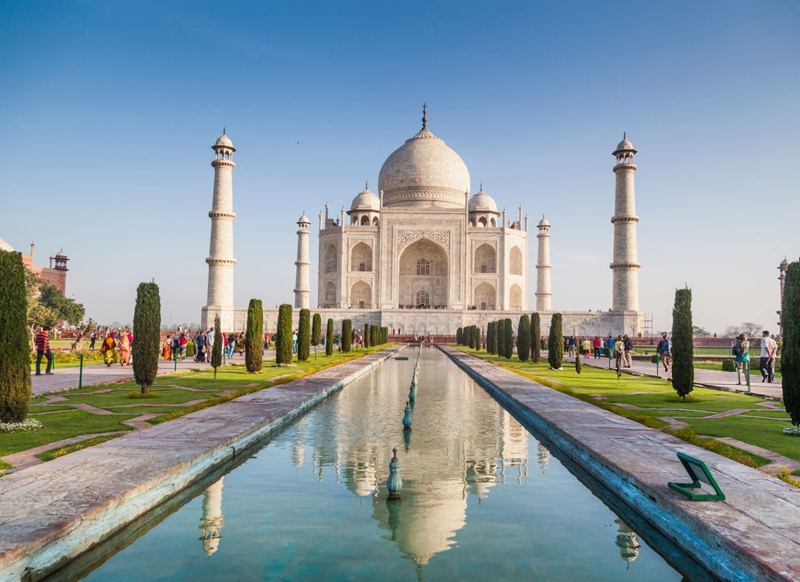
The Taj Mahal is a white marble mausoleum commissioned by Mughal emperor Shah Jahan in memory of Mumtaz Mahal. Construction began in the seventeenth century and brought together architects, calligraphers, stoneworkers, gardeners and craftspeople. The monument is recognized as a UNESCO World Heritage property. Its fame is linked not only to the central dome but also to the carefully planned garden, the symmetry of the complex, the inlaid stones, carved marble screens and the relationship between the mausoleum and its river setting.
Allow time to experience the approach rather than treating the monument as a quick photo stop. The main gateway frames the first view. From there, the long garden axis draws attention toward the mausoleum. As you move closer, details become more apparent: calligraphy around entrances, floral inlay, carved surfaces and the balance of the four minarets around the central structure. The marble changes appearance with daylight, so early morning and late afternoon can feel very different.
What to see inside the complex

- The main southern, eastern or western entrance according to the entry instructions on your ticket.
- The great gateway and its framed view toward the mausoleum.
- The charbagh garden layout and central water channel.
- The marble platform, minarets and exterior details.
- The mosque and jawab buildings on either side of the mausoleum platform.
- The main mausoleum interior, if you purchase the required add-on ticket.
- Interpretive panels and the viewing areas permitted to visitors.
Planning your Taj Mahal visit
Check your ticket date, entry gate and arrival instructions before leaving your hotel. Ticket counter hours and monument viewing hours are not the same: the official site says counters open before sunrise and close before sunset. If you have an online ticket, follow the gate and time information printed on it. Arrive early enough for security checks, walking from the parking area and any queue. Keep your identity document with you.
Security rules restrict certain objects. Large bags, food, drones, tripods and other equipment may be prohibited or subject to special rules. The official site says drone cameras are strictly prohibited inside the Taj Mahal. Read the current list before visiting, because permitted items can change and security staff may apply additional checks. Water bottles and other visitor facilities are described on the official page, but verify the current rules for your ticket and entry gate.
Plan for walking on stone, queues and outdoor exposure. Comfortable closed-toe shoes, sun protection and modest clothing are practical. Shoe covers or shoe removal rules may apply in the mausoleum area; follow the signs and instructions from staff. Do not touch the marble or attempt to sit on restricted ledges. Photography is allowed in many areas, but the interior of the main mausoleum has restrictions. Ask staff if you are uncertain.
Best time of day for the Taj Mahal
Sunrise is popular because the air is often cooler and the changing light can be beautiful. It also involves an early start, possible queues and season-specific visibility. Winter fog can soften or obscure the view; no time of day guarantees clear skies or an empty monument. Late afternoon gives a different warmth to the marble and can fit travelers who prefer a slower morning. Choose a time that suits your pace, and check the forecast without treating it as a guarantee.
Official links for Taj ticket details
Use the official Taj Mahal ticketing page for published categories and ticket notes, the official visiting-hours page for access information, and the District Agra government visitor page for local visitor guidance. Check the final ticketing portal before you pay.
2. Agra Fort
Location: Rakabganj, Agra, Uttar Pradesh 282003, a short drive from the Taj Mahal.
Usual hours: Generally sunrise to sunset; confirm the last-entry time for your visit date.
Published weekday ticket: Indian ₹50 (about US$0.53); SAARC/BIMSTEC ₹90 (about US$0.96); other foreign visitors ₹650 (about US$6.93). The official table separately lists Friday and same-day-after-Taj rates. Confirm the applicable amount and any toll component on the official portal.
History and setting
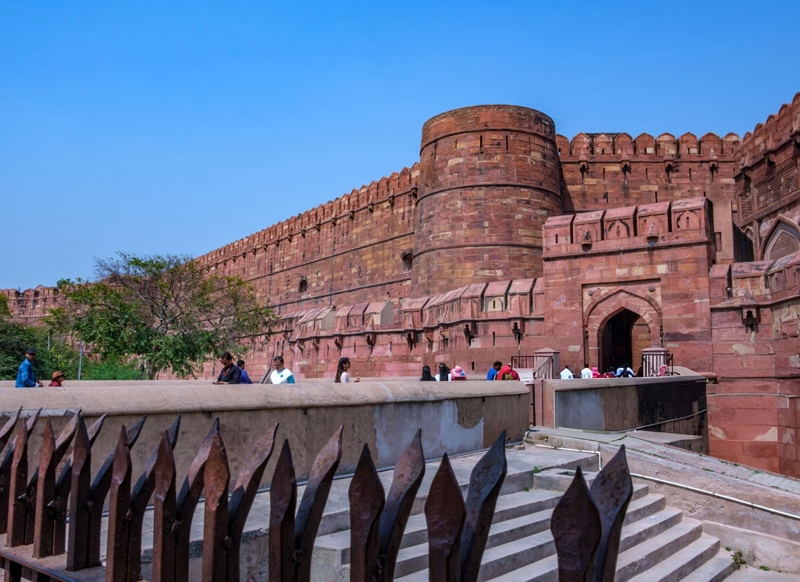
Agra Fort is a fortified complex on the Yamuna River and a UNESCO World Heritage property. Its massive red sandstone walls enclose palaces, audience halls, courtyards and religious buildings built or adapted under several Mughal rulers. The fort changed over time as rulers added spaces suited to residence, ceremony, administration and defense. Its location near the river also connects its history to the wider landscape of Agra and the Taj Mahal.
Visitors often focus on its scale, but the most rewarding experience comes from noticing how each section served a different purpose. Public audience areas were designed for ceremony and administration; private palace spaces offered more controlled access; mosques and gardens shaped the daily life of the court. From selected viewpoints, visitors can see the Taj Mahal across the river, although visibility can vary with weather and access restrictions.
Highlights inside Agra Fort
- Amar Singh Gate: the principal visitor entrance, approached through defensive turns and gateways.
- Jahangiri Mahal: a prominent palace complex with a mix of architectural details.
- Diwan-i-Am: the public audience hall associated with imperial court functions.
- Diwan-i-Khas: a private audience space used for more formal meetings.
- Khas Mahal: palace rooms associated with royal residence and court life.
- Musamman Burj: a riverside tower and pavilion from which the Taj can be seen when conditions and access allow.
- Moti Masjid: a marble mosque within the fort complex, subject to visitor access rules.
- Courtyards and wall details: useful for understanding the scale and defensive character of the site.
How much time to allow
Allow at least two hours for a focused visit, and more if you enjoy architecture, photography or a guided explanation. The complex involves walking over open courtyards and uneven surfaces. On a hot day, schedule the fort during a cooler period and carry water according to the monument’s rules. If you are visiting the Taj and Agra Fort on the same day, avoid adding too many distant sites to the same schedule.
Ticket and route notes
The Government of Uttar Pradesh table publishes a weekday amount of ₹50 for Indian visitors, ₹90 for SAARC/BIMSTEC visitors and ₹650 for other foreign visitors. It also lists a reduced amount for Friday and a different amount for a same-day visit after the Taj Mahal. ASI pages may show the entry fee and the ADA toll component separately. Check the details at checkout so you do not pay twice for a component covered by a same-day ticket.
Agra Fort can be paired with the Taj Mahal, but the two sites are not a single ticket unless a specific official product says so. Keep each ticket and receipt available. For a local transport option and a proposed visit sequence, review the Agra sightseeing tour and confirm which inclusions apply to your own booking.
3. Akbar’s Tomb at Sikandra
Location: Sikandra, Agra, Uttar Pradesh 282007, on the road toward Mathura.
Usual hours: Generally sunrise to sunset; verify the current last-entry time.
Published weekday ticket: Indian ₹30 (about US$0.32); SAARC/BIMSTEC ₹30 (about US$0.32); other foreign visitors ₹310 (about US$3.30) in the official Uttar Pradesh table. Friday and same-day-after-Taj conditions can differ; verify the current amount and any separate fee component before travel.
History of Akbar’s Tomb

The tomb complex at Sikandra is associated with Emperor Akbar, one of the most influential rulers of the Mughal dynasty. The project was begun during Akbar’s lifetime and completed under his successor Jahangir. The complex combines a monumental gateway, garden quadrants, pathways and the tomb structure. Its design differs from the later marble-centered image many visitors associate with the Mughal period: red sandstone, geometric composition and layered architectural influences are central to the experience.
The approach through the gateway is part of the visit. Look at the decorative surfaces, the transition from exterior to garden, and the way the tomb’s mass rises above the surrounding grounds. Rather than expecting the same visual effect as the Taj Mahal, treat Sikandra as a distinct monument with its own architectural character and historical context.
What to notice during the visit
- The large entrance gateway and its decorative patterning.
- The formal garden plan and long visual axis.
- The use of red sandstone with lighter stone details.
- The changing arrangement of arches, terraces and open space.
- The relationship between the tomb structure and the surrounding garden.
- Details of the upper levels and the open-air setting where visitor access is permitted.
How to include Sikandra
Sikandra lies outside the central cluster of the Taj Mahal, Agra Fort and Itimad-ud-Daulah. It can be visited on a second day, combined with Mariam’s Tomb because of the general area, or scheduled on an arrival or departure day if your timing allows. Do not assume that the monument can be comfortably added between a Taj sunrise visit and a long drive to Jaipur; account for the time needed to travel, walk the site and return to your vehicle.
The ticketing table gives a useful planning price, but official ticket categories and additional charges may change. Check the ASI or government ticket service for the actual date and visitor category.
4. Mariam’s Tomb
Location: Sikandra area, Agra, Uttar Pradesh; confirm the exact route and current access information before setting out.
Usual hours: Daylight visiting hours are commonly listed; confirm the current schedule locally.
Published weekday ticket: Indian ₹25 (about US$0.27); SAARC/BIMSTEC ₹25 (about US$0.27); other foreign visitors ₹300 (about US$3.20) in the official Uttar Pradesh monument table. Confirm the current total before travel.
Who was Mariam-uz-Zamani?
Mariam-uz-Zamani is the title commonly associated with the Rajput wife of Emperor Akbar and mother of Emperor Jahangir. The tomb is linked to her memory and is situated in the Sikandra area. Historical naming conventions, later legends and popular retellings do not always match neatly, so a visit is a good opportunity to distinguish what the site’s records state from stories repeated in travel summaries.
The structure is more restrained than the Taj Mahal and rewards visitors who look closely at the building fabric, arches and exterior details. Its location makes it a possible addition to a circuit focused on Mughal-era sites beyond the most famous monuments. The visit may be shorter than the larger garden complexes, but allow enough time for access, interpretation and photography.
Planning a visit to Mariam’s Tomb
Consider combining it with Akbar’s Tomb if the day’s route and opening hours make sense. Confirm local access and the exact entrance before leaving your hotel. The site may not have the same visitor facilities as Agra’s most prominent attractions, so bring water, sun protection and any personal essentials. Respect barriers and posted signs, and do not climb on the structure or touch fragile surfaces.
Entry prices and operating arrangements should be checked on the official ticketing source. If you have limited time in Agra, prioritize the monuments most relevant to your interests and avoid squeezing this visit into an already crowded day.
5. Fatehpur Sikri
Location: Fatehpur Sikri, Agra district, Uttar Pradesh, west of central Agra.
Usual hours: Generally daylight hours; confirm official opening and last-entry information for your date.
Published weekday ticket: Indian ₹50 (about US$0.53); SAARC/BIMSTEC ₹50 (about US$0.53); other foreign visitors ₹610 (about US$6.50) in the official Uttar Pradesh table. Different Friday and same-day ticket conditions are also published.
A planned Mughal capital
Fatehpur Sikri was developed under Emperor Akbar in the sixteenth century and served as an imperial capital for a limited period. Today, the historic complex brings together palaces, audience halls, courtyards, gateways and religious buildings. It is a UNESCO World Heritage property and one of the most important day excursions from Agra.
The site is not a single building. It is an urban complex with open spaces and distinct functions. Visitors can see how ceremonial architecture, court spaces and religious structures were arranged in relation to one another. Red sandstone dominates many buildings, while carved details, columns and screens create variety from one space to the next. A guide can help explain the roles of the buildings and the mix of architectural elements without reducing the city to a single legend.
Main places to see
- Buland Darwaza: a monumental gateway that forms one of the most striking approaches to the complex.
- Jama Masjid: a major congregational mosque within the historic site; follow current visitor and dress rules.
- Tomb of Salim Chishti: a marble shrine set within the larger complex, with specific etiquette for visitors.
- Diwan-i-Khas: a notable audience hall with an unusual central column and architectural details.
- Diwan-i-Am: a court space associated with public audience and administration.
- Panch Mahal: a multi-level pavilion that illustrates the variety of palace architecture.
- Jodha Bai’s Palace: a large residential courtyard complex commonly included in visitor routes.
- Birbal’s House and other palace spaces: buildings whose names and attributions should be understood through reliable interpretation.
How long should you allow?
Allow several hours for the principal complex, plus the drive from Agra and time for entry. A rushed stop between Agra and Jaipur can work only if the route, opening hours, transport and luggage plan have been confirmed. If you want a detailed guided visit, allow additional time. The open setting can be hot, so take water and sun protection and wear comfortable shoes.
Fatehpur Sikri as a day trip or en-route stop
Some travelers visit Fatehpur Sikri as a half-day excursion from Agra, while others stop there on the road toward Jaipur. Each option has tradeoffs. A dedicated excursion avoids combining a long sightseeing day with another transfer, while an en-route stop can reduce backtracking if you are continuing west. Confirm that your vehicle may wait and that the stop is included in the transport quotation. The ticket is separate unless a package explicitly includes it.
Check official ticket rates and local entry instructions before departure. The monument’s schedule, access, parking arrangements and any special restrictions can change.
6. Itimad-ud-Daulah, the Baby Taj
Location: Moti Bagh area, Agra, Uttar Pradesh 282006.
Usual hours: Commonly daylight hours from sunrise to sunset; verify last entry.
Published weekday ticket: Indian ₹30 (about US$0.32); SAARC/BIMSTEC ₹30 (about US$0.32); other foreign visitors ₹310 (about US$3.30) in the official Uttar Pradesh ticket table.
Why it is called the Baby Taj
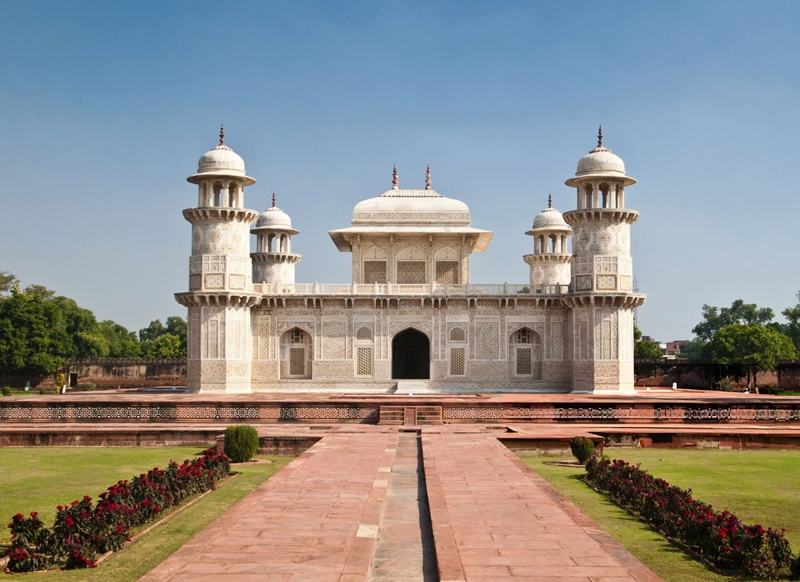
Itimad-ud-Daulah is a marble tomb commissioned by Nur Jahan for her father, Mirza Ghiyas Beg, who held the title Itimad-ud-Daulah. The nickname “Baby Taj” reflects its delicate marble surface and the way visitors compare its decorative work with the Taj Mahal. The label is useful shorthand, but the tomb deserves attention in its own right: it belongs to a different commission and tells a story about an influential Mughal woman’s patronage.
The monument is known for marble, inlay, carved screens and painted or carved details. The scale is more intimate than the Taj, so visitors can spend time noticing patterns close up. The garden setting and the structure’s relationship to the river landscape add to its appeal. It is a rewarding stop for anyone interested in the development of Mughal architecture before the construction of the Taj Mahal.
What to look for
- Stone inlay and geometric or floral motifs on exterior surfaces.
- Carved marble screens and the filtered light they create.
- The contrast between the tomb and its garden surroundings.
- Details around doorways, corners and platform edges.
- How the monument’s smaller scale changes the experience of viewing decoration.
Visit planning
Itimad-ud-Daulah can be combined with Mehtab Bagh or the Taj Mahal area depending on the day’s route and opening conditions. Allow enough time to walk through the garden and inspect the building rather than stopping only for a quick photograph. The ticket may be included in a same-day fee arrangement shown by official sources for certain foreign visitor categories; verify the applicable rule and do not assume the combined amount applies to every visitor or every date.
7. Mehtab Bagh
Location: Nagla Devjit, across the Yamuna River from the Taj Mahal.
Usual hours: Daytime to sunset is commonly listed; check current local and ASI information.
Published weekday ticket: Indian ₹25 (about US$0.27); SAARC/BIMSTEC ₹25 (about US$0.27); other foreign visitors ₹300 (about US$3.20) in the official Uttar Pradesh table.
A garden viewpoint across the river
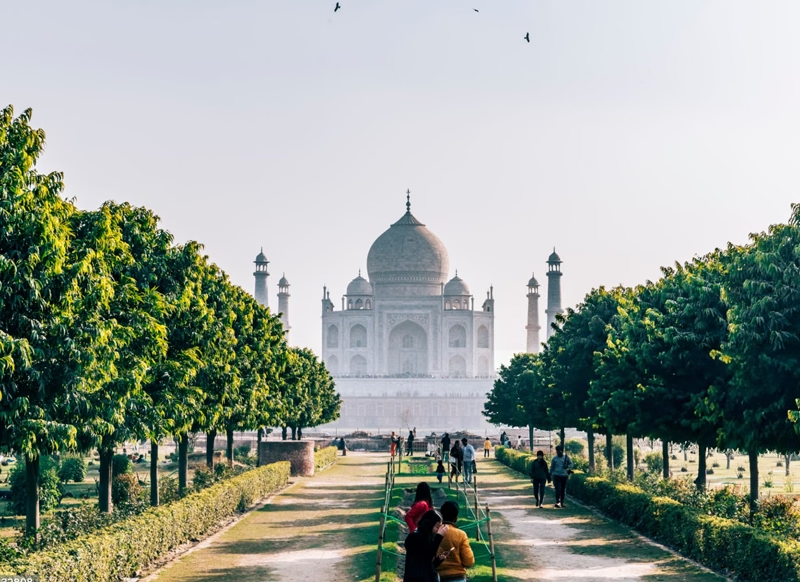
Mehtab Bagh is a historic garden on the north bank of the Yamuna, opposite the Taj Mahal. Its position creates a different viewpoint from the main monument complex. Rather than looking toward the Taj from within its formal garden, visitors see the monument across the river with more landscape around it. The garden is valued for its river alignment, open views and quieter atmosphere.
The garden is sometimes described as a moonlight garden in popular accounts, but the best reason to visit is its setting and perspective. The visible river level, haze, vegetation, weather and light can all affect the view. A sunset visit can be lovely, but it is not guaranteed to produce a dramatic sky or reflection. Keep expectations flexible and check the sunset time and closing time for your date.
Photography and access tips
Bring a camera or phone with enough battery and protect it from dust or heat. A telephoto lens can help frame the Taj across the river, while a wider lens captures the garden setting. Do not cross barriers or enter restricted riverbank areas to obtain a photograph. If the sky is hazy, focus on the garden and the monument’s outline rather than expecting sharp distant detail.
Mehtab Bagh can be combined with Itimad-ud-Daulah, but travel time between sites and the opening window should be considered. If you are already visiting the Taj Mahal at sunrise, you may prefer a slower afternoon rather than adding several more monuments.
8. Ram Bagh
Location: Bagh-i-Zar area, northern Agra, Uttar Pradesh; verify the exact navigation point before setting out.
Usual hours: Generally daylight hours; confirm the current opening and last-entry time.
Published weekday ticket: Indian ₹25 (about US$0.27); SAARC/BIMSTEC ₹25 (about US$0.27); other foreign visitors ₹300 (about US$3.20) in the official Uttar Pradesh table.
One of Agra’s historic gardens
Ram Bagh is commonly described as one of the earliest Mughal gardens in India and is associated with Babur. Its layout offers a different experience from the monumental tombs and forts: pathways, garden terraces and water channels are central to the visit. The site reflects the Mughal interest in ordered landscapes and designed outdoor spaces.
Gardens are living places and their appearance can change with season, maintenance and water conditions. Visitors interested in garden history may appreciate the site more than travelers seeking a large palace interior. Give yourself time to understand the layout and look for the relationships between terraces, pathways and water features rather than expecting the same kind of visit as the Taj Mahal.
Combining Ram Bagh with other sites
Ram Bagh can be added to a northern Agra route or visited by travelers with an additional day. It is less central to the standard first-time itinerary than the Taj Mahal or Agra Fort, so prioritize according to your interests. Check the ticket price and operating conditions in the current official listing, and confirm whether any combined visit rule applies to your ticket.
Agra Sightseeing Itineraries
The best itinerary depends on your arrival time, hotel location, season, walking pace and interest in history. The plans below are examples rather than guaranteed schedules. Always check weekly closures, official last-entry times, transport conditions and ticket availability for your chosen dates.
One day in Agra: first-time visitor route
- Early morning: visit the Taj Mahal on a day other than Friday. Follow your ticket’s entry gate and time instructions.
- Late morning: take a break for breakfast and rest. Keep a buffer for queues and transfers.
- Midday or early afternoon: explore Agra Fort, allowing at least a couple of hours for a focused visit.
- Late afternoon: choose either Itimad-ud-Daulah or Mehtab Bagh, depending on your interests and closing time.
- Evening: return to your hotel or continue to your next destination only after allowing realistic travel time.
This plan covers the main heritage highlights but leaves out Sikandra, Mariam’s Tomb, Ram Bagh and Fatehpur Sikri. Do not add every site just because it appears close on a map. Entry queues, walking, meal breaks and traffic take time.
Two days in Agra: a more balanced plan
Day one: visit the Taj Mahal, take a substantial break, and explore Agra Fort. If you still have energy, finish with a viewpoint or an easy local activity rather than adding a long excursion.
Day two: choose a group of sites based on geography and interest. Itimad-ud-Daulah and Mehtab Bagh can form a river-side heritage day. Sikandra and Mariam’s Tomb can be combined if the current hours and routes allow. Ram Bagh can be included for garden history. Fatehpur Sikri usually merits several hours and can be planned as a separate excursion or an en-route stop when continuing toward Jaipur.
A two-day plan gives time for a guide, a relaxed meal and rest. It also lets you choose a different light and atmosphere at the Taj without having to fit every visit into one day.
Agra and Fatehpur Sikri en route to Jaipur
Fatehpur Sikri is west of Agra and can be considered on the way to Jaipur. Before choosing this plan, confirm the monument’s opening status, the estimated driving time, parking, luggage arrangements and the time you need at the complex. A long monument visit followed by a drive may mean reaching Jaipur late. If you prefer to travel more slowly, stay another night and visit Fatehpur Sikri as a dedicated outing.
Agra as a day trip from Delhi
A day trip from Delhi is possible, but it can become a very long day. Build the schedule around the Taj Mahal’s opening day and check the actual door-to-door travel time. A private car offers direct transport; a train may be a better fit for some travelers depending on the station, timing and ticket availability. A night in Agra gives you more flexibility and reduces the pressure to complete every visit and return to Delhi on the same day.
Golden Triangle extension
Many visitors connect Delhi, Agra and Jaipur over several days. The five-day Golden Triangle route can be used as a starting point, but compare the number of nights and visits with your own pace. If you want additional Rajasthan cities, review the wider Rajasthan itineraries and avoid squeezing too many long drives into a short trip.
Best Time to Visit Agra
Agra can be visited throughout the year, but temperature, humidity, air quality and visibility change seasonally. The right time depends on your tolerance for heat, your preferred light and the amount of walking you plan to do. Regardless of season, check the forecast close to your visit and keep an alternative plan for rain, fog or unusually high temperatures.
Cooler months
From roughly October through March, daytime conditions are often more comfortable for outdoor sightseeing than the hottest months. Winter mornings can be cool and fog can reduce visibility, especially for early photographs. Carry a warm layer for sunrise visits and allow flexibility if the monument appears hazy. Popular travel periods can also bring more visitors, so book accommodation and transport in advance when your dates are fixed.
Hot weather
Late spring and early summer can bring high temperatures, particularly in open courtyards and gardens. Plan outdoor visits for early morning or late afternoon, drink water, wear a hat and take shade breaks. A private vehicle can provide a cool rest between sites, but it does not eliminate the walking required inside the monuments. If traveling with children, seniors or anyone sensitive to heat, reduce the number of visits.
Monsoon season
Rain and humidity can affect gardens, walking surfaces, road times and photography. The landscape may look greener, but sudden showers can interrupt outdoor plans. Bring a light rain layer and shoes with grip. Keep in mind that outdoor monuments may become slippery and protect camera equipment from moisture.
Air quality and visibility
Air quality can vary by date and weather. Visitors with respiratory sensitivities should check current local conditions and consult a health professional about personal precautions. Winter fog and haze can also change the visibility of the Taj Mahal from distant viewpoints. Check conditions on the day rather than relying on a seasonal expectation.
Getting Around Agra
Private car with driver
A private car can be convenient for connecting Agra’s monuments, especially if you have limited time, multiple stops, luggage or family members who need breaks. It can also simplify a route from Delhi or onward to Jaipur. Confirm whether the service is a transfer, a set number of hours or a full sightseeing day. Ask which monuments are included, whether parking and tolls are covered, and how long the driver will wait at each site.
The driver’s role is transportation unless a guide service is explicitly included. A guide may be arranged separately for the Taj Mahal, Agra Fort or Fatehpur Sikri. Check the language, duration, meeting point and any official requirements for the guide. For transport options, visit the car rental and private driver page and confirm details for your dates.
Local taxi or auto-rickshaw
Local taxis and auto-rickshaws can work well for short trips. Agree on a fare or confirm the meter and destination before setting off. For several stops, ask how waiting time is charged. Keep your hotel address saved offline and make sure you know the pickup point if roads near a monument are restricted.
Walking and local access
Some areas around the main monuments require walking from a parking or drop-off point. At the Taj Mahal, petrol and diesel vehicles are restricted within a buffer zone around the monument; official guidance describes battery buses and golf carts from designated parking areas. Check the latest local procedure for your entrance gate. Allow time for security checks and walking, and do not expect a car to drop you at the monument’s door.
Travel between Agra and nearby cities
Agra connects with Delhi and Jaipur by road and rail. Choose the mode according to your schedule, comfort and onward connections. If you are taking a train, include time for getting to the station and locating the correct platform. If you are driving, plan a break and expect travel duration to vary. Compare the door-to-door journey, not just the headline time shown by a route planner.
Practical Visitor Tips
Buy tickets from official sources
Use the ticketing link published by the monument authority or government tourism site. Check the web address carefully, make sure the date and visitor category are correct, and save the booking confirmation. If you buy at a counter, keep the paper ticket until you have left the site. Avoid paying a stranger who promises to bypass queues or provide an unofficial ticket.
Carry identification
Official visitor instructions advise travelers to carry government-issued identity proof. Requirements may vary by ticket type, visitor category and site. Carry the same document used for booking when possible and check the ticketing terms before arrival.
Travel light
Security checks can restrict bags, food, equipment and other objects. A small day bag usually makes entry easier. The exact permitted-items list can change, so check official visitor rules before setting out. Do not bring drones to the Taj Mahal; official instructions prohibit them inside the monument.
Wear comfortable clothing and shoes
Agra’s monuments involve walking across courtyards, gardens and stone paths. Choose footwear that is comfortable and easy to remove if the site requires it. Dress respectfully at religious spaces and carry a light layer for cool mornings. In hot weather, a hat and sun protection make a noticeable difference.
Respect religious and cultural spaces
Fatehpur Sikri includes active or sacred spaces as well as historic architecture. Follow posted clothing, photography and behavior rules. Remove shoes where requested and ask before photographing worshippers. Do not touch tombs, carvings or fragile surfaces.
Photography rules
Photography is generally allowed in many open areas, but some interiors and sacred spaces have restrictions. The Taj Mahal’s main mausoleum interior has specific rules; follow instructions from staff and signs. Tripods and professional equipment may be restricted. Ask before photographing people, especially children and workers.
Food and water
Check what food and drink may be carried inside each monument. The Taj Mahal’s official visitor page lists water-related facilities and other visitor amenities, but rules may differ by area and can be revised. Carry water for the journey, and use designated facilities where required. If you have food allergies or dietary restrictions, communicate them directly to restaurants rather than relying on a generic menu description.
Accessibility and walking effort
Historic monuments were not all designed for modern accessibility. Surfaces may be uneven, there may be steps, and some areas may not be reachable by wheelchair. Contact the site or check current official guidance if you have mobility needs. At the Taj Mahal, the district government information lists facilities such as wheelchairs at entry gates, but availability and route access should be confirmed. Plan a shorter visit if you need frequent rests.
Heat, rest and health
Take breaks in shaded areas, drink water and avoid overloading your day. If you have a medical condition or take regular medication, bring necessary supplies and speak with a healthcare professional about travel preparations. This article is a sightseeing guide, not medical advice. Know how to contact your hotel, travel companion and local emergency service.
Shopping and unsolicited offers
Agra has shops selling marble work, textiles, leather goods and souvenirs. If you choose to shop, compare prices and ask about materials, shipping and return terms. You do not need to accept a shop visit suggested by a driver or stranger. Politely decline if it is not part of your plans, and confirm in advance if your tour includes commercial stops.
Agra Monuments for Different Travellers
Families with children
Families can enjoy Agra by keeping the day focused. The Taj Mahal and Agra Fort alone can fill much of a day when queues, walking, breaks and meals are included. Carry water, snacks for outside the monument, sun protection and comfortable footwear. Check the age-based ticket rule before booking. A stroller may not be convenient on every path, so consider the child’s walking ability and the current access rules.
Children may enjoy spotting repeating patterns, carved flowers and symmetry more than listening to a long historical lecture. A guide who can adapt explanations to different ages can make the visit engaging. For a hot day, start early and plan a substantial rest between sites.
Couples
The Taj Mahal is often a highlight for couples, but the experience need not be limited to a single photograph. Take time to notice the garden approach and marble details, then consider Mehtab Bagh for a different view across the river. A quieter schedule with a meal and one additional monument can feel more memorable than racing through every site in a day.
Senior travellers
Senior visitors may prefer fewer monuments, an early start, reliable transport and regular rest. Ask about drop-off points, walking distances, steps and seating. Confirm whether the site offers wheelchair assistance or mobility support. A private car can reduce transfers between monuments, but it cannot remove walking inside a large complex.
Architecture and history enthusiasts
Visitors who enjoy architecture may want a guide for the Taj Mahal, Agra Fort and Fatehpur Sikri, where the context helps connect individual buildings with the larger complex. Allow time to compare materials and design rather than visiting only the most photographed points. Itimad-ud-Daulah and Sikandra are especially rewarding when approached as distinct commissions with their own history.
Photographers
Plan around opening hours, the restrictions on equipment and the light you want. Sunrise and sunset can be beautiful but are affected by crowds, weather and visibility. A phone camera is suitable for many views; professional equipment may require advance permission or may be restricted. At the main mausoleum, follow the no-photography rules where displayed.
Agra and the Golden Triangle
Agra is often visited between Delhi and Jaipur. The combination lets travelers see several kinds of heritage in one journey: Delhi’s layers of imperial and modern history, Agra’s Mughal monuments and Jaipur’s forts, palaces and planned urban core. A five-day route is a common starting point, but additional time allows more visits and a less hurried pace.
When building your route, check the Taj Mahal’s Friday closure first. Then place Agra’s overnight stay so that you can visit the monument on a suitable day. If the Friday closure affects your dates, rearrange the city order rather than trying to substitute another site at the last minute. You can compare the Golden Triangle tour options, browse the Agra destination guide and review the Agra sightseeing tour details.
Frequently Asked Questions About Agra Monuments
What are the main monuments to visit in Agra?
The most visited sites include the Taj Mahal, Agra Fort, Fatehpur Sikri, Itimad-ud-Daulah, Akbar’s Tomb at Sikandra, Mehtab Bagh, Ram Bagh and Mariam’s Tomb. For a first visit, prioritize the Taj Mahal and Agra Fort, then add one or two sites according to your available time.
What is the Taj Mahal ticket price?
The official Government of Uttar Pradesh Taj Mahal ticket page currently publishes ₹50 for Indian visitors, ₹540 for SAARC/BIMSTEC visitors and ₹1,100 for other foreign visitors. An optional ticket for the main mausoleum is listed at an additional ₹200. Online discounts and fee components may vary; verify the live official price before payment.
Is the Taj Mahal closed on Friday?
Yes. It is closed for general viewing every Friday. The mosque has separate prayer arrangements. Check the official schedule before choosing your Agra dates.
What time does the Taj Mahal open?
The official visiting-hours page lists regular viewing from 30 minutes before sunrise until 30 minutes before sunset. The actual clock time changes with the season, and special conditions may apply. Ticket counter hours differ from monument viewing hours, so follow your ticket instructions.
Are children charged for Agra monument tickets?
The Taj Mahal’s official ticket page says children below 15 years have no general entry fee. Check the specific monument’s current terms and carry proof of age if needed. Optional tickets or special activities may have separate conditions.
How much are Agra Fort tickets?
The official Uttar Pradesh ticket table publishes a weekday rate of ₹50 for Indian visitors, ₹90 for SAARC/BIMSTEC visitors and ₹650 for other foreign visitors. Friday and same-day-after-Taj amounts are shown separately. Confirm the current total on the official portal because ASI and ADA components can be presented differently.
How much does Fatehpur Sikri cost?
The official monument table publishes a weekday rate of ₹50 for Indian visitors, ₹50 for SAARC/BIMSTEC visitors and ₹610 for other foreign visitors. Friday or combined-visit conditions can differ. Check the live listing and account for the additional travel time from Agra.
Can I see Agra in one day?
Yes, but keep the plan selective. The Taj Mahal, Agra Fort and one additional site can fit into a well-organized day, depending on queues, opening hours, traffic and your pace. A second day is recommended if you want Fatehpur Sikri or several smaller monuments.
How long should I spend at the Taj Mahal?
Many visitors allow two to three hours, but the right time depends on queues, photography, a guide and whether you enter the main mausoleum. Add time for security, walking from the gate and the entry instructions on your ticket.
Is Fatehpur Sikri close enough for a half-day visit?
It can be visited as a half-day outing from Agra, but you must include the road journey, entry, walking and time to see the complex. It can also be a stop on the route toward Jaipur if you have confirmed the transport arrangement and arrival time.
Is Mehtab Bagh worth visiting?
Mehtab Bagh offers a different view of the Taj Mahal from across the Yamuna and can be a peaceful complement to the main monument. Visibility, river conditions and light change by date. Check the garden’s hours and current entry fee.
Do I need a guide in Agra?
A guide is optional for many visits but can help explain history, architecture and the layout of a complex. Confirm the guide’s language, fee, duration and meeting place. A driver’s service is not automatically a guide service.
Can I buy Taj Mahal tickets online?
Yes, the official Taj Mahal site directs visitors to online ticketing options. Use the official government or authorized ASI channel, carefully check the date and category, and keep the confirmation accessible. Do not rely on third-party pages that cannot clearly explain their fees.
Can I visit the Taj Mahal at night?
Limited night viewing is offered around the full moon on specific nights, subject to exclusions and separate ticket rules. Check the official Taj Mahal site for the dates, time slots and booking procedure. It is not an everyday evening opening.
What should I wear to Agra’s monuments?
Wear comfortable shoes and clothing appropriate for walking and the weather. At religious spaces, follow posted dress and behavior guidance. You may need to remove shoes in designated areas; shoe covers or storage facilities may be provided under current site rules.
Can I use a private car inside the Taj Mahal area?
Vehicles are restricted close to the monument. Drivers normally use designated parking or drop-off arrangements, and visitors continue by walking or authorized local transport. Confirm the current access process with your driver or the official visitor information.
How can I travel between Delhi, Agra and Jaipur?
You can travel by road or rail, depending on your route and schedule. A private car can offer direct hotel-to-hotel travel and planned stops; trains may be efficient on some connections. Compare the full journey time, including station transfers, queues and local transport.
Which official pages should I check before visiting?
Use the Taj Mahal official ticket page, the ASI Agra Circle information and the District Agra government visitor page. Check the date-specific information again shortly before your trip.
Plan Your Agra Monument Visit
Agra rewards travelers who give its heritage more than a quick stop. The Taj Mahal is the best-known monument, but Agra Fort, Fatehpur Sikri, Sikandra, Itimad-ud-Daulah and the historic gardens add important context to the city’s story. Check ticket categories and fees on official pages, remember the Taj Mahal’s Friday closure, and build an itinerary that allows enough time for walking, security and rest.
For transport and sightseeing options, see the Agra destination page and the Agra sightseeing tour. If you are connecting the city with Delhi and Jaipur, compare the Golden Triangle packages and request a route that matches your dates and pace.
LET’S PLAN YOUR AGRA VISIT
Want a private Agra sightseeing plan?
Share your dates, hotel location, group size and the monuments you want to see. Ask for a clear itinerary that separates transport, guide services, entrance tickets and any extra charges.

Ranjit Singh
India Travel Expert
Ranjit Singh helps international travellers plan private car tours and customised India itineraries with practical local guidance on destinations, transport and sightseeing.
Ticket fees, opening hours, visitor rules and transport conditions can change. INR ticket prices reflect the official published table checked on 10 November 2026. USD equivalents use the RBI/FBIL reference rate published on 9 November 2026 and are estimates only. Confirm the current rate and your ticket conditions on an official booking page before travel. Itineraries are indicative and should be adjusted to the opening schedule, weather and your personal pace.