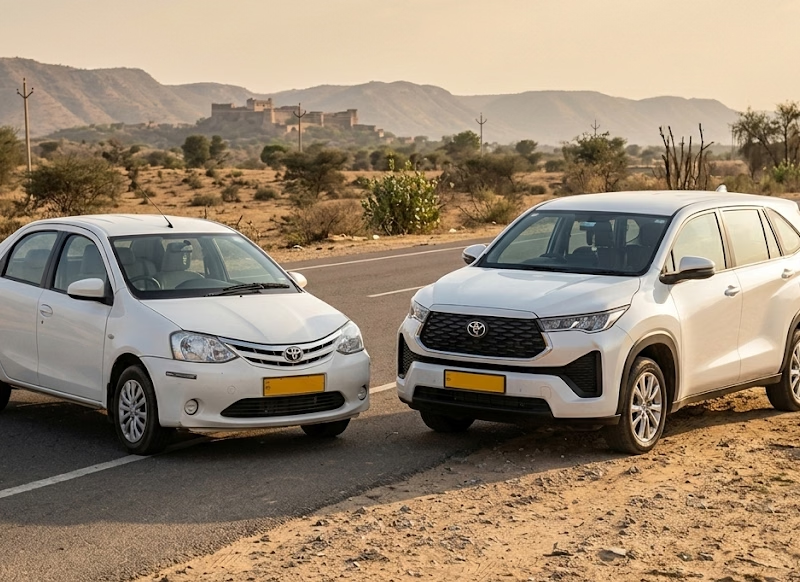
Rajasthan Car Travel Guide
Updated: 9 November 2026
Sedan vs SUV for Rajasthan Trip: Which Should You Choose?
Choosing between a sedan and an SUV for a Rajasthan trip comes down to your group, bags, route and preferred comfort—not a universal rule that one body style is always better. A sedan can suit a couple or small group travelling with modest luggage on a city-and-highway itinerary. An SUV or multi-utility vehicle may be more practical when you need a higher seating position, more cabin room or flexibility for a longer route, provided the actual model has enough boot space. This guide compares both choices for a Rajasthan tour by car and driver, explains what to confirm in a quote, and helps you choose the right vehicle for your own itinerary.
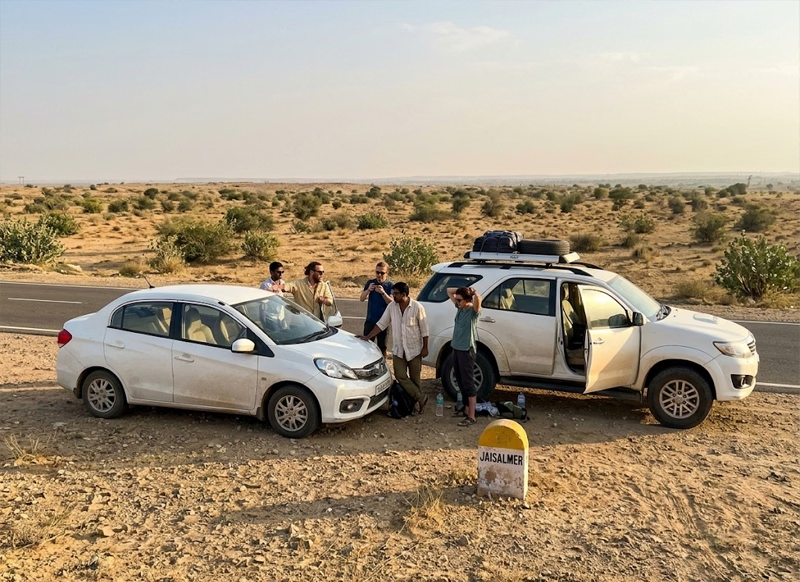
Rajasthan journeys can connect busy city streets, long intercity highways, hotel entrances, rural roads and local sightseeing areas. The roads and access arrangements vary by destination and by the exact place you plan to visit. Your vehicle choice should therefore be based on the day-by-day itinerary and the car being offered, not just the labels “sedan” or “SUV.” Ask the operator to explain what the quoted category means in practice.
Quick Answer: Sedan or SUV for a Rajasthan Trip?
Start with four questions: how many people are travelling, how many bags will you bring, how long are the driving days, and where will the car need to go? A sedan often works for one or two travellers, or a small party with compact bags, on a conventional Jaipur–Ajmer–Jodhpur or Jaipur–Udaipur route. An SUV or MUV is worth considering when there are more passengers, larger bags, older travellers who prefer a higher seat, or a longer multi-city itinerary. The specific car’s passenger capacity and luggage space matter more than its category name.
If you are unsure, send the operator the passenger count, each traveller’s approximate bag count and size, your full overnight route, and any mobility needs. Ask them to recommend a vehicle category and state how many people and bags it can carry comfortably. A clear answer helps prevent the common mismatch where the car technically has enough seats but the bags do not fit.
For a broad overview of routes and vehicle planning, see Rajasthan tour driver services. You can also browse the current Rajasthan tour packages and compare their route structure with your dates.
Sedan vs SUV: A Practical Comparison
| Factor | Sedan | SUV or MUV | What to check |
|---|---|---|---|
| Best fit | Small party with compact luggage | Group needing extra cabin space or a higher seat | Exact model and comfortable passenger capacity |
| Luggage | Boot space can be limited by large or numerous suitcases | May offer more flexible space, depending on model and seats | Number and size of bags with every passenger onboard |
| Ride height | Lower step-in and seating position | Higher entry and seating position in many models | Ease of getting in and out for your travellers |
| City use | Often easier to manoeuvre and park in tight spaces | Larger body may take more room in crowded lanes | Hotel access, parking and local pickup points |
| Long drives | Can be comfortable when the model and seating suit the group | Can feel roomier, but ride comfort varies by model | Seat comfort, air-conditioning, legroom and planned breaks |
| Cost | May be quoted at a lower category rate | May cost more, depending on vehicle, route and season | Full written quote and all included or excluded charges |
| Off-road access | Not designed for rough terrain | An SUV badge does not guarantee off-road suitability or permission | Local rules and authorized transfer arrangements |
These are broad tendencies, not guarantees about every vehicle. A well-maintained sedan can be more comfortable than a poorly maintained SUV, and an SUV with all seats occupied may have less luggage room than expected. Check the actual vehicle category and the operator’s substitution policy before you pay a deposit.
What Matters More Than the Vehicle Label?
Usable space with everyone seated
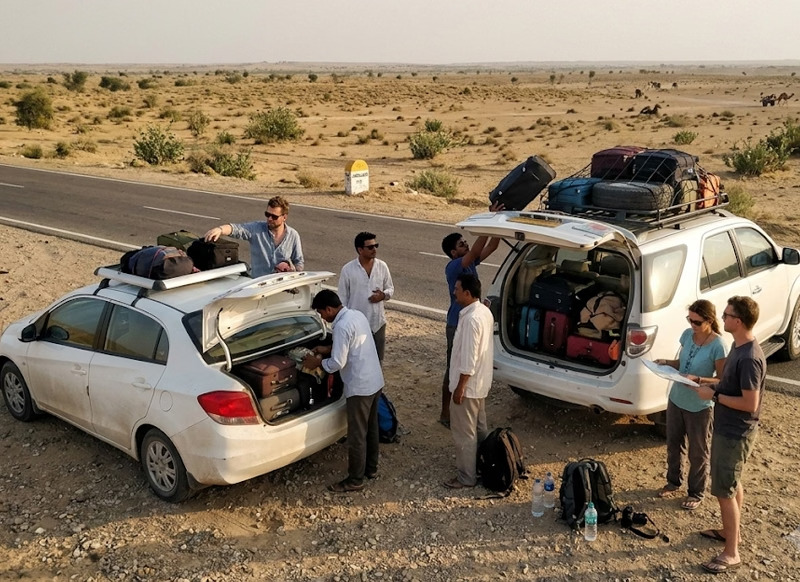
Vehicle brochures often describe a maximum seating count, but a holiday drive is not the same as a short city transfer. Passengers need personal space, and every bag has to be stowed without blocking a seat, visibility or safe access. Ask about the boot or luggage area when the vehicle is carrying the full passenger count. If the operator cannot guarantee that the bags fit, ask whether a larger category or a separate luggage vehicle is available and priced.
The actual make, model or category
“Sedan” and “SUV” cover vehicles with different dimensions, features and luggage capacity. A category may also mean a comparable vehicle rather than a guaranteed make and model. Ask whether the exact model is confirmed or whether the booking promises a category. If it is a category, get the minimum seating and luggage arrangement in writing and ask what substitutions are acceptable.
Your daily schedule
A route with multiple long transfers places different demands on a car than a short city stay. On a long day, legroom, seat support, ventilation, luggage security and regular breaks may matter more than a feature such as a sunroof. Build time into the route for meals, rest stops, traffic and check-in. Do not make a tight flight or train connection depend on an optimistic drive estimate.
Entry and exit comfort
A higher seat can help some travellers get in and out, while a lower sedan can be easier for others. If someone has knee, back or balance concerns, discuss the step height and seat access with them before confirming. Do not assume every SUV is easy to enter: running boards, door openings and seat heights vary. A short pre-trip vehicle check or a clear description of the offered car may help you decide.
Road access and local restrictions
A larger vehicle does not mean unrestricted access. Narrow old-city streets, fort entrances, busy markets and protected areas may have designated vehicle drop-off points or local transport arrangements. Desert-camp operators may use a separate local vehicle for a particular activity. Confirm the transfer plan and its price with the relevant service provider rather than assuming your tour car can go everywhere.
When a Sedan Makes Sense
You have a small group and compact bags
A sedan can be a practical choice for a couple or a small group whose luggage fits safely in the boot. This is often the simplest arrangement for travellers who have cabin-size cases, backpacks or a modest number of suitcases. Be precise about the bags: “two bags” could mean two small carry-ons or two large hard-shell cases. Send sizes or photographs if you are not sure the boot will accommodate them.
Your route is mainly paved city and highway travel
For hotel transfers and routine intercity travel on standard roads, a sedan may meet the need without paying for unused passenger capacity. Many Rajasthan itineraries connect major cities by road; the right choice still depends on the route and current conditions. Check the precise pickup and drop-off points, especially for heritage hotels or accommodation inside an old quarter where larger vehicles may need to stop nearby.
You want easier manoeuvring in crowded areas
A smaller vehicle can be more convenient around busy city roads, tight hotel approaches and parking areas. This does not mean a sedan can enter every narrow lane; pedestrian zones, traffic controls and local restrictions apply to all vehicles. A driver may ask you to walk the last section or meet at an accessible pickup point. Agree on those details before the day rather than expecting a door-to-door drop at every monument.
You prefer a lower vehicle cost, if the quote supports it
Some operators quote a lower rate for a sedan than for a larger category, but this is not universal. Route length, season, duration, included distance, fuel, tolls and the operator’s pricing structure all affect the total. Compare written quotes on the same basis. A sedan is not better value if it requires a second vehicle for bags or forces passengers into cramped seating.
You are travelling with minimal equipment
Photographers, families with strollers, travellers with mobility aids and visitors with bulky medical equipment should calculate that space separately. A sedan may still work, but do not assume it will. List every item, including foldable equipment, and confirm where it will be stored. If a bag must remain within reach, say so before the vehicle is assigned.
When an SUV or MUV Makes Sense
Your group needs more cabin room
An SUV or MUV may offer a more open cabin for a family or small group, particularly if travellers have different height or seating preferences. Whether it has enough room depends on the model and how many seats are in use. Ask how many adults can sit comfortably on the planned drives and how the rear seats affect luggage capacity. Do not choose based on the maximum seat number alone.
You value a higher seating position
Some travellers like the higher view from an SUV or find its entry height more suitable. Others prefer a lower seat or may find a tall step difficult. Consider the needs of the actual group. For older travellers, children, or anyone with a mobility concern, ask for details about the step-in height, door opening, grab handles and seating layout rather than relying on the category label.
Your trip includes several cities and frequent luggage changes
On a multi-day circuit, bags go in and out of the car repeatedly. Extra space can make packing and daily movement easier, as long as the vehicle’s boot layout remains usable. For a route such as Jaipur–Bikaner–Jaisalmer–Jodhpur–Pushkar, check what happens when all passengers and suitcases are aboard. Read a route example in the Jaipur, Bikaner, Jaisalmer, Jodhpur and Pushkar tour and ask the operator to adapt it to your dates and group.
You want flexibility for varied road conditions
A vehicle with more ground clearance may be useful on some uneven approach roads, but this depends on the actual road and vehicle. An SUV label does not mean the car is four-wheel drive, designed for dunes, or approved for restricted terrain. For normal sightseeing, follow the planned public-road route. For a desert activity or a site with special access, confirm whether a local authorized transfer is required.
You are comparing a large SUV with an MUV
“SUV” is often used loosely in travel listings, and some operators may offer an MUV or a larger people carrier as a similar category. Ask what vehicle is actually included. An MUV can provide a useful seating layout for a family, while a large SUV may have different luggage arrangements. Request a recent photo or model details where the distinction matters to your group.
If you are travelling with more people than a standard car can accommodate comfortably, ask whether a people carrier is a better fit. The goal is enough individual seating and safe luggage storage, not simply fitting everyone into the vehicle.
Choose a Vehicle by Rajasthan Route
Rajasthan is a large state with destinations spread across different regions. The right car for a two-city trip may not be the right car for a longer circuit with more passengers and luggage. Rajasthan Tourism’s official travel information describes the state’s air, rail and road connections; use it to plan how you arrive and depart, then assess the internal road route with your tour operator.
Jaipur city stay with nearby excursions
If you are staying in Jaipur and taking short or medium day trips, consider how many people are travelling, where you will park, and whether your hotel is in a narrow or busy area. A sedan may be convenient for a small party. A larger car can work for a family, but it may need to use a wider pickup point. For a planned drive to Ajmer or Pushkar, include the return journey and time at each stop in the day plan.
Jaipur–Jodhpur–Udaipur circuit
This multi-city route combines city touring and intercity drives. A sedan may suit a compact party with a modest number of bags; an SUV or MUV may suit travellers who want additional cabin room. The itinerary and overnight plan matter as much as vehicle size. See the route outline for the Jaipur, Udaipur and Jodhpur tour, then check the current road timings and vehicle availability for your dates.
Jaipur–Bikaner–Jaisalmer–Jodhpur–Pushkar
This is a longer circuit with multiple hotel changes and extended road days. Think carefully about luggage volume, seat comfort, rest breaks and the final drop-off. An SUV or MUV may be preferable for some groups, but a sedan can still be suitable for a smaller party if the model and luggage fit are confirmed. Compare the full itinerary, not only a per-day vehicle rate.
Udaipur and southern Rajasthan
Lakefront stays, day excursions and heritage sites can involve a mix of city roads and longer connections. A smaller car may be useful for urban movement; a larger one may feel more spacious for families and bags. Ask where the driver will wait during sightseeing and whether local parking or access fees are separate. If your route includes a rural stay, ask the accommodation about the last stretch of road and share its directions with the operator.
Desert camp or dune activity near Jaisalmer
Your private tour car generally handles the road transfer to an agreed meeting or camp location. A specific dune ride or camp activity may use a separate locally operated vehicle. Clarify whether that transfer, activity vehicle, guide, entry fee and return transport are included in the camp booking or tour quote. Do not assume that choosing an SUV turns the regular tour car into an off-road vehicle.
Wildlife reserves and protected areas
Wildlife safaris and protected-area visits typically operate under site-specific rules and vehicle arrangements. The transfer from your hotel to an entrance is different from the safari vehicle used inside the reserve. Check the current official booking procedure, entry arrangements and vehicle rules with the relevant reserve or government source. Your Rajasthan tour car may wait or return at an agreed time, but this should be stated clearly.
For itineraries and route inspiration, the official Rajasthan Tourism suggested itineraries can help you see how destinations are grouped. Use official sources for current access rules and your operator for the specific vehicle schedule.
Passengers, Luggage and Seating: A Simple Fit Test
Before you book, make a realistic inventory rather than estimating from the number of travellers. Count checked suitcases, cabin cases, backpacks, strollers, camera bags and any mobility equipment. Note which items must remain accessible during the drive. Then ask the operator for a yes-or-no answer on whether all passengers and bags fit in the named vehicle category.
| Group detail | What to tell the operator | Why it matters |
|---|---|---|
| Passengers | Number of adults and children, plus ages if a child seat is needed | Seat layout and child restraint arrangements vary |
| Suitcases | Quantity and approximate size of each hard or soft case | Boot space can be the limiting factor |
| Day bags | Backpacks, handbags, camera bags and items to keep nearby | Cabin space should remain comfortable and safe |
| Special equipment | Foldable stroller, wheelchair, walker or medical equipment | These need specific storage and access planning |
| Seating needs | Legroom, seat access, preferred row or motion sensitivity | Comfort is personal and depends on the actual model |
For child passengers, ask whether an appropriate child restraint can be provided and confirm its type and availability before travel. Do not assume that the vehicle has a child seat simply because you requested one in a message. If you need a particular arrangement, make it a written booking condition and reconfirm close to departure.
Keep heavy bags secured and avoid stacking luggage where it blocks the rear window or passenger movement. If the boot is full, do not accept an unsafe arrangement with cases placed loosely on seats. The operator should propose a suitable vehicle or another safe luggage plan.
Comfort on Long Drives: What to Evaluate
Seat shape, legroom and seating posture
Vehicle size alone does not predict comfort. Seat support, legroom, suspension, tyre condition and passenger height affect how a long drive feels. If a traveller has back discomfort, ask about the model and schedule stops. A bigger vehicle may have more room, but the seating position may not suit every person.
Air-conditioning and ventilation
Rajasthan weather changes across the year, and summer heat can be intense. Confirm that the vehicle has working air-conditioning and that the driver can maintain a comfortable temperature for the group. If travellers are sensitive to strong air-conditioning, mention it. Carry water and plan rest stops rather than expecting the vehicle to eliminate the effects of heat or fatigue.
Breaks and realistic travel days
Agree on the planned departure time, approximate drive duration, meal breaks and sightseeing stops. Drive times change with traffic, roadworks, weather and the location of your hotel. Add a buffer before trains or flights. If a day looks too crowded, remove a stop or add an overnight rather than trying to compensate by rushing.
Driver rest and overnight arrangements
On an overnight tour, clarify where the driver stays and whether accommodation or an allowance is included in the quote. A professional schedule should allow suitable rest. Confirm whether the car remains with you after sightseeing, whether the driver has a fixed duty-hour limit, and what happens if you request late-night or early-morning travel. Avoid assuming that a full-day booking means unlimited hours.
Cleanliness and vehicle condition
Ask how the vehicle is maintained and cleaned between assignments. You can request that the operator confirm the vehicle is air-conditioned and in roadworthy condition, with seat belts for the occupied seats. If the supplied car differs materially from the agreed category, use the booking contact to resolve it before beginning the long route. Save the confirmed details and contact number.
How to Compare the Cost of a Sedan and SUV
There is no reliable universal rate for a Rajasthan sedan or SUV tour. Quotes vary with season, duration, route, pickup and drop-off cities, vehicle model, included kilometres, daily duty hours and the operator’s terms. A larger category may cost more, but two offers with the same headline price may include different services. Ask for an itemized written quote so you can compare like with like.
Ask what the base quote includes
- Vehicle category or confirmed make and model.
- Driver and the agreed number of days, hours or kilometres.
- Fuel and whether the rate is based on a fixed route or a daily allowance.
- State or road taxes, tolls, parking and city entry charges.
- Driver allowance, meals or overnight accommodation.
- Pickup and drop-off locations, including any different-city return charge.
- Waiting time, additional sightseeing and any overtime rate.
Ask what is excluded
Monument tickets, licensed guides, hotel stays, meals, safari fees, local jeep transfers, camel activities and desert-camp packages may be priced separately. Ask who will arrange each service and how you will pay. If a quote says “all inclusive,” request a clear list of what that phrase includes. A service name alone does not reveal whether entry tickets or activity fees are covered.
Compare the total trip cost, not only the car rate
A lower sedan quote may be sensible for a small party whose bags fit. If a second vehicle or luggage transfer is then needed, the total may be higher. An SUV may cost more but simplify the trip for a group with larger bags. Compare the complete transport arrangement, divided across the travellers if useful. Do not add an extra seat or car unless the group genuinely needs it.
Check deposit, cancellation and change terms
Before paying, confirm the deposit amount, payment method, cancellation window, refund conditions and how route changes are priced. Ask whether the vehicle category is guaranteed and what substitute can be supplied if the booked car becomes unavailable. Keep the quote, receipt and itinerary. A verbal promise is harder to resolve than a written confirmation.
Desert Trips, Wildlife Areas and Local Access
One of the most persistent misunderstandings about an SUV is that it can travel anywhere. A standard SUV used for tourism may be a two-wheel-drive vehicle and may not be approved or appropriate for sand, steep tracks or protected zones. The right vehicle for a dune experience or wildlife safari is determined by the activity operator and local rules, not simply by the body style of the car you hired for your road tour.
For Jaisalmer, ask where your tour car will take you, where the camp transfer begins, what the camp package covers, and what time the vehicle returns. If an activity provider offers a separate jeep or other vehicle, confirm the provider, duration, cost and safety arrangements. Do not drive onto dunes or unmarked areas without authorization. Follow local instructions and avoid disturbing wildlife or fragile desert habitats.
For parks and protected areas, use the official reserve or tourism booking source to confirm permits, entry times and vehicle arrangements. The vehicle that takes you from your hotel to a gate is usually distinct from the vehicle or safari service used inside. Tickets and safari seats can be limited; reserve them through the appropriate official process when required.
In heritage districts, access may be restricted or unsuitable for a large car. Ask whether the driver will drop you at a parking area, wait nearby or return at a set time. Plan for walking, steps and uneven surfaces. If a traveller has mobility needs, discuss the closest permitted drop-off and any assistance available before the tour day.
What to Confirm Before Booking a Rajasthan Car and Driver
1. Share the complete route
Send each overnight city, arrival and departure point, planned sightseeing day and any optional stop. Include flights or train times where relevant. This lets the operator judge whether the route is workable and whether a sedan or larger vehicle fits the schedule. If you have not selected hotels, share the neighbourhoods or approximate locations.
2. Describe the group and all luggage
State the passenger count, ages of children, bag sizes and special equipment. Mention if anyone needs help getting into the car, more legroom or frequent breaks. Request a written confirmation that passengers and bags fit in the proposed vehicle.
3. Confirm the vehicle commitment
Ask if your booking guarantees a particular model or a category. Request the expected vehicle name and a reasonable substitution standard. Clarify the process if the assigned vehicle arrives with fewer usable seats or insufficient boot space. Keep communications with the same booking contact when possible.
4. Review the duty schedule
Ask the start and end time each day, included distance or route, driver rest arrangements, waiting time and the charge for extra hours. Clarify whether the driver remains with you during an overnight stay and when the car can be used for evening plans. A written itinerary prevents different expectations on the day.
5. Get a written cost breakdown
List fuel, tolls, parking, taxes, driver allowance, interstate charges, night charges, overtime and return-to-base costs. Identify anything paid directly to hotels, guides, parks or activity operators. Ask the operator to show the final amount and payment schedule in the quote currency.
6. Save the support details
Keep the final itinerary, payment receipt, operator contact and pickup point in a place you can access without internet. Share the plan with a family member. Confirm the pickup time and vehicle details shortly before the trip, particularly if you arrive at an airport or railway station.
Vehicle Choices for Common Trip Scenarios
| Scenario | Likely starting point | What could change the choice |
|---|---|---|
| One couple, two compact suitcases, Jaipur and Ajmer | Ask for a sedan quote first | Large cases, mobility needs, long days or hotel access constraints |
| Two adults and two children on a multi-city route | Compare a sedan with an SUV or MUV | Child seats, stroller, bags and children’s comfort over long drives |
| Four adults with full-size suitcases | Ask for a larger category and exact luggage fit | Vehicle model and third-row seating can reduce boot capacity |
| Three travellers with camera equipment | Choose based on passenger and equipment inventory | Whether camera bags must be accessible and protected from heat |
| Older traveller who prefers a higher seat | Ask to compare entry height in the offered vehicles | Step height, grab handles, mobility and preferred seat position |
| Desert camp stay near Jaisalmer | Book the road car for transfers and verify camp transport separately | Camp location, local transfer and activity vehicle arrangements |
These are starting points for a conversation, not a guarantee that a particular vehicle will fit. Passenger comfort and baggage dimensions vary. The operator should confirm the actual layout before you finalize payment.
Booking Checklist: Sedan vs SUV
- Passenger count and ages are confirmed.
- Every suitcase, day bag and special item is listed.
- The operator confirms fit with all passengers onboard.
- The vehicle category or model is written on the quote.
- Child seat or accessibility needs are confirmed explicitly.
- Daily route, pickup, drop-off, hours and distance are clear.
- Fuel, tolls, parking, taxes and driver costs are itemized.
- Extra-hour, waiting, night and route-change costs are explained.
- Desert, wildlife and local transfers are clarified separately.
- Deposit, cancellation, refund and replacement terms are saved.
Once you have these details, choosing becomes much easier. If you are still undecided, ask the operator to quote both categories on the same route and explain the difference in usable space and total cost. A good recommendation should take your actual group and itinerary into account.
Useful Official Information
Use government and official sources for destination information, current access restrictions and public travel guidance. A private tour operator can advise on its own vehicle availability and quote, but it should not replace official rules for a protected area or monument.
- Rajasthan Tourism: How to get there — official state tourism information about reaching Rajasthan by air, rail and road.
- Rajasthan Tourism: Suggested itineraries — official route ideas for planning a visit.
- Department of Tourism, Government of Rajasthan — destination and trip-planning information.
- Google Search Central: Helpful, reliable, people-first content — guidance for creating content that serves readers with useful, trustworthy information.
Official information and site procedures can change. Check the relevant government or destination page close to your travel date, especially for entry rules, safari bookings and restricted access.
Frequently Asked Questions
Is a sedan good for a Rajasthan trip?
It can be a good fit for a small group with compact luggage on a route using standard paved roads. Confirm the vehicle’s actual boot space, passenger comfort and daily schedule before booking. A sedan is not suitable simply because the group’s headcount is below the advertised maximum seating capacity.
Is an SUV better than a sedan in Rajasthan?
Not for every traveller. An SUV or MUV may provide more cabin room or a higher seating position, while a sedan may be easier to manoeuvre and may cost less under a particular quote. The right choice depends on the model, people, bags, route and price breakdown.
Which car should a family choose for Rajasthan?
Families should compare the exact passenger layout, child-seat availability, stroller or luggage space, and comfort over the longest driving day. A family with several full-size cases may need a larger vehicle even if the number of people seems small. Ask the operator to confirm the complete load, not only the seats.
Can four adults and four large suitcases travel in a sedan?
Do not assume they can. The luggage may not fit in the boot with all seats occupied. Give the operator the number and approximate size of bags and request written confirmation. If the fit is uncertain, compare a larger category or another safe luggage arrangement.
Does hiring an SUV mean we can drive on sand dunes?
No. An SUV badge does not mean the vehicle is designed or authorized for dune driving. Desert activities may require a separate local vehicle and operator. Confirm the arrangement and price with the camp or activity provider, and follow local rules.
Will an SUV reach every fort, hotel or old-city street?
No vehicle category guarantees access to every entrance. Traffic controls, narrow streets, parking rules and site security can require a drop-off at a designated point. Ask about walking distances, waiting arrangements and local transfers for your specific itinerary.
Is a sedan cheaper to hire with a driver?
It may be quoted at a lower rate, but this varies by route, season, duration and inclusions. Compare the complete written price, including tolls, parking, driver allowance, return-to-base costs and extra hours. A second vehicle for bags can change the total.
Should I book the exact model or a vehicle category?
If a specific feature or luggage layout is essential, request the model or a written minimum specification. Many bookings guarantee a category and may use a comparable replacement vehicle. Confirm what substitution is allowed and what happens if the replacement does not meet your agreed passenger and luggage requirements.
Are fuel, tolls and parking usually included?
Inclusions vary. The quote should state clearly whether fuel, tolls, parking, state taxes, driver allowance and overnight charges are included. If any items are paid separately, ask how they are calculated and when payment is due.
Can I change from a sedan to an SUV after booking?
Possibly, subject to availability and a revised price. Ask about upgrade deadlines and whether the change affects the deposit or cancellation terms. Get the updated vehicle category and total in writing before travel.
What is the best car for a Jaipur to Jaisalmer road trip?
The best fit depends on the number of passengers, luggage, comfort needs and stops. For a small party with modest bags, a sedan may be adequate if the operator confirms the vehicle and route. For a group needing more room, compare an SUV or MUV. Plan rest breaks and confirm the camp transfer separately if your itinerary includes one.
Should we use one car for the whole Rajasthan itinerary?
A single car can simplify a multi-city private tour, especially when your group is travelling with luggage. For very long transfers, compare road travel with trains or flights, and check whether starting and ending in different cities affects the vehicle price. Make sure the itinerary allows enough time to enjoy each stop.
How do I request the right car quote?
Send your dates, pickup and drop-off cities, overnight route, passenger count, children’s ages, bag count and sizes, and any mobility needs. Ask for the vehicle category, included hours or kilometres, cost inclusions, exclusions, change terms and support contact. You can use the contact page to share your requirements.
Plan Your Rajasthan Tour by Car and Driver
A sedan can be a sensible, comfortable choice when the group is small and the luggage fits. An SUV or MUV can be more practical when your travellers need extra cabin room or a higher seat, but its category alone does not guarantee a better ride, more luggage capacity or access to special locations. Match the car to your itinerary and get the details confirmed in writing.
Explore the available Rajasthan tours or review a sample Jaipur–Udaipur–Jodhpur route. When requesting a quote, include passenger numbers, luggage, dates, pickup and drop-off points, and the longest driving day. That information makes it easier to discuss a suitable vehicle and a realistic plan.
PLAN YOUR RAJASTHAN ROAD TRIP
Get the Right Car for Your Rajasthan Itinerary
Share your travel dates, route, passenger count and luggage details. The team can help you compare a sedan and SUV option and confirm the vehicle, trip inclusions and quote before booking.

Ranjit Singh
India Travel Expert
Ranjit Singh helps international travellers plan private car tours, South India journeys and customised India itineraries with practical local guidance.