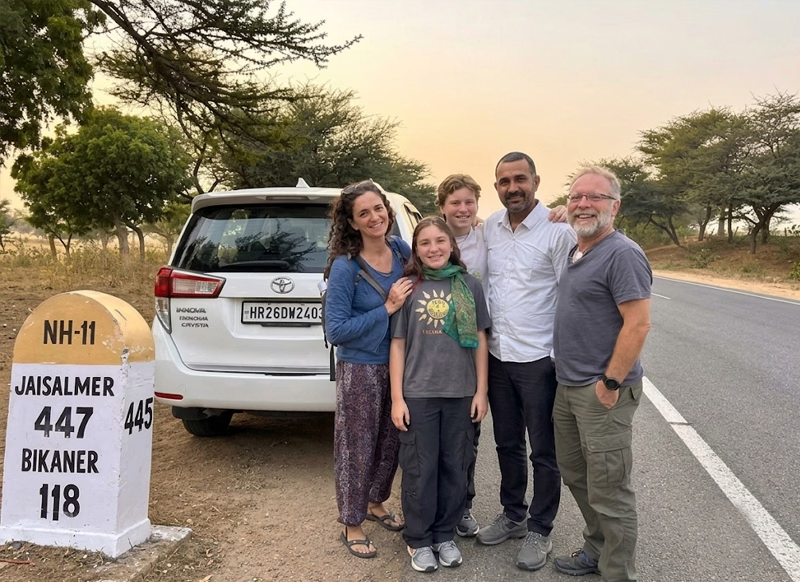
Rajasthan Road Trip Guide
Updated: 9 November 2026
10 Day Rajasthan Road Trip with Driver: The Ultimate Way to See the State
A ten-day Rajasthan road trip can connect pink city streets, desert forts, painted havelis and lakefront palaces in one memorable journey. Travelling with a private driver gives your group a car for the agreed route and lets you plan hotel-to-hotel transfers without driving yourself. The key is choosing a realistic circuit: Rajasthan is large, and Jaipur, Jodhpur, Jaisalmer, Bikaner and Udaipur cannot all be explored deeply in ten days without several long road days. This guide compares two workable route styles, explains the trade-offs, and shows what to confirm before booking a car and driver.
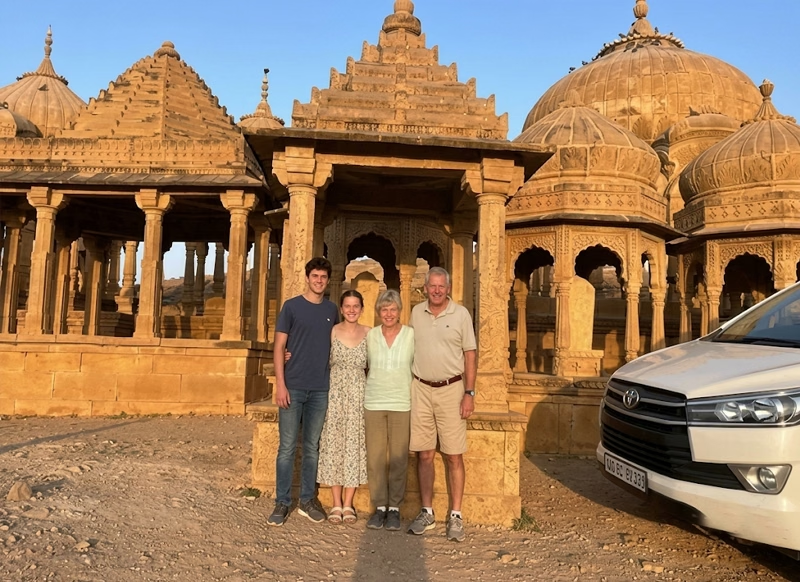
A private driver is a transport choice, not a promise that every journey will be short or every site reachable by car. Your experience depends on the route, vehicle, traffic, season, hotel locations and the clarity of your booking. A well-planned itinerary leaves room for meals, rest, walking and unexpected delays. It also makes clear which services are separate, such as hotels, monument tickets, guides, safaris and desert-camp activities.
Quick Answer: Which Rajasthan Route Fits Ten Days?
Start by deciding what you most want to experience. If desert scenery and Jaisalmer are essential, prioritize the western circuit and leave Udaipur for another trip or a longer extension. If you want a gentler pace with forts, bazaars and lakes, use a Jaipur–Pushkar–Jodhpur–Udaipur loop and skip Jaisalmer. Both routes can make a rewarding ten-day holiday; neither covers the entire state.
| Route style | Possible overnight cities | Best fit | Main trade-off |
|---|---|---|---|
| Desert and forts | Jaipur, Pushkar, Jodhpur, Jaisalmer, Bikaner | Visitors keen on the Thar region, desert architecture and western Rajasthan | Longer road days and less time for Udaipur |
| Forts and lakes | Jaipur, Pushkar, Jodhpur, Udaipur | Visitors who prefer a balanced city itinerary and lakefront time | Jaisalmer and the far-west desert are left out |
| All major highlights | Jaipur, Jodhpur, Jaisalmer, Udaipur, possibly Bikaner | Travellers with more than ten days or a strong preference for fast travel | May require extra nights, early starts and several long transfers |
For a ten-day plan, count the arrival and departure days honestly. If you spend half of Day 1 arriving and most of Day 10 driving to an airport, you have fewer sightseeing days than the headline suggests. Build in an overnight stay before an international departure instead of relying on a long road transfer to connect with a same-day flight.
Why Take a Rajasthan Road Trip with a Driver?
Connect several cities without self-driving
Rajasthan’s major destinations are spread across a large area. A driver can take your group between hotels and planned stops while you travel as a passenger. This is useful if you do not want to navigate unfamiliar roads, arrange a separate taxi for each leg or manage luggage through multiple station transfers. It does not eliminate traffic, road delays or the need to plan sensible distances.
Before choosing the car option, compare the actual route with trains, buses and flights. A road trip is most valuable when it connects places that are awkward to combine by public transport or when your group wants selected stops along the way. For a very long point-to-point journey, a train or flight may save time and reduce fatigue.
Keep luggage with your group
When you change cities every few days, having the bags travel with the group can simplify check-out and check-in. You do not need to arrange a separate transfer from a station to a hotel for every leg. This is especially helpful for families, small groups, older travellers and visitors carrying camera equipment. The vehicle still needs enough usable boot space for every passenger’s luggage; confirm the bag count, sizes and seating before booking.
Do not choose a vehicle only by the number of seats listed online. A fully occupied SUV or MPV may have limited space for large suitcases. Ask for the model or category, the number of passengers it can carry comfortably with luggage, and an acceptable replacement option if the assigned car becomes unavailable.
Plan stops around your interests
A private itinerary lets you discuss the order of sightseeing and travel days with the operator. You may want more time at Mehrangarh Fort, a slower morning in Udaipur or a stop between Jaipur and Pushkar. Changes can affect the route, cost or booking hours, so agree on significant additions in advance. A driver can transport you to a site and identify a meeting point; a licensed guide is a separate service unless the booking specifically includes one.
Flexibility has practical boundaries. Some monuments have security perimeters or designated parking; desert activities may require local operators; and crowded old-city streets may not allow a car near the exact entrance. Confirm drop-off points and walking distances. A plan that lists fewer places often creates a better visit than a packed checklist.
Make a group itinerary easier to coordinate
For a couple, family or group of friends, one vehicle can keep everyone together and simplify pickup timing. The total fare can be shared, but the economics depend on group size, vehicle category and route. Compare the entire transport cost against tickets, local transfers and the time needed for alternate modes. A private car is not automatically cheaper, and a larger vehicle is not always the most comfortable if its luggage space is limited.
Different travellers have different paces. Discuss early starts, breaks, mobility requirements, meal preferences and free time before confirming the itinerary. A good schedule should work for the people travelling, not just fit the maximum number of destinations into the calendar.
See the landscape between destinations
Driving reveals the transitions between Rajasthan’s urban centres and rural landscapes. On an intercity day you may see farms, small towns, roadside markets and changing terrain. Treat these as part of the journey, but do not assume every roadside stop is safe, permitted or suitable for photographs. Ask the driver to stop only at an appropriate place and allow for the additional time.
Travel respectfully: ask permission before photographing people, avoid blocking roads, do not litter, and follow local instructions at religious or heritage sites. A road trip is more rewarding when it leaves room for curiosity without turning communities into a backdrop.
Choose the Route Before You Choose the Car
The word “Rajasthan” covers regions that require different amounts of road time. Jaipur sits in the east; Jodhpur and Jaisalmer are farther west; Udaipur is in the south; Bikaner is in the north-west. A circuit that includes all of these can involve several long days. First decide whether the desert, lakes, forts, wildlife or a slower city pace matters most. Then select the cities and ask the operator to map the daily drives.
Option 1: Western Rajasthan with the desert
This route can include Jaipur, Pushkar, Jodhpur, Jaisalmer and Bikaner. It suits travellers who want the desert landscape, Jaisalmer’s sandstone heritage and a taste of the Thar region. It is a busy circuit: expect some substantial intercity drives and keep the schedule flexible. Udaipur is usually the city to leave out if you want enough time for the desert leg.
A common direction is Jaipur to Pushkar, Pushkar to Jodhpur, Jodhpur to Jaisalmer and Jaisalmer to Bikaner, followed by a return toward Jaipur or onward travel from a suitable rail or air gateway. The precise order can change according to arrival and departure points. Ask the company whether the quoted fare includes the vehicle’s return to base if your trip ends in another city.
Option 2: Jaipur, Pushkar, Jodhpur and Udaipur
This route trades the far-west desert for Udaipur’s lakes, palaces and nearby heritage stops. It can be easier to pace over ten days because it includes fewer very distant endpoints. A possible sequence is Jaipur, Pushkar, Jodhpur, Udaipur and back to Jaipur, with overnights chosen to avoid turning every sightseeing day into a transfer day.
Consider the arrival and departure airports before confirming the loop. If your flights allow an open-jaw itinerary—arriving in one city and leaving from another—you may reduce backtracking. Verify flight schedules independently and leave a buffer before departure. Rajasthan Tourism’s official “How to Get There” page lists major airports and railway stations as planning references; check live transport services for your dates.
Option 3: Include Udaipur and Jaisalmer by extending the holiday
Jaisalmer and Udaipur are in different parts of the state. Adding both to a ten-day itinerary can mean a long transfer or an overnight break that reduces sightseeing time elsewhere. If both are priorities, consider extending to twelve or more days, or using a flight or train for one leg where available and convenient. A mixed-mode itinerary can be more comfortable than trying to cover every distance by road.
A longer route can add Jaisalmer, Jodhpur, Ranakpur, Udaipur, Jaipur and possibly Bikaner, but the order should follow your entry and exit points. Discuss realistic driving blocks and overnight stops with a provider. Do not accept a schedule that looks attractive only because the listed drive times omit meals, traffic, check-in and rest.
Use official itineraries as a starting point
The Rajasthan Tourism suggested itineraries page offers route ideas. Treat published itineraries as a starting point rather than a current operating promise: hotel availability, attraction access, road conditions and visitor rules may change. Cross-check the current details for your dates, and use your own interests and pace to adjust the route.
Sample Ten-Day Desert and Forts Road Trip
This example begins and ends around Jaipur and focuses on western Rajasthan. It includes a return drive at the end, so it is important to protect the departure schedule. The outline is a planning framework; hotel night counts, sightseeing order and drive times should be adjusted after confirming your actual arrival and departure details.
Day 1: Arrive in Jaipur
Arrive in Jaipur, transfer to your hotel and leave time to recover from the journey. If you reach early and feel rested, choose one easy activity near your accommodation or take a short orientation drive. Do not schedule a full monument circuit after a long international flight. Confirm the driver’s pickup point, local contact and hotel address before arrival.
Use the evening to check the next day’s plan, tickets and weather. If you need cash, a local SIM or essentials, arrange them without compressing the itinerary. A relaxed first day can help the rest of the road trip begin smoothly.
Day 2: Jaipur heritage and markets
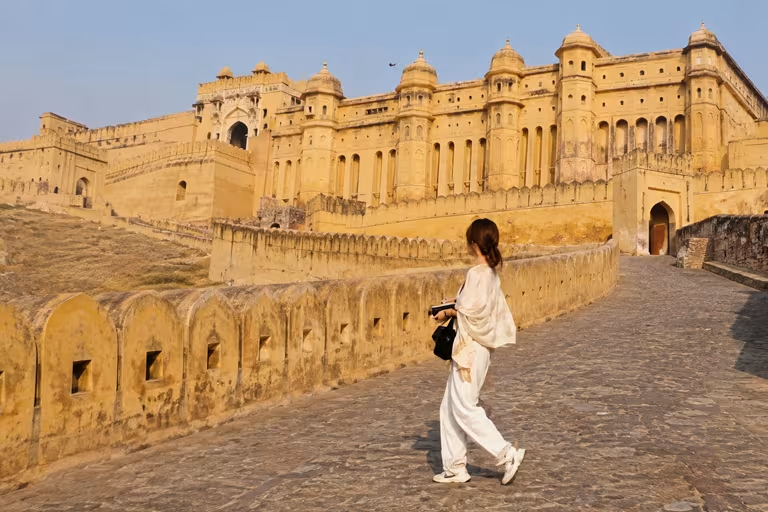
Spend a full day exploring selected parts of Jaipur. Depending on your interests and attraction hours, you might group Amber Fort with nearby stops, then visit City Palace, Jantar Mantar or the walled city on another part of the day. Hawa Mahal is commonly admired from the exterior, while visits inside require separate time and a ticket.
Do not try to visit every Jaipur landmark in one day. Consider walking time, queues, museum hours, food breaks and traffic between sites. Ask where the driver can park and agree on a clear meeting point. If you want historical context, arrange a qualified guide and confirm whether the guide fee is separate.
Day 3: Jaipur to Pushkar
Travel from Jaipur toward Pushkar. Rajasthan Tourism lists Jaipur–Pushkar at approximately 140 kilometres in one of its suggested itineraries; actual distance and journey time depend on the exact pickup, route and stops. If you want to visit Ajmer on the way, discuss whether the additional stop fits the day and confirm the order before departure.
After checking in, visit Pushkar’s lake area or explore the town at a respectful pace. Pushkar is an active religious destination. Follow local instructions near the ghats and temples, ask before taking close-up photographs and be mindful of customs. Keep the evening flexible rather than adding a long list of stops.
Day 4: Pushkar to Jodhpur
Leave for Jodhpur after breakfast. The route is a road transfer, and the practical journey includes more than the time shown on a map: allow for city exits, rest stops, meals and arrival traffic. Check in at the hotel and spend the evening near your accommodation or a local market if time and energy allow.
Confirm the Jodhpur hotel location carefully. Old-city properties may have narrow approach roads, so the driver may need to drop you at a designated point and the hotel may arrange a short onward transfer. Ask about luggage handling and the meeting point before the car departs.
Day 5: Jodhpur forts and old city
Dedicate the day to Jodhpur. Mehrangarh Fort and Jaswant Thada can anchor the sightseeing plan, while the old city and market areas offer a different perspective. Check the current opening times, ticket rules, accessible routes and photography restrictions directly with official site information before you go.
Allow time for walking and stairs. The driver can take you to an agreed drop-off and wait or return at a confirmed time, depending on the booking. A guide can add historical context; the driver is not automatically the guide. Keep one or two optional stops rather than making every hour dependent on perfect traffic.
Day 6: Jodhpur to Jaisalmer
Travel west to Jaisalmer. The road distance is often shown at roughly 270–290 kilometres depending on the start and endpoint, but live maps and route choices may differ. Treat this as a dedicated transfer day. Agree on one or two reasonable breaks and do not book a time-sensitive activity immediately after arrival.
Once checked in, rest or take a short walk depending on your arrival time. If you plan a desert-camp evening, confirm the camp’s exact location, transfer arrangements, return time, inclusions and cancellation rules separately. Some routes to dunes or camps may use local transfers; verify what your car booking covers.
Day 7: Jaisalmer Fort and desert experience
Explore Jaisalmer’s heritage quarter, fort lanes and selected havelis. The living fort includes homes and businesses as well as historic spaces, so respect residents and follow signs. Choose a manageable number of sites; walking through the lanes can take longer than expected.
Later, you may visit a desert area or book an activity with an established local operator. Ask what the activity includes, how guests reach the site, what environmental or animal-welfare practices apply, and whether a return transfer is provided. A private driver can take you to the agreed point; the driver is not necessarily the safari or camp operator.
Day 8: Jaisalmer to Bikaner
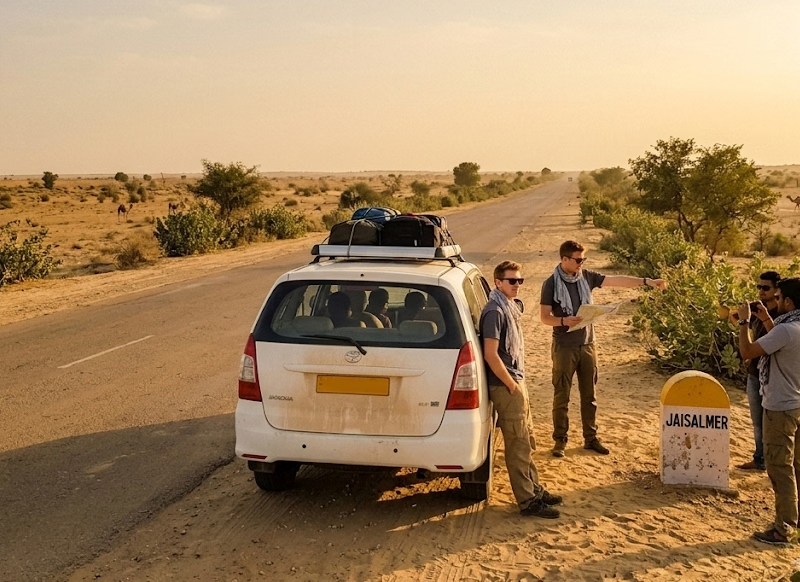
Continue to Bikaner. Rajasthan Tourism’s Jaisalmer destination information notes the city’s connections to Bikaner and gives an approximate distance of 330 kilometres. Confirm the route and current travel estimate close to your date. Break the drive as needed, and reach Bikaner with enough time to check in and rest.
If you hope to visit a site on arrival, verify its hours and leave a generous buffer. A late arrival may make it more sensible to have dinner and begin sightseeing the next morning. Do not assume the driver can extend the booked service without additional time or charges.
Day 9: Bikaner heritage and local food
Use the day to explore Bikaner, choosing a fort or museum, selected markets and local food experiences that match your interests. Confirm current access rules and opening hours before setting out. If a temple or religious site is part of the plan, dress and behave respectfully and follow its visitor guidance.
Ask the driver to explain the next day’s return plan, approximate road time, departure hour and arrival point in Jaipur. If the trip ends with a flight or train, discuss whether a Jaipur overnight before departure is safer for your schedule.
Day 10: Bikaner to Jaipur and onward plans
Travel back toward Jaipur. This is a substantial road transfer, so do not schedule a close same-day international flight or another non-refundable connection. The safest plan is usually to arrive in Jaipur, stay overnight and depart the following day. That adds a night beyond the core ten-day sightseeing plan but gives you a practical buffer.
If you must finish on Day 10, agree on the precise arrival target and a contingency plan. Check live traffic and current route conditions, but remember that even live estimates cannot guarantee arrival time. Never ask the driver to compensate for a late start with unsafe speed.
What this route includes—and leaves out
This western circuit includes Jaipur, Pushkar, Jodhpur, Jaisalmer and Bikaner, but it does not give Udaipur a proper visit. It uses several intercity drive days and is best for travellers whose priority is desert heritage. If lakes, relaxed evenings and Udaipur’s city experience matter more, choose the forts-and-lakes route below instead.
Travellers who want Udaipur, Jaisalmer, Bikaner and Jaipur in the same trip should add days or replace one long road leg with a suitable train or flight. The number of destinations is not a measure of trip quality; adequate time at each place is.
Alternative Ten-Day Forts and Lakes Route
This option gives more time to Udaipur and avoids the long western desert extension. It is a good fit if your priorities are Jaipur’s heritage, Pushkar’s religious and cultural atmosphere, Jodhpur’s fort and old city, and Udaipur’s lakeside setting. It still includes intercity driving, but it removes the far-west legs to Jaisalmer and Bikaner.
Days 1–2: Jaipur
Arrive on Day 1 and keep the schedule light. On Day 2, choose a set of Jaipur landmarks that fit your pace. If you want both the hilltop forts and the old-city monuments, organize the day into geographical groups and allow for the time needed at each location. Confirm current opening hours, ticketing and visitor restrictions rather than using an old itinerary as a guarantee.
Day 3: Jaipur to Pushkar
Travel to Pushkar, optionally stopping in Ajmer if that visit is a priority. Jaipur to Pushkar is commonly planned as a half-day road transfer; Rajasthan Tourism’s suggested itinerary lists about 140 kilometres. Check your actual pickup and hotel addresses and confirm that the Ajmer stop fits within the booking hours.
Spend the evening in Pushkar at a respectful pace. The town has active religious sites and local customs. Follow posted instructions near the lake and temples, and ask before taking photographs of people or ceremonies.
Days 4–5: Pushkar to Jodhpur and Jodhpur sightseeing
Use Day 4 for the drive to Jodhpur and hotel check-in. Depending on your start time, you may have time for a short market visit, but do not promise yourself a full sightseeing day after the transfer. Day 5 is the main Jodhpur visit, with Mehrangarh Fort, Jaswant Thada and the old city arranged according to opening hours and walking needs.
Days 6–8: Jodhpur to Udaipur and time by the lakes
Travel to Udaipur on Day 6. Some travellers add Ranakpur or another stop en route. A detour should be confirmed before departure, with realistic time for the site, meals and the remaining drive. If the visit lengthens the day too much, consider staying nearby or removing the stop.
Use Days 7 and 8 for Udaipur. You might visit City Palace, Jagdish Temple, Saheliyon Ki Bari or other attractions, and leave time for a lakeside walk or a boat activity if available. Check ticket rules, operating hours and weather-related availability. Boat services and events can be subject to local conditions and schedules.
Day 9: Return to Jaipur
Drive back to Jaipur and stay overnight. This transfer uses much of the day, so do not add several major sightseeing stops. If your flight leaves on Day 10, the overnight in Jaipur gives you a more reliable departure plan than driving straight to the airport from Udaipur.
Day 10: Departure
Use Day 10 for your flight or train from Jaipur. If you have a late departure, a short nearby visit may be possible, but only after checking luggage storage, traffic and check-in requirements. Keep the day flexible rather than booking a distant attraction before a flight.
Why this route feels different
This itinerary gives Udaipur room to breathe and keeps Jaisalmer out of the schedule. It does not include the dunes or the far-west desert. If desert scenery is a must, select the western route and accept that Udaipur may need to wait for a separate trip. If you want both, add nights instead of compressing the drive.
For a route reference, see the live Jaipur–Udaipur–Jodhpur tour. Its itinerary is a starting point; confirm current order, trip duration, hotels and inclusions directly with the provider.
What to See in Each Rajasthan City
Jaipur: forts, planned streets and craft markets
Jaipur is a natural start or finish for many road trips because it has an airport, rail connections and a broad range of accommodation. Visitors often choose Amber Fort, City Palace, Jantar Mantar, Hawa Mahal, museums and bazaars. The city has several distinct areas, so the order of visits matters. Ask the driver to group nearby sites and confirm the best drop-off points for the old city.
Give forts and museums enough time. A monument may include courtyards, galleries, steps, queues and walking between buildings. If you only have one full day, choose the sites that matter most instead of trying to see every landmark. A local guide can explain the history and design, while the driver handles the agreed transfers.
Pushkar: lakefront, temples and a slower evening
Pushkar is a smaller town with a strong religious identity, a lakefront and markets. Visitors may come for the atmosphere as much as for a checklist of monuments. Dress respectfully at religious sites, follow signs and local instructions, and ask before photographing worshippers. Some lanes are narrow or pedestrian-focused, so a driver may drop you at an agreed edge of the town rather than at a specific shop or ghat.
If your visit coincides with a fair or major event, expect changed traffic and crowded accommodation. Confirm dates and access closer to the trip. Do not assume an event will occur on the same calendar dates every year without checking official information.
Jodhpur: Mehrangarh, Jaswant Thada and the blue-city lanes
Jodhpur is known for its fort, old-city setting and markets. Mehrangarh Fort can take several hours depending on your interests and pace. The approach, parking arrangements and walking route may change with crowd levels. Check the current visitor information and consider accessibility before planning a tightly timed sequence of sites.
Jaswant Thada and other nearby attractions can be combined with the fort if the day allows. Keep time for lunch, rest and local streets. A driver can wait where permitted or return at a coordinated time; confirm the waiting terms and meeting point before you leave the car.
Jaisalmer: living fort and desert surroundings
Jaisalmer’s fort is a historic urban quarter with residents, businesses and religious spaces. Visitors should stay on public paths, respect private doorways and avoid loud behaviour. The sandstone havelis and heritage streets reward a slower walk. Ask a guide or local site staff about photography boundaries and conservation rules.
The desert experience may involve a camp, cultural performance, camel ride or other activity arranged by a separate operator. Ask what is included, how guests travel to the site, whether the experience is appropriate for children or mobility needs, and what animal-welfare practices are followed. Do not assume the car-and-driver booking includes the camp or activity price.
Bikaner: fort, old city and regional food
Bikaner can add another heritage stop on a western Rajasthan circuit. Junagarh Fort, museums and markets are common interests, but opening times and ticket arrangements should be checked for your dates. Food is part of the city experience for many visitors; if you have allergies or dietary restrictions, communicate them clearly at restaurants and confirm ingredients where needed.
Plan Bikaner according to how much time you have. A single overnight may mean choosing one major visit and a short market stop. If you want a slower experience, stay longer and consider adjusting the rest of the itinerary rather than turning the day into a rushed checklist.
Udaipur: palace, lakefront and gardens
Udaipur offers a different atmosphere from the desert cities, with lakes, palaces, gardens and old-city streets. City Palace can fill several hours, especially if you visit museums and galleries. Lake activities depend on operating schedules and local conditions, so verify them before building the day around a boat ride.
The old city has narrow lanes and pedestrian movement. A car may not reach every hotel entrance or lakefront location. Ask your hotel for the correct vehicle drop point and arrange luggage assistance if needed. Leave time to walk and sit by the water rather than filling every hour with another drive.
Optional stops: Ranakpur, Kumbhalgarh and Chittorgarh
Optional heritage stops can enrich a road trip but should be added with a clear understanding of the drive. Ranakpur’s Jain temples, Kumbhalgarh Fort and Chittorgarh Fort each require time at the site as well as travel to and from it. Some locations have long internal walking routes, stairs or seasonal operating schedules. Check current access and dress expectations before travelling.
Do not add a major fort as a casual “quick stop” on a day that already includes a long intercity transfer. Ask the operator to show the extra distance, estimated arrival time and whether an overnight change is recommended. If the day becomes too long, remove a stop or add a night.
Distances, Drive Times and a Realistic Daily Pace
Road distances in online tools vary with the starting hotel, city traffic, route selection and temporary diversions. Journey time changes with traffic, roadworks, weather, breaks and how long you spend at en-route stops. Treat all distances as planning estimates, check a live map close to departure, and ask the operator to confirm the route it is quoting.
As broad route-planning references, Rajasthan Tourism lists Jaipur to Pushkar at around 140 kilometres in its suggested itinerary and notes a Jaisalmer–Bikaner connection of about 330 kilometres in its Jaisalmer destination information. These figures are not guaranteed journey times. Your hotel-to-hotel distance can be different, and the actual day should include breaks and arrival time.
Separate transfer days from sightseeing days
A transfer day is when the group moves between overnight cities. It can include one planned stop, but it should not be treated as a full sightseeing day as well. A sightseeing day works better when the car is used for short local connections and the travellers have enough time at each site. Mixing a very long drive with multiple major attractions is one of the fastest ways to make an itinerary tiring.
Ask for a schedule with the expected pickup time, route, meal break, likely arrival window and overnight city. Leave room to adjust if traffic or a site visit takes longer than planned. The driver’s shift and rest matter too; a responsible itinerary should not depend on unsafe hours behind the wheel.
Plan around the actual hotel address
Two hotels in the same city can produce very different daily routes. A property outside the centre may add travel time, while an old-city hotel may have restricted vehicle access. Share the exact hotel or neighbourhood with the operator before finalizing the quote. Ask whether the driver can reach the entrance, where luggage is unloaded and how you will reconnect after sightseeing.
Build in breaks and daylight where useful
For a long drive, plan meal and restroom breaks and keep drinking water available. If an arrival after dark would make check-in or the final approach difficult, consider leaving earlier or adding an overnight stop. In hot weather, avoid underestimating the effort of walking around open forts and courtyards; schedule shade and rest.
Protect flights and train departures
Do not place a major intercity road transfer immediately before a flight or train without a generous buffer. A driver can estimate a route, but cannot guarantee arrival time. If missing a departure would disrupt the trip, sleep in the departure city the night before. For an airport transfer, confirm the terminal, pickup time, waiting terms and contact process in writing.
Choosing a Car and Driver for Ten Days
The right vehicle depends on the number of passengers, luggage, route and comfort expectations. A compact sedan may work for one or two travellers with light bags. A larger MPV or SUV can provide more room for a family or small group, but the usable luggage space changes when all seats are occupied. A long road trip makes seat comfort and cabin space just as important as the vehicle’s advertised capacity.
Match the vehicle to passengers and bags
Tell the operator the number of adults and children, how many full-size suitcases and cabin bags you have, and whether you will carry strollers, photography equipment or mobility aids. Ask whether the vehicle can carry everyone with a separate seat and belt while keeping luggage secured. If the itinerary includes airport arrival, shop purchases or winter clothing, include that extra luggage in your estimate.
Confirm the actual category or model and what substitutions are allowed. A phrase such as “or similar” can mean a different make, boot size or seating layout. If the proposed replacement would not work for your group, agree on the acceptable category before paying.
Check service terms, not only the driver description
Ask who provides the vehicle and driver, whether the company has a dispatch contact, how vehicle changes are communicated, and whether the driver is assigned for the whole route. Confirm working hours, rest breaks, local sightseeing limits, daily distance allowance, night halt, driver accommodation and any extra-use charges.
The driver is responsible for transport and driving the agreed route. A professional driver is not automatically a historian, licensed guide, translator or activity provider. Arrange a local guide separately if you want detailed interpretation at forts, palaces or religious sites. Ask whether the guide accompanies you for the whole visit and how the fee is handled.
Comfort details for a long road trip
Ask about air-conditioning, seat belts, seat layout, boot access and whether the vehicle is appropriate for the road conditions on your route. Confirm child seats if needed; availability should not be assumed. If someone has limited mobility, ask about step height, door access, the distance from parking to the attraction and whether the car can store their mobility equipment.
If a provider gives unclear answers about capacity or access, ask for a vehicle photograph or a more precise description. Choose a car that fits the people travelling, not one that only fits the booking form.
How Much Does a Ten-Day Rajasthan Road Trip Cost?
There is no universal price for a ten-day Rajasthan car-and-driver trip. The total depends on vehicle class, exact route, travel season, daily distance, pickup and drop-off cities, overnight stops and what is included. A sedan for two travellers is not comparable to a larger vehicle for a family, and a transport-only quote is not comparable to a package that includes hotels or guides.
Rather than relying on an old rate copied from a blog, request a current written quote for your dates and route. If you are comparing providers, send them the same itinerary and ask for the same vehicle class and inclusions. This makes the comparison more useful and helps reveal whether one quote excludes charges that another already includes.
Ask about each charge separately
Ask whether the quoted amount includes fuel, tolls, parking, state taxes, driver allowance, driver accommodation, airport charges, local sightseeing, waiting time and overnight halts. Confirm what is excluded: hotels, meals, monument tickets, guide fees, desert activities, permits, personal expenses and tips may be separate. If any item is “on actuals,” ask how it will be calculated and whether receipts are available.
Clarify whether the price covers the vehicle’s return to its base when your route ends in another city. A one-way drop may still account for the car’s repositioning. Ask whether the booking begins at the first pickup or includes the vehicle’s travel to the pickup point. These details can materially change the overall amount.
Understand distance and overtime limits
A local package may have both a time limit and a kilometre limit. An outstation tour may use a per-day allowance, a total distance or a fixed route price. Ask what happens if you exceed either limit, how additional time is billed, and whether waiting at a fort or restaurant counts against the service hours. Confirm the route and daily kilometre plan in writing.
Do not plan a ten-day route around a quote that assumes impossible drive days. A lower figure may omit a night halt or driver accommodation, while a higher figure may include additional services. Ask the provider to show the calculation or the service inclusions so you can compare like with like.
Budget for the trip as a whole
Make separate estimates for transport, accommodation, meals, tickets, guides, activities and contingency. The car-and-driver amount is only one part of the holiday. Your hotel category, room occupancy, travel dates and optional experiences can change the final spend. Keep a reasonable buffer for route changes, extra nights or a missed connection.
If cost matters, consider a mixed itinerary. Use a train for a long direct leg and hire a driver for local sightseeing or the sections with multiple stops. Reduce the number of cities before choosing an undersized vehicle or removing essential rest time.
How to Book the Trip Clearly
1. Confirm your arrival and departure plan
Decide which airport or railway station you will use, where you want the road trip to begin and where it should end. If you arrive in Delhi and want to start in Jaipur, compare a separate transfer or train with a long first-day drive. The easiest route on paper may not be the best choice after an overnight flight.
Share your flight or train details and the hotel addresses when available. If the final city differs from the starting city, ask if the provider can finish there and whether an additional repositioning charge applies. Keep arrival-day plans light and protect the final departure with an overnight buffer.
2. Decide which cities matter most
Rank your priorities: Jaipur, Pushkar, Jodhpur, Jaisalmer, Bikaner, Udaipur or another place. Identify one or two “must-see” experiences and separate them from optional stops. This helps the operator build a route that fits ten days rather than simply repeating a list of popular cities.
If you want a full day at a fort, a desert camp night or time to shop, add those as fixed requirements. The itinerary should show where those experiences happen and whether they need a local guide, ticket or separate transfer.
3. Request a detailed written quote
Include dates, passenger count, luggage, hotels or neighbourhoods, stops, preferred vehicle and whether you need airport pickup. Ask for daily pickup estimates, drive distances, service hours, vehicle category, inclusions, exclusions, extra-use charges, payment schedule and cancellation terms. Request clarification about driver accommodation and whether the same car and driver will be with you throughout.
Do not depend only on a telephone conversation. Keep the final itinerary and quote in one written confirmation. If a change is agreed later, ask for the updated price and schedule in writing as well.
4. Verify the company and payment details
Use a contact method listed by the company and confirm the booking reference, business name and payment recipient. Look for clear terms and a way to reach the operator during the trip. Recent detailed reviews may provide context, but no review or online listing can guarantee future performance. Pay through the agreed method and keep the receipt.
Before arrival, ask when the driver’s name, telephone number and vehicle registration will be shared. If a replacement is needed, request confirmation through the company’s main contact rather than accepting an unexplained change from an unknown number.
5. Reconfirm the day before pickup
Check the pickup time, location, terminal or station, hotel entrance, number of passengers, luggage and next destination. Save the driver and dispatch contacts on your phone. Keep the address available offline and send the hotel location pin if useful. If your flight, train or hotel changes, inform the provider promptly.
When to Go and What to Pack
Rajasthan’s weather varies by season and by region. Many visitors prefer the cooler part of the year for city sightseeing and long walks, while the hotter months require a slower outdoor schedule and more attention to hydration and shade. Monsoon conditions can affect road comfort and some outdoor activities. Desert nights can feel quite different from daytime temperatures, so check the forecast for each overnight city rather than packing for Jaipur alone.
Do not treat a general “best months” recommendation as a guarantee of comfortable weather or open attractions. Check current forecast, event dates, site schedules and road conditions close to travel. During popular holiday periods, book hotels and transport early if your route depends on a particular vehicle or property.
Pack for walking as well as driving
- Comfortable closed-toe walking shoes with grip for fort paths and uneven lanes.
- Light layers that can be added or removed as the day and evening temperatures change.
- Sun protection such as a hat, sunglasses and suitable sunscreen.
- A reusable water bottle and any prescribed medication you need during the day.
- Modest clothing options for religious sites and places with visitor dress guidance.
- A small day bag for passport copy, phone, wallet and essentials.
- Power bank, charging cable, offline maps and hotel addresses saved on your phone.
- Any required child seat or mobility equipment, confirmed with the operator in advance.
For a desert outing, ask the activity operator what clothing and footwear are appropriate for the conditions and time of day. Carry only what you need, protect valuables from dust and heat, and follow the camp or guide’s safety instructions.
Road Safety and Comfort on a Driver-Led Trip
A private driver can reduce the need for you to navigate, but it does not guarantee safety, punctuality or a particular road condition. Use seat belts for every passenger, do not exceed the vehicle’s seating capacity, and allow breaks on long drives. Confirm how driver rest is managed, especially if the itinerary includes early starts or evening activities.
Before you board
Compare the vehicle registration and driver details with the information sent by the company. If they do not match, pause in a public place and contact the company using the number on your written confirmation. Do not board a replacement vehicle until the change is verified. At airports and railway stations, use the authorized pickup zone and follow local instructions.
During the drive
Keep your passport, medication, cards and essential electronics with you rather than in the trunk. Store hotel addresses and the next stop offline. Tell the driver early if you need a break or want to adjust the plan. For a long journey, ask for stops at suitable rest areas and avoid roadside stops that appear unsafe or obstruct traffic.
For solo travellers and families
Solo travellers may choose to share the route and vehicle details with a trusted contact. Families should confirm child seating, air-conditioning, luggage space and restroom-break expectations. Older travellers and people with mobility needs should check walking distances at forts and sites in advance; the car may not reach the monument entrance.
If you feel uncomfortable about a vehicle, driver or change in plans, contact the operator through the confirmed channel and wait somewhere public while it is resolved. Keep emergency contact information accessible. Follow your own government’s travel advice and any current local instructions.
Private Car Versus Train, Bus or Group Tour
A private car is most useful when the itinerary has several stops, a group with luggage or a door-to-door route that is difficult to coordinate by public transport. A train can be more suitable for a long direct connection, and a group tour may be easier for travellers who prefer a fixed plan and shared transport. No option is automatically best for every traveller.
- Choose a private car when you value a custom route, hotel transfers and stop flexibility, and the quote fits your group budget.
- Choose a train when a direct service suits your dates and you prefer rail for a longer intercity leg.
- Choose a bus when a convenient route is available and a lower-cost shared trip is more important than a custom schedule.
- Choose a group tour when you want a set itinerary and do not mind travelling at the group’s pace.
- Combine modes when a train or flight can cover a long distance and a local car can handle sightseeing at either end.
Compare the complete door-to-door cost: tickets, transfers, luggage, station or airport travel, waiting and local transport. For one or two people on a direct route, a private car may not be the economical choice. For several travellers visiting multiple places, the comparison may look different.
Respectful and Responsible Rajasthan Travel
Rajasthan’s forts, temples, mosques, havelis and lakes are part of living communities as well as visitor itineraries. Follow signs and instructions, dress appropriately for religious spaces, ask before photographing people and do not enter private courtyards or homes. At a living heritage site such as Jaisalmer Fort, keep noise low and respect the residents who live and work inside the historic area.
Use legal parking and pickup points. Do not ask the driver to stop on a highway shoulder, block a lane or enter a restricted area for a photograph. Carry reusable water where practical, take litter with you and avoid unnecessary idling. If you book a desert activity, ask the operator about the route, safety practices, animal welfare and what is included in the price.
Be considerate of the driver’s working day. Confirm the schedule and rest breaks, communicate changes early and avoid asking anyone to drive at an unsafe speed to make up time. A realistic itinerary benefits the travellers, the driver and the places being visited.
Ten-Day Rajasthan Road Trip Booking Checklist
- Decide whether the priority is Jaisalmer and the desert or Udaipur and the lakes.
- List the arrival city, departure city, overnight towns and the exact hotel addresses when known.
- Confirm all travel dates, passenger count, luggage and preferred vehicle category.
- Ask for a day-by-day route, approximate driving blocks and planned overnight stops.
- Check whether the car and driver remain with you throughout the tour.
- Confirm fuel, tolls, parking, state taxes, driver allowance and night-halt terms.
- Ask what is excluded, including hotels, meals, tickets, guides and desert activities.
- Clarify local sightseeing hours, distance limits, waiting time and extra-use charges.
- Get the payment, cancellation, refund and route-change terms in writing.
- Save the company contact, driver details, vehicle registration and hotel addresses offline.
- Check official site schedules, weather and event dates near your travel date.
- Leave a safe buffer before flights and trains; add a night if the final transfer is long.
Use this list while comparing quotes. If a term is unclear, request a written explanation before paying a deposit. The aim is a shared understanding of the service, not a longer list of promises.
Official Rajasthan Travel Information
Use official sources for destination planning and verify details close to your trip. The Department of Tourism, Government of Rajasthan provides:
- Suggested Rajasthan itineraries — route ideas that can help you compare trip lengths and city combinations.
- How to get to Rajasthan — information about air, rail and road connections.
- Foreign tourist information — Rajasthan Tourism information intended for international visitors.
- Jaisalmer destination information — official destination overview and travel connections.
Government pages can change and some itinerary details may be old. Check current transport schedules, monument access, permits, event dates and local rules before travel. This article is general planning guidance and does not replace official instructions, a provider’s written booking terms or advice from your embassy.
Frequently Asked Questions
Is ten days enough for a Rajasthan road trip?
Ten days is enough for a focused route through several destinations, but not for a relaxed visit to every major city. Choose either the western desert circuit or a forts-and-lakes route. Add days if you want Jaipur, Jodhpur, Jaisalmer, Bikaner and Udaipur together without rushing.
What is a good 10-day Rajasthan itinerary with a driver?
A desert-focused example is Jaipur, Pushkar, Jodhpur, Jaisalmer and Bikaner. A more balanced option is Jaipur, Pushkar, Jodhpur and Udaipur. The best route depends on your arrival and departure cities, how much time you want at each site and whether desert travel is a priority.
Can I visit Jaipur, Jodhpur, Jaisalmer and Udaipur in ten days?
You can connect those cities in ten days, but you will have several long transfer days and less time to explore. Consider extending the trip, dropping one city or using a train or flight for one leg. Do not build the plan around a same-day connection after a long road transfer.
Is a private driver better than renting a self-drive car?
A private driver lets you travel without navigating or driving yourself and can provide door-to-door transport for the agreed itinerary. Self-drive offers independence but requires you to handle driving, navigation, parking and local road conditions. Compare comfort, cost, experience and route needs before choosing.
Does the driver also act as a tour guide?
Not automatically. The driver’s role is transportation and route coordination. If you want historical interpretation or a guided visit, request a qualified local guide and confirm whether the fee is separate.
Are hotels and monument tickets included in the car quote?
Only if the written quote specifically says so. Ask for a separate list of inclusions and exclusions covering accommodation, meals, tickets, guides, desert activities, tolls, parking and taxes.
How much does a ten-day Rajasthan car-and-driver trip cost?
The total varies by vehicle, route, season, service limits and included charges. Request a current quote for your dates and hotel stops. Compare the same vehicle category and inclusions instead of relying on a generic online rate.
Which vehicle is best for a ten-day trip?
Choose based on the number of passengers and luggage together. A sedan may work for a small party with light bags; an MPV or SUV may offer more room for a family or group. Confirm the actual vehicle class, seat belts and luggage capacity in writing.
Should I start the road trip in Jaipur or Delhi?
Jaipur is a practical starting point for a Rajasthan-only circuit if your flights or trains work with it. Delhi can be useful if it is your international arrival gateway, but the transfer to Jaipur takes additional time. Compare schedules and consider beginning the sightseeing after an overnight rest.
Can a driver take me to desert camps near Jaisalmer?
The driver can take you to the agreed pickup or drop point if the route is included and the vehicle is permitted. Camp transfers, safaris, meals and cultural activities may be operated and charged separately. Confirm the exact location, return time and inclusions with both the car provider and activity operator.
What should I do before a flight after the road trip?
Stay overnight in the departure city if your route reaches it after a long drive. Road delays are possible, and a driver cannot guarantee arrival time. If a same-day departure is unavoidable, leave a generous buffer and confirm the plan with the operator.
When is the best season for a Rajasthan road trip?
Many visitors prefer cooler months for outdoor sightseeing, but conditions vary by city and date. Check local forecasts, event schedules and attraction timings before booking. In hotter weather, plan shade, water and shorter outdoor periods; during rainy periods, allow flexibility for road and activity changes.
Can I customize the route after I book?
Changes may be possible, but additional distance, hours, overnight stays or taxes can affect the price. Agree on major changes with the provider and get the revised amount and itinerary in writing. Do not assume unlimited stops are included.
Does the car stay with us overnight?
That depends on the booked service. Ask whether the same car and driver are assigned throughout, whether the car is available during free time, and who arranges driver accommodation or night-halt charges.
Is the final Bikaner-to-Jaipur drive suitable before a flight?
It is a long road transfer and should not be paired with a close flight. The safer plan is to reach Jaipur, stay overnight and depart the next day. Confirm the route and travel estimate for your specific date.
Explore Rajasthan at a Pace That Works for You
A ten-day Rajasthan road trip can be memorable when the route reflects your interests and the driving days are realistic. Choose the desert circuit for Jaisalmer and Bikaner, or the forts-and-lakes route for Udaipur. Confirm the vehicle, daily limits, overnight cities, inclusions and final departure plan in writing before booking.
For a desert-focused route reference, explore the Jaipur, Bikaner, Jaisalmer, Jodhpur and Pushkar tour. For a forts-and-lakes route, see the Jaipur–Udaipur–Jodhpur tour or browse all Rajasthan tour packages. Share your dates, group size, route preferences and luggage details through the contact page to discuss a current itinerary and quote.
PLAN YOUR RAJASTHAN ROAD TRIP
Request a Route-Based Rajasthan Plan
Share your arrival city, travel dates, preferred destinations, passenger count and luggage details to discuss a suitable car and day-by-day route.

Ranjit Singh
India Travel Expert
Ranjit Singh helps international travellers plan private car tours, South India journeys and customised India itineraries with practical local guidance.
Route distances and driving estimates are approximate and can change with pickup points, traffic, road conditions and stops. Fares, service limits, attraction schedules and access rules vary by date and provider. Confirm current details before booking.